


When comparing home neurofeedback vs clinic training, the key difference is not simply convenience versus expert care. Both formats can involve practitioner guidance, but assessment, feedback, and follow-up are organized differently. Understanding those details can help you choose a setting that fits your routine and the kind of support you want.
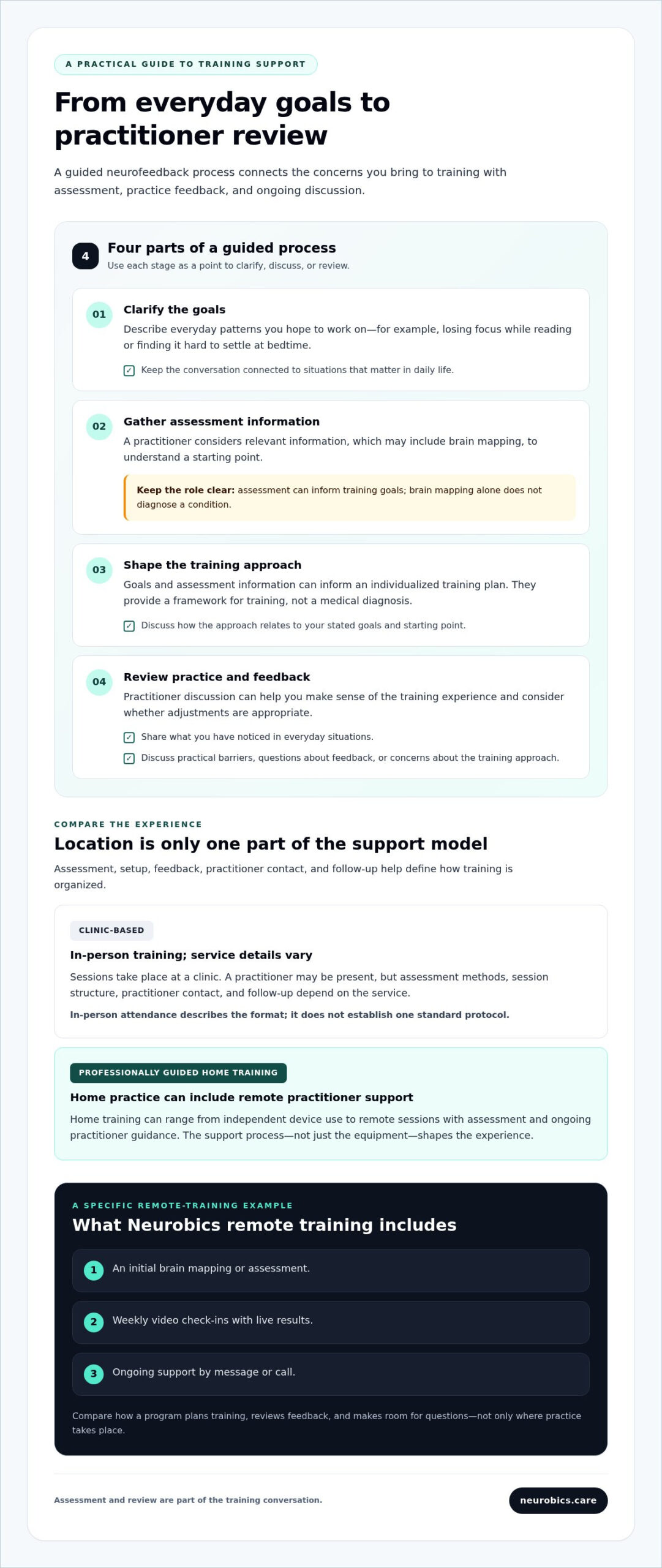
Clinic sessions take place in person, while a home program brings training into your own space. Neurobics’ remote training includes an initial brain mapping or assessment, weekly video check-ins with live results, and ongoing support by message or call. This comparison explains what to consider across assessment, practitioner contact, training routines, and follow-up.
Rather than assuming one format is best for everyone, compare the practical structure of each program. Consider how training is planned, how feedback is reviewed, and whether the routine feels manageable in your everyday life.
Key Takeaways
- In the home neurofeedback vs clinic comparison, location alone does not tell you how much structure or practitioner guidance a program provides.
- An initial assessment can help inform training goals, but it is not a medical diagnosis.
- Compare routine, feedback, practitioner contact, and technology support to understand the experience.
- Weigh your goals, preferred level of guidance, and everyday schedule before choosing a format.
- Remote training can combine home practice with expert guidance, unlike unsupported device use.
Home Neurofeedback vs. Clinic: What Is the Real Difference?
The setting alone does not determine how structured or supported a neurofeedback program is. Clinic-based training takes place in person, while home training can range from independent device use to remote sessions with assessment and continuing practitioner guidance. For a useful home neurofeedback vs clinic comparison, look at how training is planned, monitored, and reviewed, not just where you use the equipment.
Neurofeedback uses information about brain activity to provide feedback during training. Depending on the system, feedback may use visual or audio cues. For a general overview of the method and its different forms, see What is Neurofeedback? The service model around the technology shapes what assessment, setup, and follow-up look like.
Compare the support model, not just the training location. Find out how the training approach is established, how progress is discussed, and how you can raise questions between sessions. These details may affect your experience more than whether you use the equipment in a clinic room or at home.
What does clinic-based neurofeedback usually involve?
Clinic-based neurofeedback means attending a location for in-person training. A practitioner may be present during sessions, but the arrangement varies. Assessment methods, session structure, practitioner contact, and follow-up depend on the service. The word “clinic” alone does not tell you how individualized the approach is or how often progress is reviewed. In-person attendance describes the format, not a single standard protocol.
What does home neurofeedback mean when it’s professionally guided?
Home neurofeedback takes place outside a clinic, but it does not have to be unsupported. A professionally guided program can include remote setup, an initial assessment to inform training goals, and ongoing practitioner contact to review progress. That is different from using a standalone device without professional involvement: guidance and review are part of the service, not simply features of the equipment.
For example, someone with a busy schedule may prefer home practice while still having regular opportunities to discuss training with a practitioner. Someone else may value the structure of travelling to a clinic and meeting in person. Neither preference determines how tailored the training is. The assessment and support process matter too. Neurobics provides expert-guided remote neurofeedback, with practitioner input alongside home practice.
“At home” does not fully describe the training experience. Assessment, setup, feedback, and ongoing contact all help define the support around practice. Compare those elements to decide whether the program suits your needs.
How Assessment, Feedback, and Practitioner Support Differ
Assessment and review give neurofeedback training a point of reference. They connect the goals a person brings to the process with information gathered during training, and create opportunities to reflect on how the plan is working in daily life. The useful distinction is not simply whether these steps happen remotely or in person, but how they inform decisions along the way.
A guided process may include several stages:
- Clarify goals: Describe the everyday patterns you hope to work on, such as losing focus while reading or finding it hard to settle at bedtime.
- Gather assessment information: A practitioner considers relevant information, which may include brain mapping, to understand a starting point.
- Shape the training approach: Your goals and assessment information can inform an individualized plan. This is a training framework, not a medical diagnosis.
- Review practice: Feedback and discussion help you make sense of the training experience and consider whether adjustments are appropriate.
How does assessment inform a training plan?
An assessment is useful as context for planning, not as a stand-alone answer. Your goals describe what matters in daily life; brain mapping may provide another perspective on brain activity. A practitioner can consider both when shaping the training approach. For instance, someone who wants to sustain attention while studying can discuss when focus feels difficult, rather than treating a single measurement as a complete explanation. Brain mapping alone does not diagnose a condition.
To understand what brain mapping can contribute, the at-home QEEG brain mapping guide provides further context. The value lies in how assessment informs the training conversation, not in treating a map as a verdict.
What does ongoing practitioner guidance add?
Practitioner review lets you consider training feedback alongside your own observations. A change in a measurement does not automatically explain how you feel, and a difficult practice session does not by itself determine whether the approach is useful. Discussing both can keep decisions measured and connected to your goals.
Useful review questions include: What have you noticed in everyday situations? Are practical barriers affecting your routine? Is there anything in the feedback you want to discuss? These questions make check-ins more specific and help separate a technical or routine issue from a concern about the training approach itself.
Support also means having a clear way to raise questions instead of being left to interpret information alone. Neurobics includes weekly video check-ins with live results, plus ongoing support through messages or calls. That gives you opportunities to discuss your experience and questions as training progresses.
Home Neurofeedback vs. Clinic: Compare the Experience, Not the Price
Price alone cannot show what a neurofeedback program includes or how closely it is guided. Compare the practical experience: where training happens, how assessment informs it, what practitioner contact is available, and how feedback is reviewed. Service models differ, so the points below describe common distinctions rather than rules that apply to every clinic or home program.
Compare who assesses, guides, and reviews training before weighing convenience. This keeps the decision focused on the support around practice instead of assumptions based on location.
| Experience | Clinic-based training | Home-based training |
|---|---|---|
| Setting | Training takes place in person at a clinic. | Training takes place at home, with the process varying by program. |
| Assessment | Assessment may be included; its format and role depend on the service. | Some guided programs include an assessment to inform training goals. |
| Practitioner contact | Contact may happen face to face during visits, with follow-up varying. | Support may be remote and scheduled, or limited, depending on the program. |
| Routine | Attendance involves travelling to appointments. | Practice takes place at home, where you need a suitable space and routine. |
| Feedback | Results and progress may be discussed during or after sessions. | Feedback may be available through an app or reviewed with a practitioner. |
| Technology support | Equipment is used in the clinic; setup arrangements vary. | Remote setup and technical guidance depend on the service model. |
Which parts of the experience can be compared directly?
Separate the features of a specific program from what may vary elsewhere. Neurobics’ remote model includes a cap with sensors that measure brainwaves in real time, Bluetooth connectivity to a smartphone, and access to an app and cloud platform for progress tracking. Light or sound cues provide feedback during training. Weekly video check-ins review live results, and ongoing support is available through messages or calls. These are features of Neurobics’ service, not standard features of every home neurofeedback program.
For either format, consider how the practical pieces connect. Is equipment setup supported? Is there a clear way to discuss feedback? Does practitioner contact continue after the initial assessment? The answers help distinguish a structured service from one where you are left to manage the technology and routine alone.
How do routine and access affect the decision?
Clinic attendance may suit someone who values a dedicated setting and in-person contact. Home practice may work better for someone who prefers using equipment in a familiar, private space. It also requires comfort with the technology and room in your schedule for practice. Neither format is automatically more effective; fit depends on your preferences and the support provided.
Consider which setting would make it easier to take part consistently and feel supported. If remote guidance matters to you, Neurobics’ home program combines practitioner review with app and cloud-platform access.
How to Choose Between Home and Clinic Neurofeedback
Start with the kind of guidance and routine you can realistically engage with, rather than assuming one setting is inherently better. Home training does not necessarily mean training without practitioner input. A guided remote program can include assessment, regular review, and ongoing communication, while clinic services differ in how they structure those elements.
Use these questions to clarify what matters to you:
- Clarify your goals. Identify what you would like to focus on, such as sleep, attention, or stress regulation. This gives you and the practitioner a clearer starting point for discussing whether neurofeedback may be appropriate and how progress will be reviewed.
- Identify your preferred guidance. Consider whether face-to-face interaction is important to you or remote practitioner contact would feel supportive. Home-based training can be professionally guided, so think about what kind of contact helps you feel informed and engaged.
- Consider your routine. Think about travel to appointments, the space available at home, and when you could practise. Choose a format that fits your actual week, rather than one that sounds convenient in theory.
- Review your support needs. Decide how much help you want with assessment, equipment setup, feedback, and questions during training. Look for a service that explains how these parts fit together.
When might a clinic setting feel like a better fit?
A clinic may suit you if in-person interaction helps you feel comfortable or you prefer attending a dedicated setting instead of managing equipment at home. Consider the service’s assessment and follow-up structure, not just the fact that sessions take place face to face. Clinic attendance alone does not establish how personalized or closely reviewed a program will be.
When might professionally guided home training fit better?
Remote training may suit you if you value practising at home while staying connected with a practitioner. Consider whether you are comfortable using a brainwave-sensing cap, connecting it to a smartphone, joining video check-ins, and viewing progress through a cloud-based platform. These practical details shape the experience, and home practice will not suit everyone.
Picture an ordinary training day. Would you rather travel and meet a practitioner in person, or use the equipment in a familiar space and discuss progress remotely? Neither answer guarantees a particular level of consistency or outcome. The useful choice is the one whose routine and guidance feel manageable for you.
Neurobics offers practitioner-guided home training with remote setup, regular video check-ins, and ongoing support, providing a structured option for people who prefer to practise at home.
What Remote Neurofeedback with Neurobics Includes
Neurobics provides remote, expert-guided neurofeedback training for people who prefer to practise at home while working with a practitioner. The program includes an initial brain mapping or assessment, a neurofeedback cap kit, access to the app and cloud platform, weekly video check-ins with live results, and ongoing support through messages or calls. It is a training program, not a medical diagnosis or substitute for medical care.
What happens during remote setup and training?
The kit is shipped based on your location and preferences, and setup takes place remotely through a video call. The cap’s sensors measure brainwaves in real time and connect to a smartphone through Bluetooth. During training, light or sound cues provide feedback. You can use the initial session to understand the assessment and get oriented to the equipment before establishing a practice routine at home.
Because training uses connected technology, it helps to feel comfortable with a smartphone and video calls. The system is non-invasive and passive: it measures brain activity and does not send anything into the brain. Consider whether you have a suitable place to practise and feel comfortable following setup guidance remotely.
How are progress and support handled over time?
Neurobics combines home practice with weekly video check-ins, live results, cloud-based progress tracking, and ongoing support through messages or calls. Check-ins create an opportunity to discuss how training fits your routine and bring practical concerns into the conversation, rather than having to interpret the process entirely on your own.
Approach the experience with realistic expectations. People’s needs and responses differ, and no particular result or timeline is guaranteed. Neurofeedback training is not a medical diagnosis or a substitute for advice from a healthcare professional. If you are considering it alongside existing care, keep those roles distinct and discuss care decisions with the professional supporting you.
Choosing a remote format means deciding whether home practice and remote guidance suit your preferences. If the approach feels relevant to your needs, explore Neurobics and its remote training approach.
Choose a Supportive Next Step
Turn your preferences into practical criteria. Rather than asking only whether home or clinic is “better,” consider what would help you feel comfortable taking part: the kind of practitioner contact you value, how training could fit your usual routine, and whether you prefer in-person or remote interaction. This makes the home neurofeedback vs clinic decision more personal and grounded in your circumstances.
Note the goals you hope to explore and the questions you want answered before beginning. A thoughtful conversation can help you understand the program structure and decide whether its approach aligns with your preferences. Neurofeedback does not guarantee a particular outcome, so approach the decision with curiosity and realistic expectations.
If remote, practitioner-guided training feels worth exploring, learn more about remote neurofeedback with Neurobics.
Frequently Asked Questions
Can neurofeedback diagnose ADHD?
No. Neurofeedback training and brain mapping do not constitute an ADHD diagnosis, and a brain map cannot confirm that someone has ADHD. Training goals, such as practising attention regulation, are different from a clinical assessment that considers symptoms and relevant history. If you are concerned about ADHD for yourself or your child, seek an appropriate assessment from a qualified healthcare professional who can consider the full picture.
Can neurofeedback replace medication or psychotherapy?
No. Neurobics provides a neurofeedback training program, not medication or psychotherapy, and it should not be treated as a substitute for professional care. Do not stop, adjust, or delay prescribed medication or existing support based on an article or training program. If you are considering neurofeedback alongside current care, discuss treatment decisions with the clinician responsible for your care so they can consider your circumstances.
Is neurofeedback the same as brain stimulation?
No. Neurobics’ cap uses sensors to passively measure brain activity, while light or sound cues provide feedback during training. The system is non-invasive and does not send anything into the brain. This describes Neurobics’ approach specifically; other devices and procedures may use different technologies, so their mechanisms should not be assumed to be the same. When comparing options, focus on what the particular system measures and how it provides feedback.
Can neurofeedback support goals such as focus or calm?
People may explore neurofeedback with goals related to focus, calm, or clarity, but individual needs and experiences vary, and improvement is not guaranteed. Neurobics uses an initial assessment to inform an individualized training approach. For example, someone hoping to feel more focused during study can discuss that goal as part of planning, while remembering that training is not a diagnosis or a substitute for care when symptoms need clinical attention.
How long does it take to notice changes with neurofeedback?
There is no universal timeline or guaranteed milestone for noticing a change. Experiences differ, so a specific number of sessions or weeks should not be treated as a prediction. Instead, clarify what you hope to notice in daily life, such as concentration during a familiar task, and use practitioner check-ins to review progress without assuming that every change is due to training.
Can I use neurofeedback while receiving other mental health care?
Whether a particular training plan fits alongside your care depends on your circumstances. Neurofeedback should not replace medical advice, psychotherapy, or prescribed treatment. If you are already receiving support, discuss your interest in training with the professional involved in your care. That conversation can help ensure decisions take account of your needs and the care or support you already receive.
