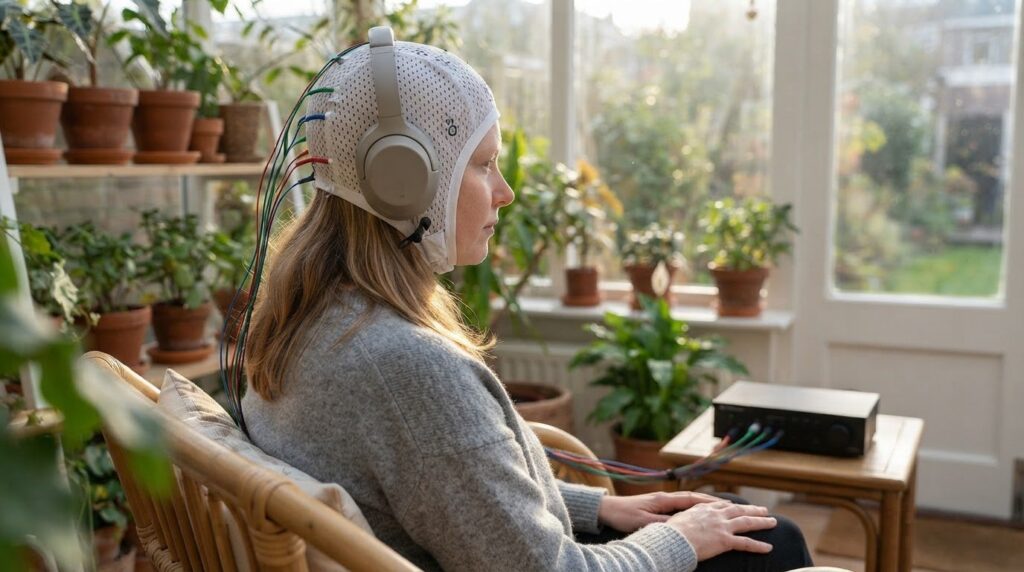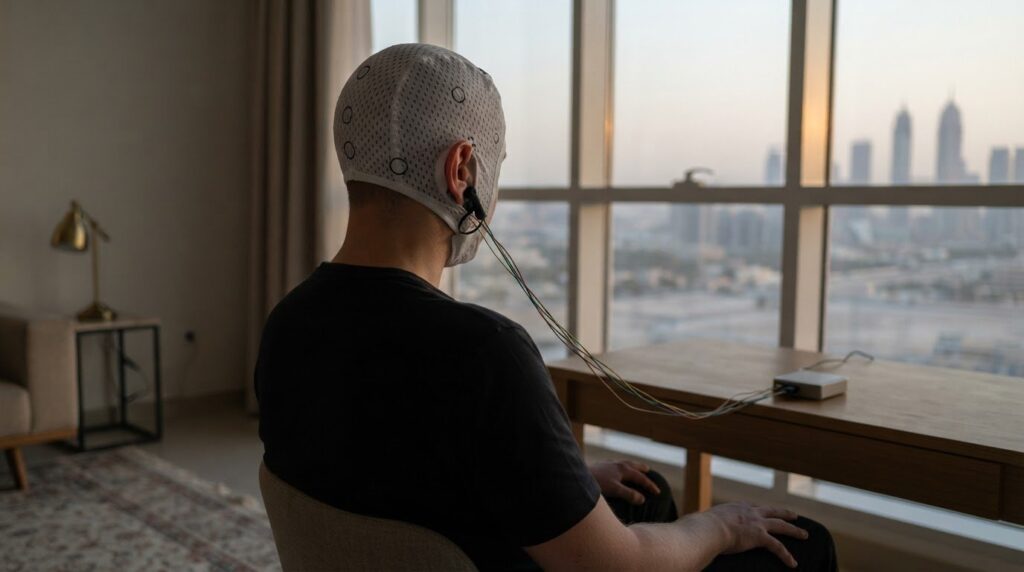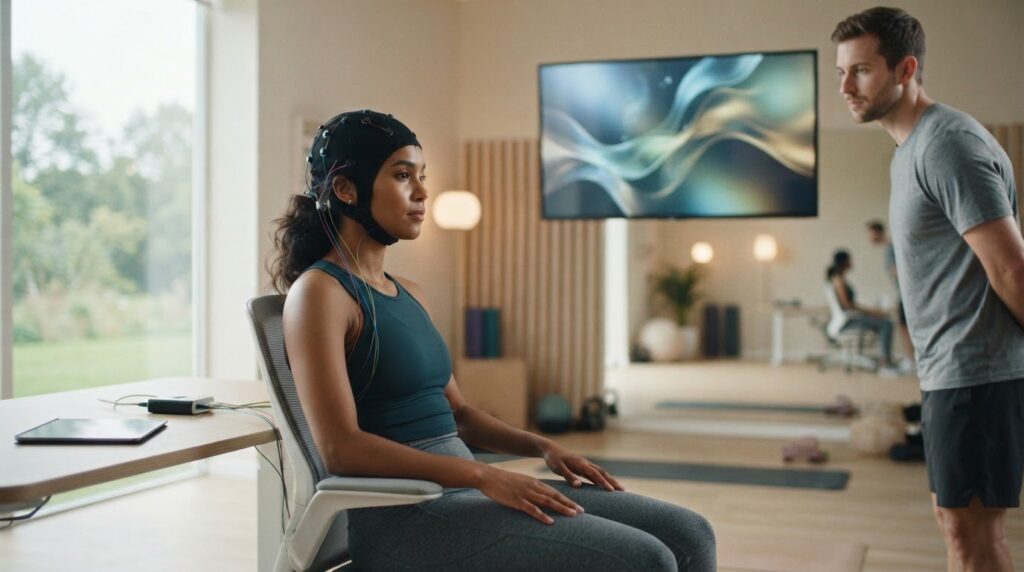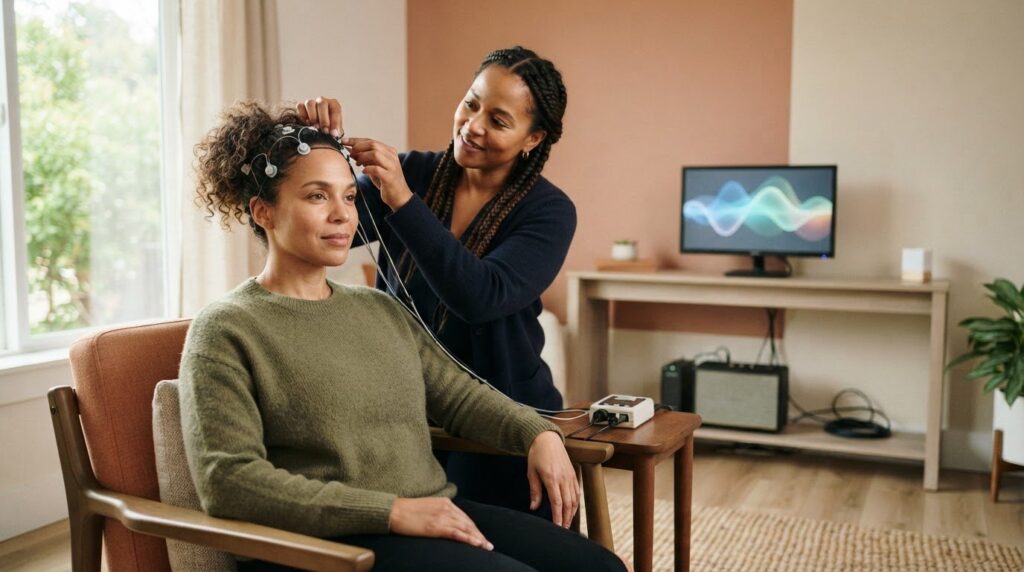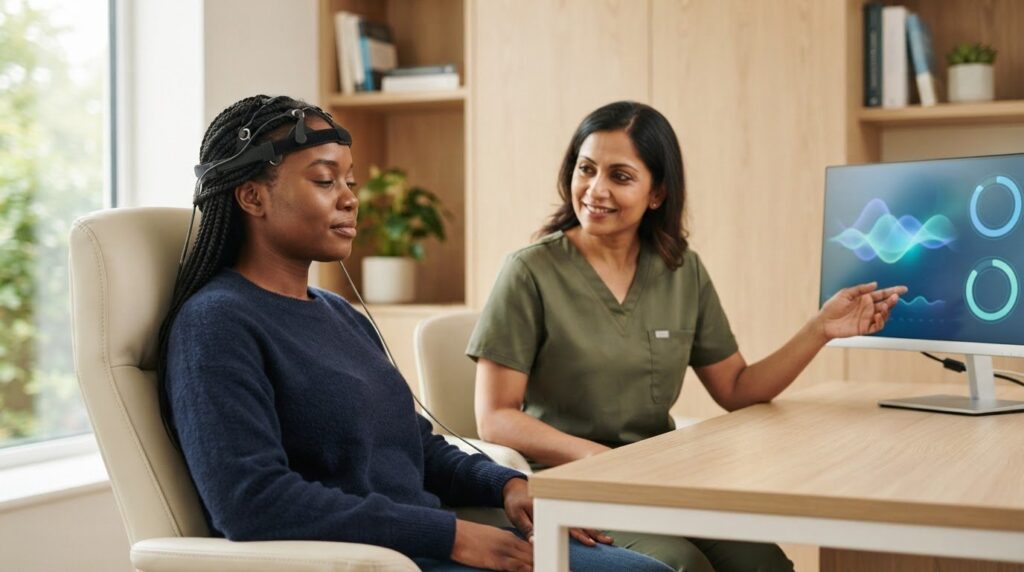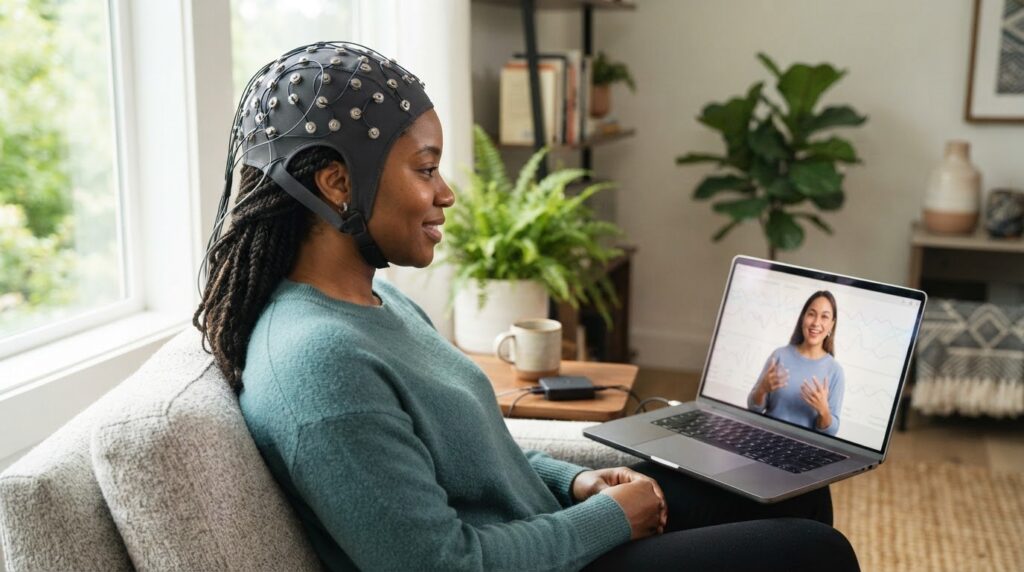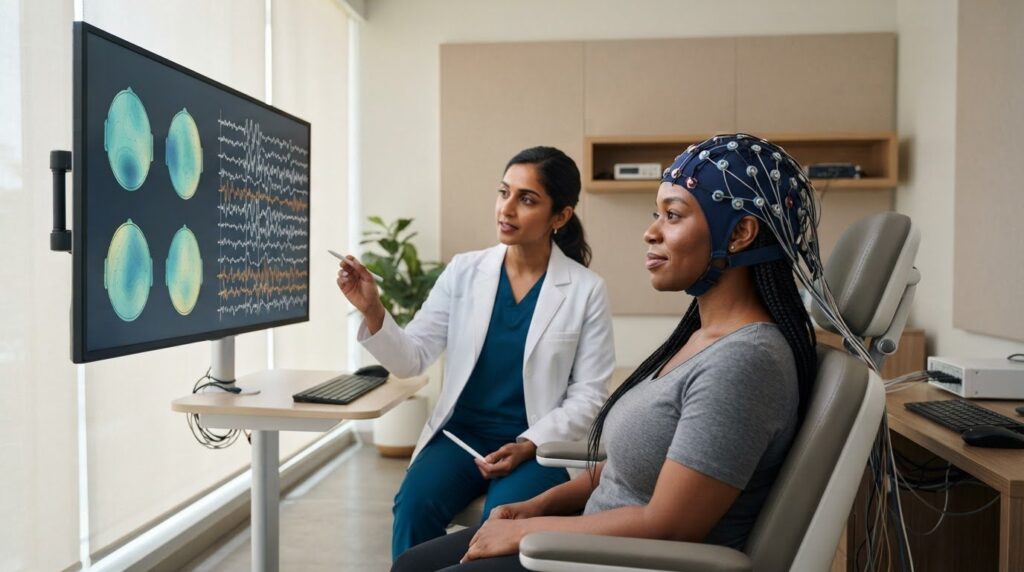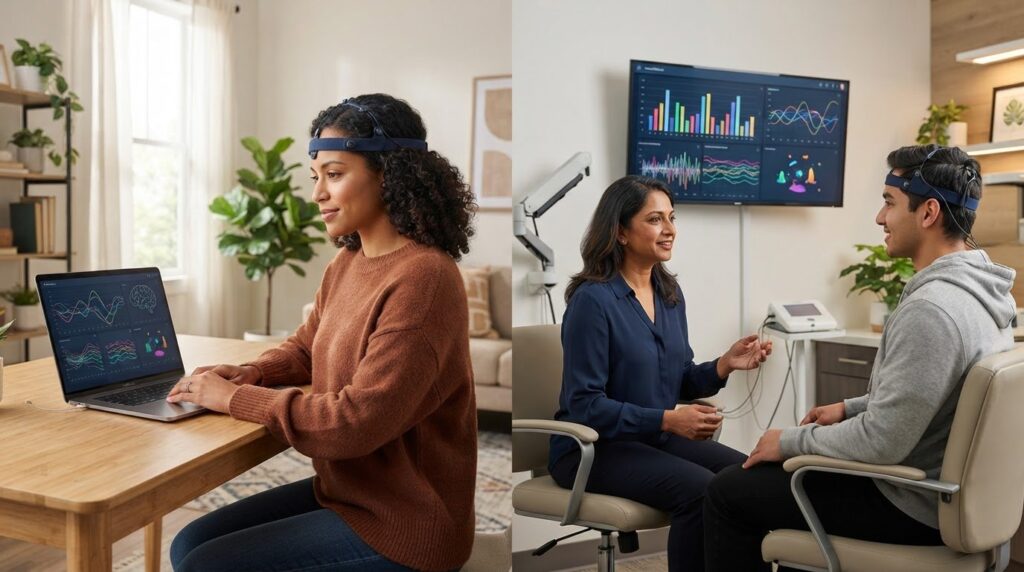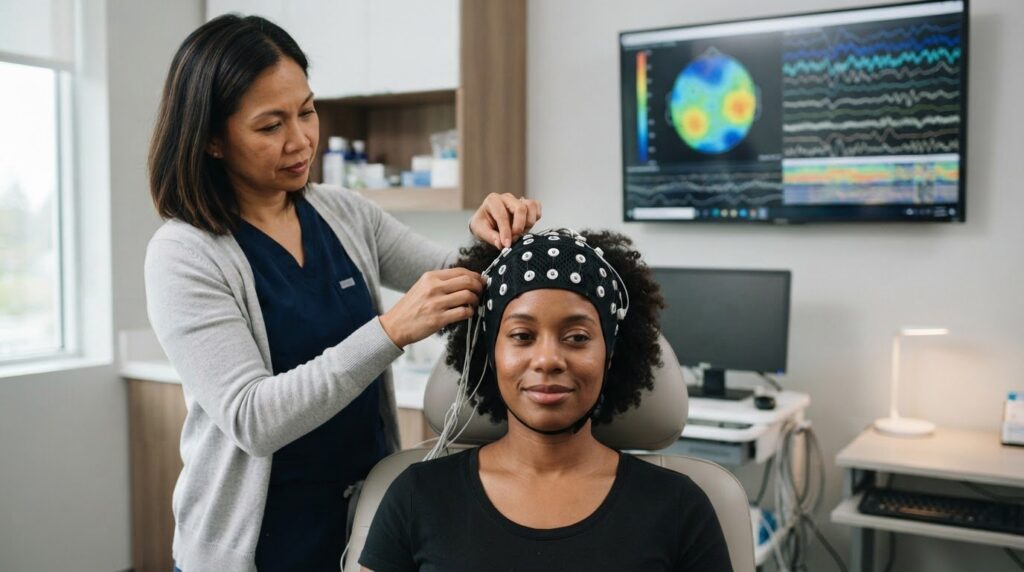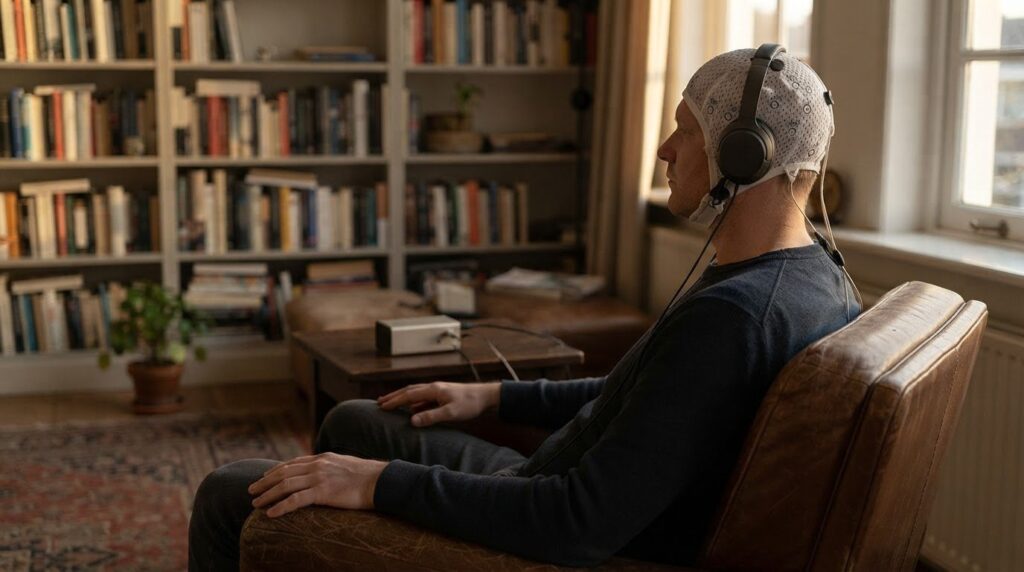
Brain wave biofeedback at home measures brain activity and uses real-time feedback to support self-regulation practice. Sensors in an EEG cap record…
Posted in
Posted in


Brain wave biofeedback at home measures brain activity and uses real-time feedback to support self-regulation practice. Sensors in an EEG cap record…
Brain feedback makes activity that’s usually invisible available for practice. Neurofeedback for depression uses real-time signals from brain…
Focus training doesn’t have to rely on effort alone. Neurofeedback in Dubai uses sensors to measure brain activity and provide real-time feedback…
Peak performance isn’t about staying switched on at full intensity; it’s about finding a steady, responsive state when focus and composure matter….
Calm isn’t something you can force on demand, but the brain may be able to practise shifting out of over-alert patterns. Neurofeedback for stress…
Impulsivity is not simply a matter of trying harder to stop. Neurofeedback for impulsivity may help by giving the brain practice in self-regulation,…
At-home brain mapping can show recorded brainwave activity, but the results need context to be useful. It’s natural to wonder what the sensors…
Clinical qEEG can add quantitative analysis to an EEG recording, helping describe patterns in recorded brain activity. It does not diagnose a…
When comparing home neurofeedback vs clinic training, the key difference is not simply convenience versus expert care. Both formats can involve…
Can a brain map explain why you’re struggling with focus, sleep, or stress? A QEEG can provide information about patterns of electrical activity, but…