


Calm isn’t something you can force on demand, but the brain may be able to practise shifting out of over-alert patterns. Neurofeedback for stress uses real-time feedback about brain activity to support self-regulation; it may help some people feel less tense or overwhelmed, though effects vary.
If stress keeps your mind racing or makes it hard to wind down, it’s understandable to look for more than another relaxation tip. Neurofeedback doesn’t aim to erase normal worry. Instead, it provides a structured way to practise self-regulation, guided by an individual assessment and regular practitioner check-ins.
Here, you’ll learn how neurofeedback works, why assessment and supervision matter, and what it may contribute to stress regulation. We’ll also consider the limits of the approach and how training can fit alongside other support, so you can weigh it with realistic expectations.
Key Takeaways
- Understand what EEG feedback shows during training and how it can support the brain’s self-regulation.
- Learn why stress-related training is individualized rather than based on one protocol for everyone.
- See how neurofeedback may complement other support for anxiety or trauma without replacing it.
- Explore what realistic progress can look like, from noticing patterns to applying regulation skills in daily life.
- Find out how remote, guided training may fit into a structured approach to stress regulation.
Neurofeedback Therapy For Stress: Does It Work?
Neurofeedback may support stress regulation, but it generally complements care for anxiety or trauma rather than replacing it. Reported risks include worsening symptoms, headaches, fatigue, and worsened seizures in people already at risk.
Everyday Anxiety and Anxiety Disorders
Normal anxiety is a response to a challenge, while an anxiety disorder can involve persistent, disproportionate worry that worsens over time. Before an exam, for example, someone may feel tense but settle afterward; ongoing worry that disrupts sleep or work may need clinical attention. The distinction matters because brain training is not a diagnosis, and stress-related symptoms can have different causes. A clinician considers duration, intensity, and effects on daily function.
High-Beta Activity and Chronic Anxiety
Chronic anxiety has been associated with spending too much time in high-beta activity, a fast, tense, over-alert brainwave pattern. This doesn’t mean one brainwave pattern explains everyone’s anxiety. EEG feedback can show activity as it changes during a session, helping inform training. For someone who remains mentally on guard after a work deadline has passed, the question is whether regulation can be supported, not whether all alertness should be removed.
Prolonged Stress and Daily Function
Short-term stress can help the body respond to demands, but prolonged stress can affect sleep, mood, focus, and energy. For example, a caregiver facing ongoing family demands may notice irritability, headaches, or difficulty concentrating at work. Digestive problems and insomnia can also occur. These effects can overlap with anxiety, so the pattern across daily life matters. Noting when symptoms appear, such as before meetings or at bedtime, can help clarify what support may be useful.
What Neurofeedback Evidence Can Tell Us
Research on neurofeedback is still evolving, and results differ among individuals. A small study reported changes in the theta/beta ratio after two training sessions, but that finding alone doesn’t establish lasting stress relief. Another study used real-time fMRI-guided feedback with 26 people experiencing high anxiety, then reassessed brain connectivity three days later without feedback. These studies examine specific measures and methods; they don’t prove that every protocol works for every stress pattern.
Complementary Support for Anxiety and Trauma
For anxiety or trauma-related difficulties, neurofeedback is generally considered alongside other support rather than as a replacement. Someone who feels persistently dysregulated may use training to practise self-regulation while also receiving appropriate clinical care. Trauma responses and anxiety disorders can affect several areas of life, not only brainwave activity. Neurofeedback for stress may contribute to a broader plan, while ongoing symptoms still call for attention to sleep, functioning, and emotional wellbeing.
How neurofeedback works
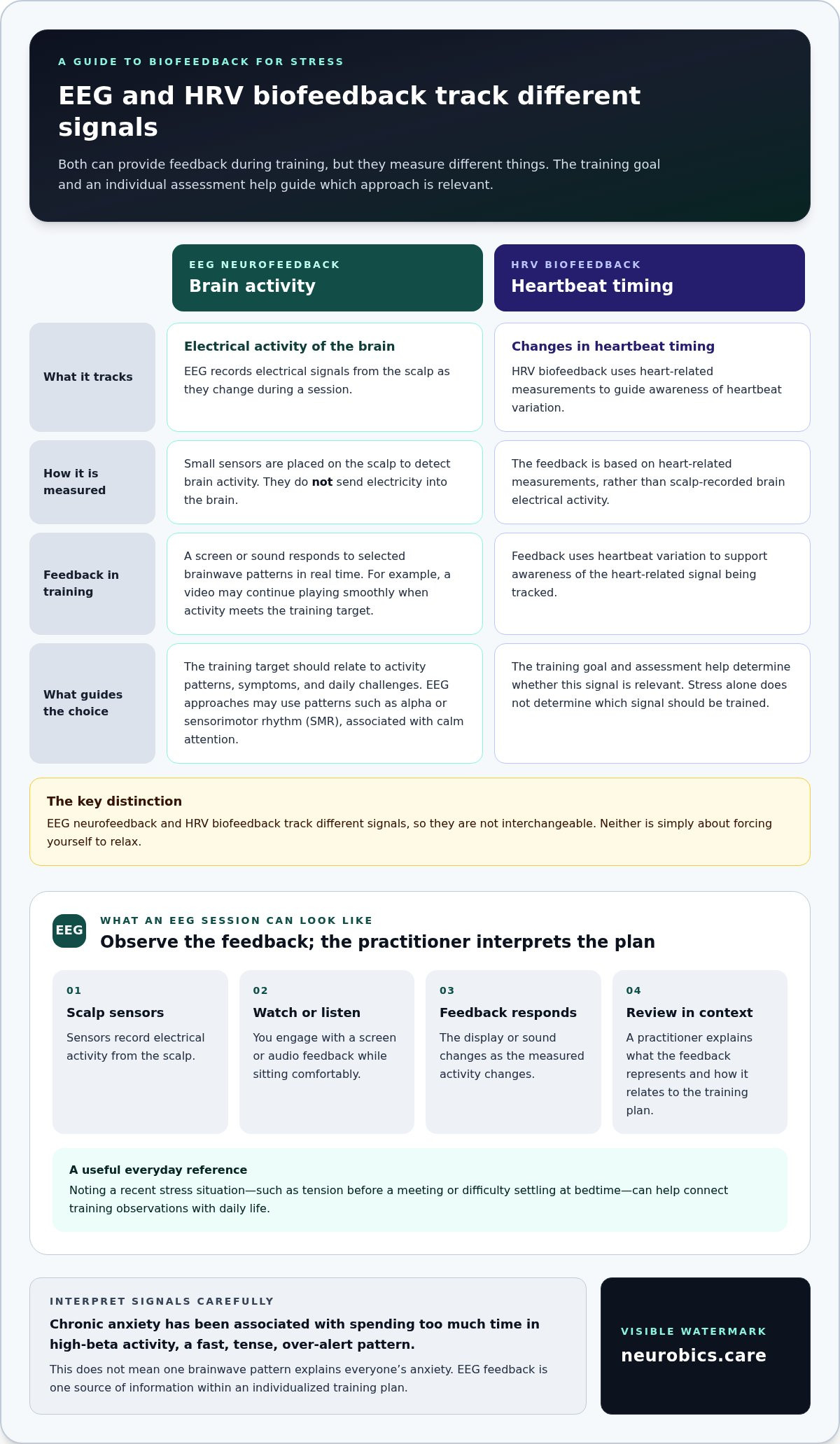
EEG neurofeedback measures the brain’s electrical activity. Heart-rate variability (HRV) biofeedback instead tracks changes in heartbeat timing. During an EEG session, sensors record activity while visual or auditory feedback responds to selected patterns. Bring examples of stress symptoms and follow the practitioner’s setup guidance.
From Brain Activity to Feedback
EEG stands for electroencephalography, a way to record electrical signals from the scalp. Small sensors detect these signals; they don’t send electricity into the brain. A computer processes the recording and provides immediate feedback, such as a video that continues playing smoothly when activity meets the training target. The display gives the brain information about its own activity without requiring the person to consciously control each signal.
Think of someone who notices racing thoughts before an important presentation. During training, a screen or sound can respond to selected brainwave patterns in real time. The person may simply watch or listen while the feedback changes. This isn’t a test of willpower or a measure of how well someone can relax. The practitioner selects the target and interprets the response within the agreed training plan.
EEG and HRV Biofeedback
These approaches track different signals, so they aren’t interchangeable. EEG neurofeedback uses scalp sensors to provide feedback about brain electrical activity. HRV biofeedback uses heart-related measurements to guide awareness of heartbeat variation. Someone seeking support for stress may encounter either method, but the choice depends on the training goal and assessment. Stress alone doesn’t determine which signal should be trained.
There are also different EEG training approaches. Some provide feedback based on patterns such as alpha or sensorimotor rhythm (SMR), which are associated with calm attention. The selected target matters: training isn’t simply about increasing one brainwave or suppressing another across the board. A protocol should make sense in relation to the person’s activity patterns, symptoms, and daily challenges.
What Happens During a Session
A typical EEG session begins with sensors placed on the scalp, followed by watching a screen or listening to tones. As measured activity changes, the feedback changes too. For example, a video may become clearer or dimmer in response to the training signal. The person can sit comfortably; the task is to stay engaged with the display, not to force a particular mental state.
Before a session, note a recent situation that affected you physically or mentally, such as tension before a meeting or difficulty settling at bedtime. Sharing an example helps connect training observations with everyday life. A practitioner can explain what the feedback represents and how it relates to the plan. Neurobics offers remote neurofeedback, with remote set-up by video call and weekly video check-ins.
Neurofeedback training and nervous-system regulation
Neurofeedback training uses feedback to help a person notice and practise shifts in brain activity. Its practical aim is self-regulation, not suppressing every emotional response.
Emotional Regulation
Emotional regulation is the ability to respond to feelings without being overwhelmed by them. During training, feedback can make changes in brain activity easier to notice, offering a structured way to practise steadier responses. For example, after a tense work conversation, someone might become more aware of how quickly agitation builds. That awareness can support reflection rather than an automatic reaction.
This doesn’t mean a person can control every feeling on demand. Neurofeedback focuses on practice over time, with feedback shaped around the training target. Repeated sessions may make newly learned patterns easier to access in daily life. For someone managing depression alongside stress, regulation training is one possible part of broader mental health support, not a substitute for appropriate care.
Stress Resilience
Stress resilience is the ability to adapt positively when exposed to a stressor. Neurofeedback may support this capacity by helping the brain practise shifting from heightened activity toward calmer patterns. For instance, someone who feels keyed up before a difficult conversation might notice the tension sooner and recover more steadily. The aim isn’t to avoid pressure, but to respond with greater flexibility.
Everyday resilience also depends on context. A demanding workload, disrupted sleep, or family strain can continue to activate stress responses, even when someone is practising regulation. Training can contribute to self-regulation, while practical changes and other support address the pressures themselves. This distinction sets a grounded expectation: brain training concerns patterns of response, not removing the situations that create stress.
Psychophysiological Self-Regulation
Psychophysiological self-regulation means noticing and influencing links between mental activity and bodily responses. During neurofeedback, a person receives information about brain activity and observes how feedback changes. In daily life, this awareness may help someone recognize that a racing mind accompanies shoulder tension or shallow breathing. The goal is to build recognition and regulation skills, not to monitor every sensation.
Stress involves interconnected brain and body processes, so a single signal cannot describe someone’s entire state. Training focuses on selected neural patterns, while lived experience provides important context. After a session, consider whether settling after a stressful email feels different, or whether bedtime feels less activated. These observations connect training with daily function and help guide discussion about progress.
With repeated practice, feedback may help make self-regulation more accessible beyond the training setting. That possibility matters during ordinary stressors, such as an unexpected change of plans or a challenging meeting. The aim isn’t constant calm. It’s a more flexible response, with enough mental space to choose what to do next.
Treatment supervision and individualized protocols
Stress-related brain activity differs between individuals, so a protocol should reflect assessment findings and the person’s goals. Supervision helps connect training targets with symptoms, daily challenges, and changes observed across sessions.
Neurofeedback is generally considered a complementary approach for anxiety or trauma-related difficulties, not a substitute for established care. People with persistent stress may also receive cognitive behavioural therapy, counselling, or stress-management support; medication may be considered for more severe health problems.
How Protocols Are Individualized
An individualized protocol starts by considering what the person wants to address, such as difficulty winding down or concentration disrupted by chronic stress. An assessment can help identify relevant neural patterns rather than assuming one approach fits everyone. The practitioner selects training targets and reviews the response over time. If training coincides with increased agitation or fatigue, that information matters when reviewing the approach.
This process is different from following a generic brain-training routine. Two individuals may both report anxiety yet have different histories, stressors, and patterns of functioning. A supervised plan accounts for those differences and keeps the goal specific, such as supporting regulation during a demanding workday. Neurofeedback for stress may require a course of 20-40 or more sessions, depending on the approach and individual needs.
How It Fits With Other Treatments
Mindfulness practises attention to present-moment experience, while cognitive behavioural therapy helps people examine thoughts and behaviours linked to distress. Neurofeedback provides feedback about brain activity during training. These approaches work differently, and a care plan may combine neurofeedback with psychological support rather than treating them as interchangeable options.
For anxiety, cognitive behavioural therapy and self-help groups are common psychological approaches. Medication, including antidepressants or benzodiazepines, may also be prescribed. Drug-based treatments and neurofeedback differ in how they work, and neither should be presented as a universal replacement for the other. A prescribing physician should guide medication decisions; medication shouldn’t be stopped or changed because someone begins brain training.
Supervision, Safety, and Clinical Care
People with a seizure disorder or a history of seizures should discuss neurofeedback with a physician before training. Seizures have worsened in some patients receiving neurofeedback for seizure disorders, while serious events are described as rare and usually associated with poor supervision or inappropriate protocols. A history of neurological concerns is relevant when considering suitability and oversight.
Supervision also matters when someone has trauma-related symptoms, severe anxiety, or worsening distress. A practitioner can monitor responses and adjust targets when the training experience or symptoms change. Neurofeedback shouldn’t replace urgent clinical attention or established treatment for significant mental health concerns. Individualized training can support a broader plan, while qualified clinical care addresses diagnosis and treatment needs.
Neurofeedback and stress reduction
Stress itself isn’t measured directly in neurofeedback; training focuses on brain activity and related experiences. Progress is better understood through changes in daily symptoms, not a single stress score.
For one person, useful signs might include fewer racing thoughts after work, less physical tension before a meeting, or an easier transition into sleep. These are meaningful observations, but they don’t prove that training caused every change. Workload, health, relationships, and other support can also affect how stress feels. Tracking specific situations gives the person and practitioner clearer information to discuss.
What Training May Contribute
Neurofeedback provides feedback about selected brain activity, giving the brain an opportunity to practise self-regulation. In a stress-focused plan, the aim isn’t to remove normal worry or keep the brain calm at all times. It’s to support a more flexible response when pressure rises. For example, someone might notice tension building during a difficult conversation, then find it easier to settle afterward.
The changes people look for are everyday ones: feeling less overwhelmed by routine demands, winding down more easily at night, or having fewer racing thoughts. Someone might note whether bedtime feels different after a demanding day, or whether a work email triggers less prolonged tension. These observations make goals concrete and help distinguish a short-lived good day from a pattern that matters in daily life.
Why Personal Context Matters
Stress has many possible triggers, so the same training target won’t necessarily suit everyone. A deadline-driven employee, for instance, may struggle most with alertness after work, while a caregiver may face stress throughout the day. Their symptoms and priorities differ. What matters is how each person responds across real situations, rather than whether they can achieve a particular feeling in one session.
Stress reduction also depends on the pressures surrounding a person. Neurofeedback doesn’t change a difficult schedule, resolve a family conflict, or replace practical support. Someone facing ongoing demands may need several forms of support, with training focused on self-regulation rather than removing the cause. Practice may support coping, while changes to the situation address its demands.
Reading Change Without Overclaiming
A useful way to review progress is to compare specific experiences over time: tension before presentations, racing thoughts at bedtime, or recovery after conflict. Look for changes in frequency, intensity, or how long it takes to return to usual activities. These examples don’t directly measure stress, but they give a grounded picture of how daily function is changing.
Neurofeedback is non-invasive, but the process still deserves thoughtful supervision. If training coincides with increased symptoms, headaches, or fatigue, report the change rather than treating discomfort as proof of progress. A clear conversation about goals and responses can help keep expectations realistic. To discuss whether guided training fits your stress-regulation goals, contact the team about your needs.
Neurobics: Remote Neurofeedback
Neurobics offers remote neurofeedback for people who want structured brain training at home with expert guidance. An initial QEEG brain-mapping assessment informs an individual training protocol, connecting the plan with personal needs rather than a one-size-fits-all approach. The cap measures brainwaves in real time, connects to a smartphone via Bluetooth, and provides feedback through light or sound cues. Cloud-based progress tracking, weekly video check-ins, and ongoing support are included.
This approach may suit people who can set aside time for guided training and want their protocol shaped around assessment findings. It isn’t a replacement for medical care or psychotherapy when those are needed, but can complement broader support. To discuss whether remote neurofeedback may fit your goals, contact Neurobics.
Take a Thoughtful Next Step
Choosing support starts with a clear sense of what you want to change in daily life. You might focus on feeling less on edge after work, settling more easily at bedtime, or recovering sooner after a stressful moment. These goals can help shape a useful conversation about whether neurofeedback for stress belongs in your wider wellbeing plan.
It can also help to consider what support you already have and where you feel a gap. Neurofeedback is a training approach, not a replacement for medical care or other treatment when needed. Neurobics offers remote training from home, with protocols informed by individual needs and expert guidance.
If you’d like to discuss how this kind of training could relate to your goals, contact Neurobics. A considered first conversation can help you decide on a path that feels practical and aligned with your needs.
Frequently Asked Questions
How Does It Work?
Neurofeedback uses brain activity as information for a learning process. During training, feedback changes in response to selected activity, allowing the brain to practise patterns linked to the training goal. For example, someone working on winding down might notice whether they feel more settled after a session. These observations can help guide later discussions about the training plan.
What Is Neurofeedback?
Neurofeedback is a form of biofeedback focused on brain activity. It uses EEG recordings to provide information about patterns during training. Unlike brain stimulation, it monitors activity rather than sending signals into the brain. This distinction clarifies what a session involves: a guided learning process, not a procedure that directly changes brain tissue.
What is neurofeedback and how might it help with stress?
Neurofeedback is brain-activity training that may support self-regulation for some people experiencing stress. Feedback offers a structured opportunity to practise regulation linked to personal goals. For example, someone who feels mentally activated after work could notice whether settling into an evening routine becomes easier over time. Neurofeedback isn’t intended to eliminate normal worry or replace other care.
What does research say about neurofeedback and anxiety?
Research is evolving, and results vary across people and training approaches. Because stress isn’t measured directly, studies often examine related symptoms or measurable brain activity instead. Findings from a particular protocol don’t establish that the same approach will help everyone. To interpret evidence, compare a study’s method and measured outcome with the concern being addressed.
How many neurofeedback sessions are typically needed for stress, and how often are they scheduled?
A course may involve 20-40 or more sessions, but the schedule depends on the protocol, the person’s goals, and how training is progressing. The number alone doesn’t show whether the approach is useful. For instance, someone might review sleep, tension, and daily functioning with their practitioner as training continues, then consider whether the plan still fits those needs.
How much does neurofeedback cost in the United States, and is it covered by insurance?
Neurofeedback costs depend on the program, assessment, and support included; Neurobics provides pricing after a quote request. Insurance coverage varies by plan and how the service is classified, so there is no universal coverage answer. Before budgeting, clarify whether the quoted program includes assessment, training, and ongoing professional support, and review your plan’s applicable benefits and reimbursement terms.
