


The headset is only one part of neurofeedback equipment for home use. What matters just as much is how brain activity is measured, what the feedback is designed to train, and whether someone with relevant expertise helps interpret the process.
It’s understandable to wonder whether a wearable that displays brain activity is the same as a neurofeedback training system, or whether you can follow a protocol on your own. Monitoring and training aren’t interchangeable: a device alone doesn’t provide an individual assessment or guidance. A structured approach brings these elements together, so home sessions are informed by your needs rather than treated as a one-size-fits-all routine.
This article explains what home neurofeedback equipment measures, how a qEEG assessment can inform a personalised training protocol, and what ongoing practitioner support can look like. You’ll also learn what to compare, including the difference between a general brain-monitoring gadget and guided training. Neurobics provides remote neurofeedback with equipment for home use, an at-home qEEG assessment, tailored protocols, and weekly live sessions. The aim is to make the process clearer and more supported, while keeping expectations realistic and focused on your individual circumstances.
Key Takeaways
- Neurofeedback equipment for home use supports brain-activity training, but the equipment itself doesn’t set the training goal or plan.
- A QEEG assessment can help inform an individual protocol; it provides information for training, not a medical diagnosis.
- Compare the full setup, including assessment, a tailored protocol, and practitioner contact, rather than considering the device alone.
- Before starting at home, understand how the training process works and how you’ll receive guidance as you use the equipment.
- Neurobics’ remote programme brings these elements together through intake, QEEG assessment, protocol design, and weekly live sessions.
What does neurofeedback equipment for home use actually do?
Home neurofeedback equipment records brain activity and provides feedback during a structured training process. It can support practice at home, but the device alone doesn’t determine what a person is training or how that training should be planned. Those decisions depend on the purpose of the programme and, in a professionally guided approach, the individual assessment and practitioner’s input.
Some consumer wellness devices offer brain-related measurements or feedback as part of a broader wellbeing experience. They may be useful for general self-observation, but a reading or engaging interface isn’t automatically a personalised neurofeedback plan. The distinction isn’t that one category is inherently valuable and the other isn’t; they serve different purposes. Neurofeedback describes a range of approaches in which feedback about brain activity is used during training.
What is measured during a neurofeedback session?
EEG, short for electroencephalography, records patterns of electrical activity at the scalp. During a session, the equipment gathers this information while a person takes part in a training activity. For example, someone may follow a simple on-screen task while feedback responds to recorded brain activity. The measurement itself isn’t a medical diagnosis, and it doesn’t explain a person’s health or abilities on its own.
Equipment versus a complete home training programme
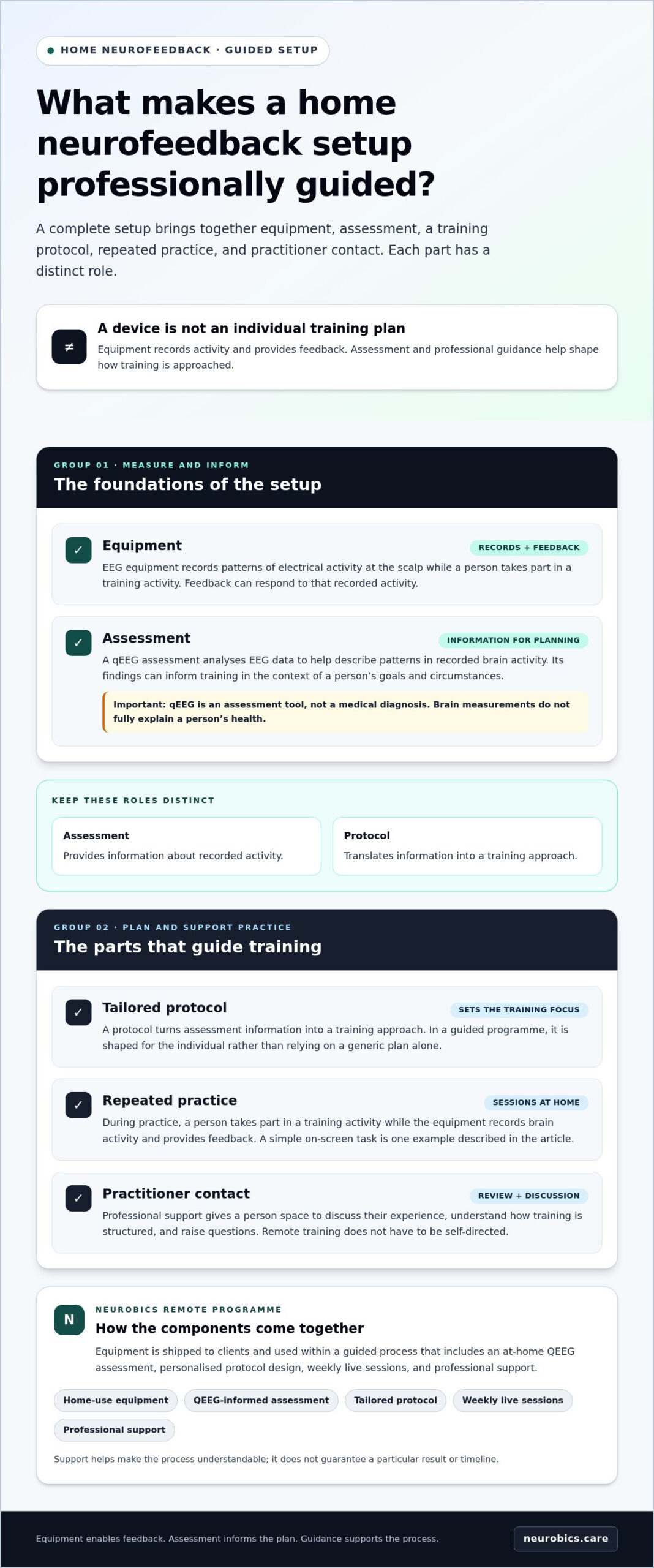
A structured programme brings together several distinct elements: equipment to record activity and provide feedback, an assessment to inform the approach, a training protocol, repeated practice, and professional guidance. Each has a different role. The equipment gathers information and delivers feedback; assessment helps shape the plan; the protocol sets the training focus; and practitioner contact supports review and discussion.
Using a device doesn’t necessarily mean a person is following an individual training programme. A qEEG assessment, for instance, can provide a broader picture of brain activity to inform a tailored protocol, but it isn’t a diagnosis. In Neurobics’ remote training, equipment is shipped to the client and used within a guided process that includes personalised QEEG-informed protocol design and weekly live sessions. To understand how these pieces fit into the wider process, read At-Home Neurofeedback: The Complete Guide.
What makes up a professionally guided home neurofeedback setup?
A professionally guided setup involves more than neurofeedback equipment for home use. The equipment records brain activity and delivers feedback during practice. Assessment helps inform the training approach, a tailored protocol gives sessions a focus, and practitioner contact provides a space to review the process. These elements work together, but each has a distinct role.
Equipment provides the means to train; assessment and professional guidance help shape how that training is approached. A device on its own can’t establish an individual training plan. In Neurobics’ remote programme, equipment is shipped directly to clients, alongside a personalised QEEG brain-mapping assessment, tailored protocol design, weekly live sessions, and professional support.
How QEEG assessment informs an individual protocol
QEEG, or quantitative EEG, is an analysis of EEG data that helps describe patterns in recorded brain activity. In a guided programme, this information can contribute to decisions about an individual’s training protocol, rather than relying on a generic plan alone. QEEG is an assessment tool, not a medical diagnosis, and its findings are considered in the context of the person’s goals and circumstances. For a closer look at the assessment itself, see At-Home QEEG Brain Mapping.
The assessment and protocol are related, but they aren’t the same thing: the assessment provides information, while the protocol translates that information into a training approach. The aim is to make the plan more specific to the individual without treating brain measurements as a complete explanation of their health.
Why practitioner contact remains part of remote training
Remote training takes place at home, but it doesn’t have to be self-directed. Neurobics includes weekly live sessions, giving clients an opportunity to discuss their experience, understand how the training is structured, and receive professional support as they follow their protocol. This contact helps make the process understandable; it doesn’t guarantee a particular result or timeline.
For example, if a client is unsure how to make sense of their training experience, a live session offers a setting to raise questions and discuss the process with a practitioner. The equipment remains one part of the programme, rather than a substitute for assessment or guidance. To explore how Neurobics structures remote support, visit the Neurobics contact page.
Is a standalone neurofeedback device enough for home training?
A device can record brain activity and provide feedback, but it isn’t interchangeable with an individual training plan. Neurofeedback equipment for home use may be part of a training system, yet having access to a device alone doesn’t explain what feedback to focus on, what goal to set, or how to make sense of the information it displays.
That distinction doesn’t make consumer technology inherently unhelpful. Some people use wellness devices to observe or explore patterns in their own activity. The key is to understand what a device is designed to do, and not to treat its readings as a personal assessment, diagnosis, or clinical advice.
What equipment can and cannot tell you on its own
A device records signals and may present them as feedback or a visual summary. Interpretation requires context: the signal alone doesn’t establish why a pattern appears or what training approach is appropriate for a particular person. For example, a user might notice that feedback changes during a session. That observation doesn’t, by itself, show what caused the change or determine the next training goal.
In a self-directed setup, the user is generally responsible for deciding how to use the device and interpret its output. In remote guided training, assessment and practitioner input provide a structure for setting and reviewing an individual approach. Neither format should be confused with medical diagnosis.
When guided home neurofeedback may feel more suitable
Guided training may appeal to someone who would rather not interpret brain-activity information alone, or who values an individual assessment and regular professional contact. Remote sessions can add structure while allowing practice to take place at home, without requiring visits to a clinic. The value lies in having a supported process, not in a promise of a particular result.
For example, someone who is unsure how their sessions fit into a broader training plan may appreciate being able to discuss the process with a practitioner. Others may prefer more independent exploration. Needs, preferences, and experiences differ, so the most suitable approach depends on the person and the kind of support they want.
Neurobics’ remote neurofeedback combines home equipment with an individual QEEG-informed approach and practitioner support, including weekly live sessions. If you’re considering guided training, explore the separate guide, Choosing a Neurofeedback Device, for a device-focused evaluation framework.
How can you prepare for neurofeedback equipment at home?
Preparing for neurofeedback equipment at home is less about setting up a special environment and more about understanding the process, making room for consistent practice, and knowing how to access support. Neurobics ships the equipment to clients as part of its remote training programme, with professional guidance throughout. You don’t need to plan the training protocol alone.
A simple preparation sequence can help you feel more settled:
- Consider what you’d like to focus on and note relevant patterns in everyday life, such as times when concentration or winding down feels difficult.
- Take part in the intake and QEEG assessment so the practitioner has individual context to inform the training plan.
- Choose a comfortable place where you can approach sessions with as few interruptions as practical.
- Use the weekly live sessions to raise questions or discuss practical difficulties as they arise.
Getting ready for an initial assessment and training plan
Before intake, jot down the goals and everyday experiences you want to discuss. These might include noticing when focus feels easier or harder, or describing routines that affect your sleep. There’s no need to arrive with a technical interpretation of your brain activity. Intake and QEEG assessment help establish personal context and inform a training approach; they aren’t a medical diagnosis.
Keeping expectations realistic also matters. An assessment offers information to guide training, not a guarantee of what you’ll experience. If you’re unsure what details are useful, bring that question to the intake conversation.
Building a manageable home session routine
Choose a familiar, comfortable spot where you can give a scheduled session your attention. A consistent setting may make it easier to fit practice into your routine, but the aim isn’t to create a perfect environment. If everyday responsibilities or changes in schedule make sessions difficult, discuss the practical challenge with your practitioner rather than assuming you have to solve it alone.
In Neurobics’ remote programme, weekly live sessions provide regular practitioner contact alongside home training. They offer an opportunity to talk through questions and understand the process as it unfolds. For a closer look at how the experience is structured, read How Remote Neurofeedback Training Works.
If you’re considering a professionally supported approach from home, you can contact Neurobics about remote neurofeedback.
How Neurobics supports neurofeedback equipment for home use
Neurobics provides remote neurofeedback training with equipment shipped to the client. The equipment is part of a guided programme, not a standalone purchase. The process brings together an intake, a personalised QEEG brain-mapping assessment, protocol design, home practice, and weekly live sessions with professional support.
This sequence connects the technology to an individual training approach. Intake gives the practitioner context about a person’s goals and circumstances. The QEEG assessment provides information to help shape a tailored protocol, while live sessions offer a regular opportunity to discuss the training process. Brain mapping informs training; it isn’t a medical diagnosis, and the programme doesn’t guarantee a particular outcome.
Neurobics has operated for over 15 years, according to its company history. Its remote model is designed to make guided training accessible from home while keeping professional support part of the process.
What the Neurobics remote training process includes
The programme brings together assessment, individual protocol design, equipment for home practice, and practitioner contact. Each element has its own purpose: assessment informs the approach, the protocol gives training an individual focus, and weekly live sessions provide a regular space to discuss the experience. For more on the programme structure, see Our 4-Week @Home Neurofeedback Program Explained.
Taking a considered next step
Guided home training may suit people who value an individual assessment and regular professional contact as they practise from home. As you consider whether it fits, reflect on what you’d like to work on, whether a structured routine feels manageable, and whether you’d find practitioner support helpful. Experiences differ, and neurofeedback shouldn’t be approached as a guaranteed solution or replacement for medical care.
If you’d like to explore whether remote training aligns with your goals, learn about remote neurofeedback with Neurobics and discuss a possible next step.
Choose a supported path for home training
The key question isn’t only what neurofeedback equipment for home use can measure, but how that information fits into a considered training process. A device can provide feedback, while individual assessment helps inform the protocol and practitioner support gives you a place to discuss your experience. QEEG can contribute to training decisions, but it isn’t a medical diagnosis or a promise of a specific outcome.
Neurobics brings these elements together through remote training, with equipment shipped to clients, personalised protocol design, weekly live sessions, and professional support. The practice has operated for over 15 years, according to its company history. If you’re weighing up a more structured approach, understanding the process and your own goals is a useful place to begin.
Explore remote neurofeedback with Neurobics to learn more about guided training from home. With clear information and individual support, you can consider your next step at a pace that feels right for you.
Frequently Asked Questions
What equipment is used for neurofeedback at home?
Home neurofeedback typically uses equipment that records brain activity and provides feedback during a training session. The exact setup varies, so don’t assume every system works the same way. In a guided programme, equipment is one part of a wider process that may also include an assessment, an individual protocol, practice, and practitioner support. The device alone doesn’t determine the purpose or plan of training.
Can I use neurofeedback equipment at home without a practitioner?
Some consumer devices are designed for self-directed use, but using one doesn’t provide the same structure as training guided by a practitioner. Brain-activity readings need context, and device feedback alone doesn’t establish an individual training plan or provide a medical diagnosis. If you’re considering neurofeedback, think about whether you’d prefer to interpret the process independently or have assessment-informed planning and professional contact as part of your training.
Is home neurofeedback the same as buying a brainwave monitor?
No. A brainwave monitor may record or display activity, while neurofeedback training uses brain-activity feedback as part of a practice process. A complete training approach also involves decisions about what to train and how to structure the process. Some consumer technology can support general self-observation, but a monitor by itself isn’t necessarily an individual neurofeedback programme or a source of clinical advice.
How does QEEG relate to home neurofeedback equipment?
QEEG, or quantitative EEG, is an analysis of EEG data that can help describe patterns in recorded brain activity. In a guided home programme, the assessment can inform choices about an individual training protocol. It doesn’t diagnose a condition or determine a person’s needs on its own. The equipment records or provides feedback during training; QEEG assessment and practitioner interpretation help place that process in a broader individual context.
Does remote neurofeedback include professional support?
Neurobics’ remote neurofeedback includes equipment shipped to the client, personalised protocol design, weekly live sessions, and professional support. The live sessions give clients an opportunity to discuss their training experience and ask questions about the process. This guidance helps make the programme structured, but it doesn’t guarantee a particular result or replace medical care when that’s needed.
What should I consider before starting neurofeedback at home?
Consider what you hope to focus on, whether you want an individual assessment, and how much professional guidance you’d find helpful. Ask yourself whether scheduled practice can fit into your routine, and keep realistic expectations: training isn’t a guaranteed outcome or a medical diagnosis. A guided programme should make clear how assessment, protocol, equipment, and practitioner contact fit together, so you understand the process before you begin.
If you’re considering a structured, supported approach from home, explore remote neurofeedback with Neurobics to learn more about the process.
