


What can a brain map contribute to a training plan, and does a QEEG result mean something is “wrong”? With qeeg guided neurofeedback, an assessment can provide information for a practitioner to consider, but it does not replace a broader understanding of your needs or establish a diagnosis.
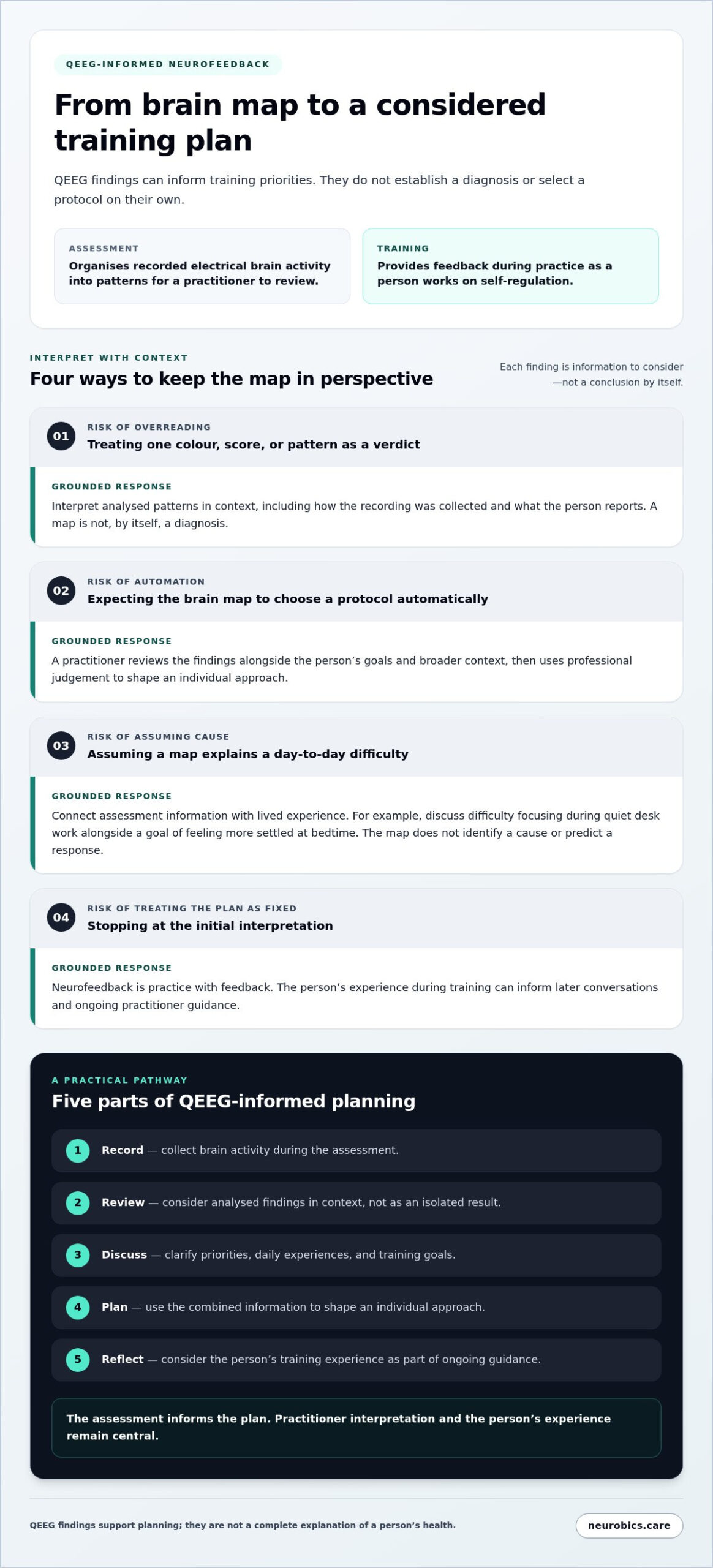
A QEEG analyses patterns in recorded electrical brain activity. An experienced practitioner may use those findings to decide what to explore in neurofeedback training, alongside your goals, experiences, and responses during practice. The map can inform the plan; training is where you receive feedback and practise self-regulation.
This article explains how assessment and training serve different roles, how individual findings can inform a protocol without being overinterpreted, and what expert-guided remote support can involve. You’ll also learn what to consider when deciding whether an at-home, personalised approach fits your goals.
Key Takeaways
- QEEG findings can help inform training priorities, but they need to be interpreted alongside your goals and broader context.
- With qeeg guided neurofeedback, a practitioner interprets the assessment and shapes the protocol; a brain map does not select one automatically.
- A QEEG can provide information about recorded brain activity, but it cannot establish a diagnosis or predict your individual outcome on its own.
- Before considering training, define an everyday goal and look for a clear explanation of how the assessment informs the plan and how your experience will be reviewed.
- Neurobics connects QEEG assessment at home or in-office with tailored, expert-guided neurofeedback training at home.
What Is QEEG-Guided Neurofeedback, and What Does the Assessment Show?
QEEG-guided neurofeedback uses assessment findings to inform a training plan, while neurofeedback provides feedback during practice. QEEG, or quantitative electroencephalography, is the structured analysis of recorded electrical activity from the brain. A resulting brain map displays measured patterns for a practitioner to review. It is not, by itself, a medical diagnosis.
QEEG helps inform the training plan; neurofeedback is the practice through which a person receives feedback and works on self-regulation. This distinction sets realistic expectations. An assessment offers information, not a complete explanation of someone’s health or a prediction of what training will achieve.
For a foundational overview, Quantitative Electroencephalography (QEEG) describes the method and its relationship to EEG analysis. In practice, a map is one part of a wider conversation about a person’s experiences, goals, and relevant history.
What information can a QEEG brain map provide?
QEEG organises recorded brain activity into patterns that a practitioner can examine. Depending on the assessment and analysis, these patterns may help identify areas to explore when considering a training approach. They are not a direct readout of thoughts, abilities, or a specific condition.
A colour, score, or isolated pattern should not be treated as proof of a diagnosis. Its meaning depends on context, including how the recording was collected and what the person reports. For example, someone hoping to work on focus can discuss their attention in everyday situations alongside the assessment findings, rather than assuming one feature of the map explains the difficulty.
Interpretation matters. A practitioner considers the map alongside the person’s goals and wider context, then explains what the results may contribute to planning and what they cannot establish on their own.
How is QEEG-guided training different from a generic protocol?
A generic protocol uses a broadly applied approach. In qeeg guided neurofeedback, assessment findings provide additional information for a practitioner to consider when shaping an individual plan. Personalisation means the plan reflects the person’s assessment and goals. It does not mean the map automatically selects a protocol or removes the need for professional judgement.
Training is an ongoing process, not a one-time interpretation of a brain map. The practitioner can consider the person’s experience during training when providing guidance over time. Individualisation supports a considered approach, but it does not guarantee a particular result.
Neurobics provides QEEG assessment at home or in-office, uses the findings to inform an individual protocol, and offers expert-guided training at home. The at-home QEEG brain mapping process explains how assessment can fit into a guided training plan.
How QEEG Findings Inform a Neurofeedback Training Protocol
QEEG findings can contribute to protocol planning, but they do not generate a training plan by themselves. A practitioner considers the assessment alongside your day-to-day concerns and the goals you want to work toward. In qeeg guided neurofeedback, the aim is to turn information into a considered starting point for training, not to treat a measurement as a complete explanation.
A QEEG-informed protocol is personalised guidance, not a diagnostic verdict. The reasoning should be clear: what the assessment may contribute, how it relates to your goals, and what the training is intended to support.
From recording to practitioner interpretation
A QEEG recording measures electrical activity; it does not directly read thoughts, emotions, or personal experience. A practitioner reviews the analysed patterns in the context of the assessment, rather than drawing conclusions from one number or feature. Interpretation informs planning; it is not a diagnosis or an automatic instruction about which protocol to use.
A practical pathway may look like this:
- Record: collect brain activity during the assessment.
- Review: consider the analysed findings in context instead of treating an isolated result as decisive.
- Discuss: clarify the person’s priorities, daily experiences, and training goals.
- Plan: use the combined information to shape an individual approach.
- Reflect: consider the person’s experience during training as part of ongoing guidance.
This sequence keeps measurement and interpretation distinct. It also makes room to explain uncertainty: a finding may be relevant to planning without proving why a particular difficulty occurs.
From interpretation to individual training goals
Assessment findings may help a practitioner decide which self-regulation goals to prioritise, while the person’s own concerns make those goals relevant to daily life. The process should connect information with intention, not use a one-pattern-to-one-condition shortcut.
Hypothetical example: Someone finds it hard to stay focused during quiet desk work and would also like to feel more settled at bedtime. The practitioner can discuss these separate goals alongside the QEEG findings, then explain which goal to focus on first and how the training plan relates to it. This example does not imply that the map identifies a cause or predicts how the person will respond.
Neurofeedback involves receiving feedback during practice, so the person’s experience can inform later conversations about the plan. For a broader explanation of this feedback process and self-regulation, see the guide to neurofeedback and brain self-regulation.
If you’re considering an assessment-led approach, Neurobics can help you discuss your goals and how guided training may relate to them.
What QEEG-Guided Neurofeedback Can, and Cannot, Tell You
A QEEG map can contribute information to a neurofeedback plan, but it cannot diagnose a condition or predict exactly how training will affect you. Recorded brain activity is one source of information; diagnosis and decisions about individual care require a broader clinical assessment. Neurofeedback is a training approach, not a guaranteed treatment or a substitute for appropriate clinical care.
What QEEG can inform
- Patterns in the electrical activity recorded during the assessment.
- Topics a practitioner may consider when developing an individual training plan.
- A discussion connecting assessment information with your goals and everyday experience.
What QEEG cannot establish on its own
- Whether you have ADHD, anxiety, autism, or another diagnosis.
- The cause of a difficulty or the full picture of your mental or physical health.
- Whether neurofeedback will help you, how much change to expect, or when it might happen.
Assessment findings are information, not a diagnosis
QEEG describes recorded electrical activity. A practitioner interprets it in the context of the assessment and the person’s wider situation. A particular pattern is not proof of a condition. For example, a brain map alone cannot establish ADHD or explain why someone finds it difficult to focus. If you have questions about diagnosis, seek an appropriate clinical assessment. A QEEG-guided training plan does not answer that question by itself.
This distinction also helps prevent overreading a colour, score, or comparison on a map. Such details may raise a question for discussion, but they do not represent the whole person. Responsible interpretation keeps conclusions proportionate to what was measured.
Personalised training does not mean predictable results
An individual protocol reflects information considered relevant to that person’s goals; it does not guarantee symptom relief or a fixed timeline. People’s experiences differ, and a plan is best understood as a guided approach that can be reviewed over time, not a promise of a particular outcome. Progress can be discussed in relation to the person’s experience and goals without assuming every change is caused by training.
For example, someone with a focus goal might reflect on how concentration feels during everyday tasks and share that experience with the practitioner. This conversation can inform ongoing guidance, but it does not turn an observation into proof of a specific effect. Clear expectations leave room for thoughtful review and adjustment.
For more context on guided training, read the complete guide to professional at-home neurofeedback. If you’re weighing whether an assessment-led approach fits your goals, Neurobics can help you discuss your priorities.
How to Evaluate Whether QEEG-Guided Neurofeedback Fits Your Goals
Start with the everyday change you hope to work toward, rather than with a label or a brain map. You might want to stay focused during desk work, build a steadier bedtime routine, or feel more able to regulate stress during demanding days. A specific goal gives you and the practitioner something practical to discuss when considering whether qeeg guided neurofeedback fits your needs.
A thoughtful intake should clarify what you want to work on, how assessment findings relate to the proposed training, and how the plan will be reviewed over time. The value lies in a structured, individually guided process, not promises about a particular result.
Questions that clarify the purpose of assessment
Before an assessment, consider what you hope it will help inform. During an intake, you should be able to describe your priorities in your own words and understand how the practitioner connects them with the proposed training goals. Useful questions include:
- Goals: What everyday experience would I like to work on, and how does it affect my routine?
- Interpretation: How do the assessment findings relate to that goal, and what can’t they tell me?
- Protocol rationale: Why is this training approach being considered for my priorities?
- Review: How will we discuss my experience during training and decide whether the plan needs attention?
Clear answers help you understand the reasoning without expecting the assessment to provide certainty. If your main concern is sleep, for example, describe the difficulty in practical terms, such as trouble settling at bedtime, rather than expecting a map to explain every factor affecting sleep.
Matching the approach to your circumstances
Fit is practical as well as personal. Remote training may be easier to integrate if you can make room in your routine for home practice and live guidance. Consider whether you have a suitable place to train, whether using the supplied equipment at home feels manageable, and whether the support format fits your schedule. The aim is a process you can realistically engage with, not one that adds avoidable strain.
Neurobics provides remote, expert-guided neurofeedback. Assessment is available at home or in-office, and training takes place at home with professional support. Remote programmes include personalised protocol design and weekly live sessions. This gives you a clear picture of the structure and guidance involved as you consider whether the format suits your circumstances.
Neurofeedback is a training approach, not emergency mental health care or psychotherapy. If you need urgent support or an assessment for a mental health condition, seek appropriate clinical care for that need. An intake can still help clarify whether guided neurofeedback aligns with a separate goal, such as focus or stress regulation.
To explore whether remote, assessment-informed training fits your goals, arrange an intake with Neurobics and discuss your priorities and the process.
How Neurobics Connects QEEG Assessment with Remote Neurofeedback
At Neurobics, assessment findings inform remote neurofeedback without being treated as a complete explanation of the person. A brain map is one part of the conversation; your priorities and experience help give the assessment practical meaning. This keeps the focus on a considered training process rather than interpreting a report in isolation.
If you’re new to QEEG, you don’t need technical knowledge or a theory about what your results mean before an intake. Start with what you hope to understand and consider how the information relates to your circumstances.
What the Neurobics remote model involves
Neurobics’ practitioner-guided approach uses assessment information to inform training. The aim is to make the reasoning behind the approach understandable and connect it with your individual priorities. You bring your perspective, while practitioner expertise helps place the assessment in context.
Neurobics’ remote neurofeedback support combines at-home training with professional guidance. Training includes personalised protocol design and weekly live sessions, with equipment shipped directly to you for remote use. This structure helps you understand how assessment-informed training and ongoing support fit together.
A considered next step after learning about QEEG
You can approach an intake without a definitive explanation for your concerns. Describe what prompted your interest, what you would like to understand better, and what would help you feel comfortable discussing the process. If you already have assessment information, note which parts feel unclear or raise questions.
A useful conversation leaves room for uncertainty. Ask for explanations in everyday language, share what matters most to you, and take time to reflect on whether the proposed direction feels relevant. There’s no need to turn an assessment into a conclusion before discussing it.
To talk through your questions and learn what an intake involves, contact Neurobics about an intake. The conversation can help you consider a next step at your own pace.
Take the Next Step at Your Own Pace
Choosing whether to explore qeeg guided neurofeedback doesn’t require you to have every answer in advance. Begin with what you hope to work on, then use an intake conversation to understand how assessment and training might relate to that goal. A useful next step leaves you better informed and gives you space to consider whether the approach fits your circumstances.
Neurobics has more than 15 years of experience supporting clients with neurofeedback. The focus is on understanding the person behind the assessment and discussing a considered path forward, without promising a particular outcome.
If you’d like to explore assessment-informed, remote training, arrange an intake with Neurobics to discuss your priorities and learn how the process works.
Frequently Asked Questions
Is QEEG-guided neurofeedback the same as a brain scan?
No. QEEG records electrical activity from the scalp; it does not produce structural images of the brain like an MRI or CT scan. A QEEG report is not designed to show anatomy or investigate a suspected physical injury. If a clinician has recommended medical imaging, discuss that recommendation with them rather than treating QEEG as an alternative.
Can a QEEG tell whether someone has ADHD or anxiety?
No. If you’re seeking clarity about ADHD or anxiety, arrange an assessment with an appropriate clinician and describe what you’ve noticed, when it occurs, and how it affects daily life. For a child, examples from home and school may help explain the concern. A QEEG report can be discussed separately as information relevant to training, but it should not be used to settle a diagnostic question.
Does QEEG-guided neurofeedback work for everyone?
No single approach can be assumed to suit every person. Before beginning, choose a goal that can be discussed in everyday terms, such as staying with a work task or feeling more settled at bedtime. You can keep brief notes on relevant situations and bring your observations to follow-up discussions. This provides a practical way to reflect on your experience without assuming what the result will be.
How is QEEG-guided neurofeedback different from standard neurofeedback?
The term “standard neurofeedback” can describe different approaches, so the label alone may not explain how a plan is designed. A useful distinction is what assessment information informs the training and how the practitioner chooses its focus. Ask what role QEEG plays in the approach and what other information about your needs contributes to planning.
Is remote QEEG-guided neurofeedback supervised by a practitioner?
Neurobics’ remote training is expert-guided, with weekly live sessions and professional support. Ask how guidance is provided, what to do if you have questions during practice, and how to share your experience with the practitioner. These details help you understand the support relationship and your role in it. Remote training is not the same as independently interpreting brain data or choosing a protocol without professional input.
How long does QEEG-guided neurofeedback take?
The time involved depends on the programme and your circumstances. To understand the commitment, consider the stages separately: how the assessment is scheduled, how often training is planned, and how progress discussions fit into the programme. You can also discuss how to manage training if your routine changes. These questions help you plan realistically without assuming that a particular duration guarantees a particular result.
Can QEEG-guided neurofeedback replace therapy or medication?
No. Don’t stop, start, or change prescribed medication because of a QEEG result or neurofeedback plan. Discuss treatment decisions with the clinician responsible for your care, especially if you’re considering adding a new approach. Neurofeedback has a different role from psychotherapy and medication, so clarify how it would fit alongside existing support rather than treating it as a substitute.
