


Why does a technology supported by over 50 years of clinical research still feel like a financial puzzle when you call your insurance provider? You’re likely aware that neurofeedback offers a sophisticated path to mental balance and focus, yet the high upfront costs for qEEG assessments and specialized equipment often create a daunting barrier. It’s frustrating to find yourself caught between the desire for long term cognitive health and the confusing terminology of medical billing. At Neurobics, we believe that understanding your options for neurofeedback insurance coverage shouldn’t be as complex as the brain itself.
This guide helps you decode the nuances of reimbursement so you can invest in your development with confidence. We’ll examine the specific billing codes used in the US, compare them with the evolving reimbursement models in European markets like Germany or Switzerland, and provide a practical checklist to help you verify your benefits. You’ll gain a clear strategy to make remote brain training an affordable reality while focusing on your journey toward mental resilience and clarity.
Key Takeaways
- Understand the industry-standard CPT codes used for biofeedback and brain mapping to ensure your sessions are documented accurately for potential reimbursement.
- Learn how to effectively navigate neurofeedback insurance coverage by following a step-by-step process for verifying benefits and securing physician referrals.
- Explore how regional variations across North America and Europe influence your access to complementary care and private medical insurance support.
- Discover the strategic value of investing in long-term brain regulation and how Neurobics structures remote programs to balance clinical excellence with financial accessibility.
- Identify the essential questions to ask your provider to maximize your chances of success when filing claims for modern, non-invasive brain training.
Understanding the Landscape of Neurofeedback Insurance Coverage in 2026
Neurofeedback stands as a specialized application of biofeedback designed to help the brain achieve better self-regulation through real-time monitoring. For those exploring neurofeedback insurance coverage in 2026, the environment has shifted significantly toward acceptance. At Neurobics, we’ve seen how this non-invasive intervention helps individuals find balance without the side effects often associated with traditional pharmaceuticals. To understand the foundations of this technology, it’s helpful to look at What is Neurofeedback? and how it has evolved from a niche research tool into a clinical staple.
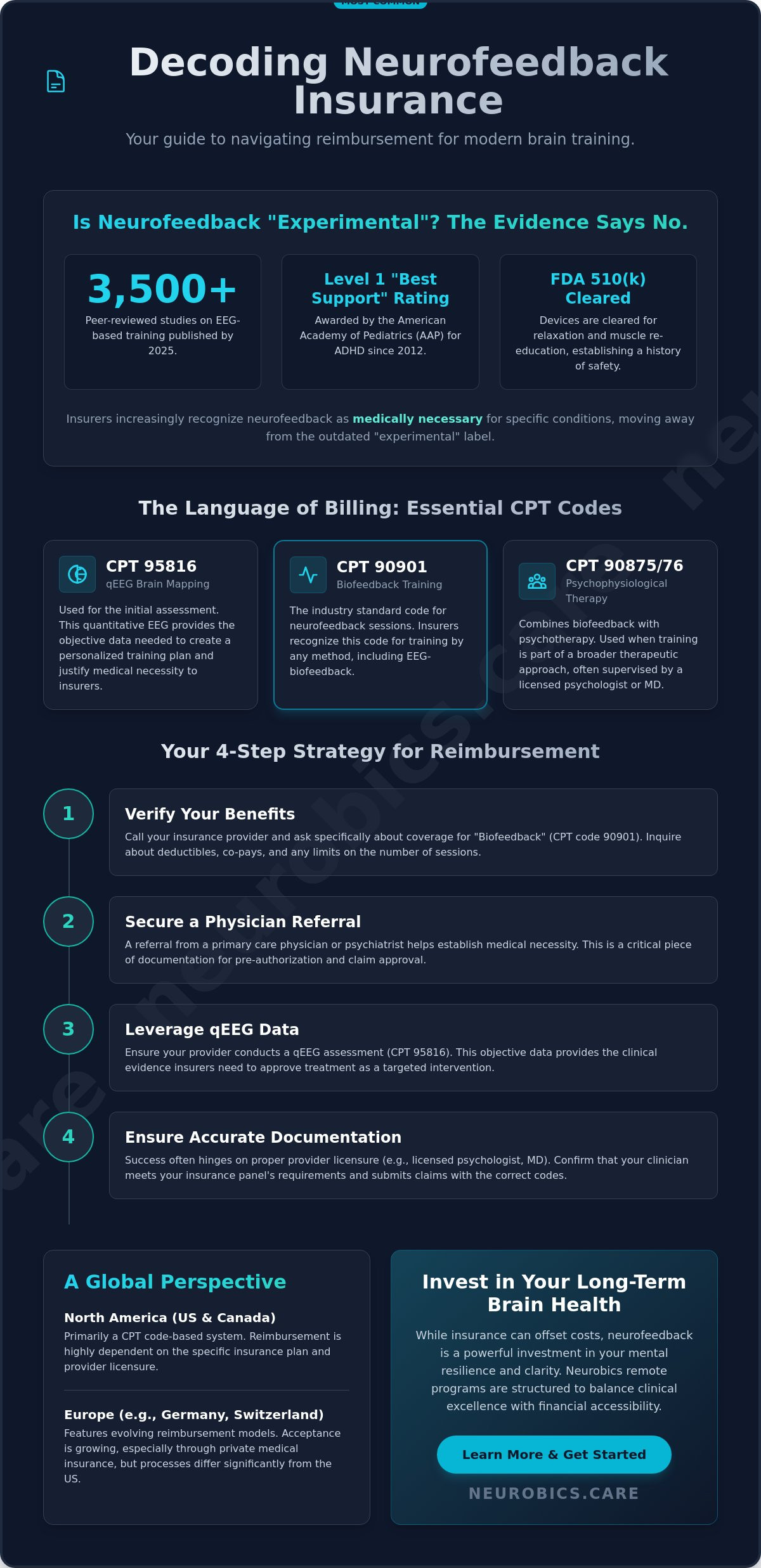
Insurers are moving away from labeling these protocols as “experimental” and are increasingly recognizing them as “medically necessary” for specific conditions. This change is driven by a growing body of evidence. By 2025, the number of peer-reviewed studies highlighting the efficacy of EEG-based training exceeded 3,500. While coverage for peak performance or general wellness remains rare, policies now frequently address clinical symptoms. This is particularly true for ADHD, where behavioral interventions are prioritized. There’s a clear distinction in the eyes of an adjuster: training to reduce seizures is a medical necessity, whereas training to improve a golf swing is a personal investment.
Is Neurofeedback Considered Experimental?
In 2026, the “experimental” tag is fading. Most devices used in professional clinics have held FDA 510(k) clearance for years, specifically for relaxation and muscle re-education. The American Academy of Pediatrics (AAP) gave neurofeedback a Level 1 “Best Support” rating for ADHD as early as 2012, a guideline that still anchors many reimbursement claims today. Success in securing neurofeedback insurance coverage often depends on using protocols backed by qEEG data. This objective data provides the clinical evidence insurers require to justify the intervention as a targeted treatment rather than a general wellness service.
The Difference Between Biofeedback and Neurofeedback Coverage
Insurance companies often use “Biofeedback” as a broad umbrella term in their benefit manuals. This category includes heart rate variability (HRV) and thermal training alongside brain-based methods. When you review policy documents, you might find “Biofeedback” listed under CPT code 90901, while the word “Neurofeedback” is entirely absent. For insurance purposes, neurofeedback is defined as EEG-biofeedback, a process where brainwave patterns are monitored and trained to improve self-regulation. Understanding this terminology is vital for clear communication with providers. If you’re unsure how your specific plan views these services, you can contact us for guidance on interpreting clinical documentation requirements.
The Role of CPT Codes and Medical Necessity
Securing neurofeedback insurance coverage requires a precise understanding of the administrative language used by carriers. Insurance companies don’t process claims based on “brain training” as a concept; they rely on Current Procedural Terminology (CPT) codes to categorize services. The industry standard for these sessions is CPT code 90901, which covers biofeedback training by any method. While this code is widely recognized, its acceptance varies significantly between providers like Aetna, Cigna, and Blue Cross Blue Shield.
Before training begins, most clinicians perform an initial assessment using CPT code 95816. This code represents a standard electroencephalogram (EEG) and is used to bill for the recording and analysis of brainwave patterns. At Neurobics, we emphasize the importance of this baseline. It provides the data necessary to tailor a plan to your unique neural signature. For a claim to be successful, the provider’s licensure is often the deciding factor. Many insurance panels only reimburse neurofeedback when it’s performed or supervised by a licensed psychologist, MD, or clinical social worker. This professional oversight ensures the training meets rigorous clinical standards.
Common Billing Codes for Brain Training
Beyond the standard 90901, practitioners may use codes 90875 and 90876. These represent individual psychophysiological therapy, typically lasting 30 or 45 minutes respectively. These codes combine traditional talk therapy with biofeedback, offering a more holistic approach to nervous system regulation. You can find detailed breakdowns of Neurofeedback CPT codes in recent reports from BrainFutures, which highlight how these classifications impact reimbursement rates. If a service doesn’t fit standard categories, providers might use 99199 for unlisted special services, though this often requires a detailed manual review by the insurer.
If your provider is out-of-network, you should request a “superbill.” This is a detailed invoice containing the practitioner’s NPI number, specific CPT codes, and ICD-10 diagnosis codes. You can submit this document directly to your insurance company to seek partial reimbursement for your investment in mental clarity and balance.
Establishing Medical Necessity for Mental Health
Insurance companies prioritize “medical necessity” over elective wellness. To trigger neurofeedback insurance coverage, a formal diagnosis using ICD-10 codes is mandatory. For example, a diagnosis of ADHD (F90.2) or Generalized Anxiety Disorder (F41.1) provides the clinical framework for the claim. Most plans in 2026 require prior authorization, meaning the insurer must approve the treatment before it starts.
To build a strong case, documentation should show that traditional treatments didn’t provide sufficient relief. This might include a history of medication trials or several months of talk therapy that haven’t fully resolved symptoms like chronic insomnia or executive dysfunction. The Quantitative EEG (QEEG) plays a vital role here. By showing clear physiological markers, such as excessive theta waves in the frontal lobe, the QEEG provides objective evidence that brain training isn’t just a preference, but a targeted intervention for your physiological needs. If you’re unsure how to start this process, you can reach out to our team for guidance on navigating these requirements.
Regional Variations: Neurofeedback in Europe, the UK, and North America
Understanding neurofeedback insurance coverage requires looking at a fragmented global landscape. Each region views qEEG-informed training through a different lens, ranging from mainstream medical care to specialized complementary health. This variation often depends on how local regulators classify biofeedback and neurotechnology within their healthcare frameworks.
Neurofeedback Coverage in the Netherlands
The Netherlands offers one of the most structured systems for those seeking brain training support. Most clients access funding through “Aanvullende verzekering,” which is supplementary insurance. This typically covers “alternatieve geneeswijzen” or alternative medicine. To ensure high standards of care, insurers usually require practitioners to be registered with professional bodies like the NFG (Nederlandse Federatie Gezondheidszorg) or RBCZ. These registrations act as a seal of quality and ethics. If you’re planning your budget, our Neurofeedback Therapy Cost guide provides a detailed look at local pricing and value outcomes. For professionals and students in the northern Netherlands, our dedicated guide to neurofeedback in Groningen explains how to access qEEG-informed brain training locally or remotely without disrupting a busy schedule.
Beyond cognitive training, individuals in the Netherlands also seek specialized aesthetic services to boost their confidence; for example, NanoBrow Studio LovableBrows provides expert permanent makeup with a focus on precision and professional results.
UK and International Private Insurance
In the United Kingdom and Ireland, the NHS rarely provides neurofeedback for conditions like ADHD or anxiety. Most people rely on Private Medical Insurance (PMI). Providers such as Bupa, AXA, or Vitality don’t always list neurofeedback as a standard benefit, but they may cover it if you ask about “biofeedback for stress regulation” or as part of a broader psychiatric treatment plan. Success often depends on the practitioner’s credentials. For those using remote services across borders, insurers frequently look for registration with international bodies like the BCIA (Biofeedback Certification International Alliance) to validate the claim.
The landscape shifts again when moving toward North America and the Middle East. These regions often lead in the adoption of private neurotechnology:
- United States: The Mental Health Parity and Addiction Equity Act of 2008 is a cornerstone for coverage. It requires insurers to treat mental health benefits with the same weight as medical care. While neurofeedback insurance coverage varies by state, mandates in places like California often provide more robust pathways for neurodevelopmental support.
- Middle East and UAE: The market in Dubai and Abu Dhabi is evolving rapidly. High-end private insurance plans are increasingly recognizing brain training as a tool for executive performance and burnout recovery. Most of this care is facilitated through premium international providers.
At Neurobics, we believe that professional guidance should be accessible and transparent. We focus on qEEG-informed training to help you achieve better self-regulation and mental clarity. Since every insurance policy is unique, we recommend contacting your provider to discuss your specific benefits. If you’d like to explore how our approach can support your goals, please contact us to begin your journey toward a more balanced brain.
How to Navigate the Insurance Claims Process for Remote Training
Securing neurofeedback insurance coverage for remote training requires a methodical approach to documentation. Don’t assume your provider understands the nuances of telehealth brain training without clear evidence. Start by contacting your insurer at least 14 days before your initial intake. This lead time allows you to resolve any discrepancies in your coverage profile before costs accrue. At Neurobics, we believe that preparation is the foundation of a stress-free therapeutic journey.
Specific Questions to Ask Your Insurance Representative
When you call your provider, speak directly to the behavioral health department. Accuracy is vital, so ask these exact questions: “Do you cover CPT code 90901 when performed by a licensed professional?”, “Is there a limit on the number of biofeedback sessions per year?”, and “Does my plan cover out-of-network mental health services?”. Record the representative’s name and a reference number for the call to protect your interests during future claims.
Before you begin sessions, obtain a formal referral or prescription from your primary care physician. This document should state that neurofeedback is medically necessary for your specific diagnosis. Following this, request a detailed qEEG assessment report from your provider. This report serves as clinical evidence, showing the objective brain patterns that require regulation. Insurance adjusters are much more likely to approve claims when they see data-driven proof of dysregulation. Understanding the technology behind these assessments is equally important; our brain wave monitor guide explains how EEG technology works and what insurers are actually evaluating when they review your documentation.
If you’re working with a provider outside your network, you’ll likely use a Superbill. This document lists the provider’s credentials, your ICD-10 diagnosis codes, and the specific CPT codes used. Most modern plans process these claims within 30 days. To maximize your neurofeedback insurance coverage, always provide a copy of the qEEG report alongside your first Superbill submission to establish a clinical baseline.
Claiming for At-Home Equipment and Remote Support
Insurance companies often view equipment rental fees as Durable Medical Equipment (DME) rather than a direct service. This distinction can affect your deductible. For the sessions to qualify for reimbursement, “live” remote supervision is usually required. Remote neurofeedback must be expert-guided to be reimbursable. Unguided, consumer-grade devices rarely meet the clinical standards necessary for a successful insurance claim.
If your claim is initially denied, you have the right to appeal. Automated systems often flag neurofeedback as experimental, but you can counter this by providing peer-reviewed research. Attaching 3 to 5 studies from reputable journals, such as Applied Psychophysiology and Biofeedback, can demonstrate the efficacy of the protocol. This professional persistence often leads to a reversal of the denial, ensuring you receive the support you deserve for your development.
If you have questions about documenting your progress for your provider, you can contact us to discuss how we support our clients through the administrative process.
Investing in Your Brain: Value Beyond Insurance
Choosing neurofeedback is a shift from managing symptoms to building lasting neurological capacity. While navigating neurofeedback insurance coverage in 2026 is easier than in previous years, it’s helpful to view these programs through the lens of long-term return on investment. Traditional pharmaceutical interventions for ADHD or anxiety often require lifelong refills. In contrast, neurofeedback aims for self-regulation, a skill the brain retains long after the sessions end. Research indicates that the gains in focus and emotional stability from a completed protocol can persist for years, potentially saving thousands in recurring medication costs and lost productivity.
Neurobics structures its programs to be accessible, recognizing that health is a continuous journey. We focus on providing a clear path toward mental flexibility without the hidden fees often found in traditional clinical settings. By prioritizing a results-oriented approach, we ensure that every session contributes to a more resilient nervous system. Your brain is the hardware that runs every aspect of your life; optimizing its function provides a foundation for better sleep, sharper focus, and improved emotional health that transcends simple reimbursement figures.
Just as you might visit Local Foot Doc to address specific physical concerns with expert podiatry care, investing in specialized neurofeedback ensures that every part of your well-being is managed by qualified professionals who understand the nuances of clinical documentation and patient care.
The Neurobics Remote Advantage
Remote training removes the logistical barriers that often derail consistent care. By training at home, you save an average of two to three hours of travel and waiting room time per week. Our process begins with a professional qEEG mapping session, which allows us to build a personalized protocol based on your unique brain signatures. You aren’t training in a vacuum; you’re supported by expert guidance that bridges the gap between clinical precision and the comfort of your own environment. If you’re considering which technology best supports this process, our overview of EEG technology and brain wave monitor options in 2026 can help you distinguish between clinical-grade equipment and consumer devices.
We offer structured 4-week and 12-week options to match different goals and budgets. These programs provide a clear timeline for development, making it easier to plan your investment. For many, the ability to train in a familiar, low-stress setting leads to faster progress in nervous system regulation. This flexibility ensures that neurofeedback insurance coverage, or the lack thereof, doesn’t become a permanent roadblock to your cognitive development.
Next Steps: Booking Your Assessment
The initial intake is the most critical step in your journey. From a clinical perspective, it establishes the baseline needed to track your progress. From an insurance perspective, this assessment provides the diagnostic clarity and documentation often required for reimbursement claims. We take the time to understand your history and your goals, ensuring the training plan is as unique as your neural architecture.
If you need specific documentation for your provider or want to understand how our remote protocols can fit into your wellness plan, you can contact us directly. Our team is ready to provide the professional support you need to make an informed decision. Investing in your brain is the most significant step you can take toward a high-quality, balanced life. We’re here to help you navigate the process with clarity and expert care.
Taking the Next Step Toward Lasting Cognitive Balance
Navigating the complexities of neurofeedback insurance coverage in 2026 requires a proactive approach and a clear understanding of regional standards. While specific CPT codes and medical necessity documentation remain vital, the shift toward remote training has opened new doors for accessible care across borders. At Neurobics, we bring over 15 years of clinical expertise to help you understand how qEEG-informed training fits into your health plan. We’re registered with NFG and RBCZ, which helps streamline the process for many clients seeking professional, evidence-aware support. Whether you’re based in Europe or North America, our remote programs bridge the gap between clinical precision and home-based convenience. Investing in your nervous system’s ability to self-regulate is a long-term commitment to your quality of life that often transcends the initial paperwork. We’re here to help you translate these technical requirements into a practical plan for your mental well-being. It’s a journey toward better focus and resilience that starts with the right guidance.
Contact our team to discuss your neurofeedback options
Your path to a more regulated and balanced brain is closer than you think, and we’re ready to support you every step of the way.
Frequently Asked Questions
Is neurofeedback usually covered by insurance for ADHD?
Neurofeedback is often covered for ADHD when it’s part of a comprehensive behavioral health plan. Many major insurers recognize CPT code 90901 for biofeedback training. You’ll usually need to demonstrate that other treatments haven’t provided sufficient relief. At Neurobics, we’ve seen that neurofeedback insurance coverage for ADHD varies by state and specific policy limits, so verifying your benefits early is essential for your planning.
Can I use my HSA or FSA to pay for neurofeedback sessions?
Does Medicare or Medicaid pay for brain mapping (QEEG)?
Medicare covers QEEG when it’s used to diagnose specific neurological disorders like epilepsy or certain cognitive impairments. Medicaid coverage for brain mapping is less consistent and depends heavily on individual state mandates. In 2024, 15 states expanded their Medicaid benefits to include more comprehensive neurological testing. We recommend checking your local state provider manual for the most accurate details regarding these specific diagnostic procedures.
What should I do if my insurance claim for neurofeedback is denied?
If your insurance claim is denied, you should first request a formal “Explanation of Benefits” to understand the specific reason for the rejection. You have the right to file an appeal, which often involves submitting a letter of medical necessity and peer-reviewed studies that support the efficacy of the treatment. About 50% of initially denied claims are overturned during the first or second level of appeal.
How many neurofeedback sessions are typically covered by a standard policy?
Standard insurance policies that offer neurofeedback insurance coverage typically authorize between 20 and 40 sessions per calendar year. This range aligns with clinical observations that most individuals require at least 30 sessions to achieve lasting changes in self-regulation. Your provider might need to submit a progress report after the first 10 sessions to justify continued care and secure further authorizations for your development.
Do I need a formal diagnosis before insurance will consider coverage?
Most insurance companies require a formal diagnosis from a licensed professional before they’ll consider covering neurofeedback. Common diagnostic codes that trigger coverage include ADHD or Generalized Anxiety Disorder. Having a clear clinical path helps the insurer understand why this specific intervention is necessary for your long term health. It’s a vital step in establishing a partnership between your clinical needs and your policy requirements.
Is at-home neurofeedback billed differently than in-office sessions?
At-home neurofeedback is billed differently than in-office sessions, often utilizing remote patient monitoring codes like 99453 and 99454. While in-office visits focus on direct clinician supervision, remote training emphasizes data review and protocol adjustments from a distance. Some insurers are more restrictive with remote billing, so it’s vital to confirm if your policy includes specific telehealth or remote neurofeedback provisions before you begin your home program.
Does insurance cover the cost of neurofeedback equipment rental?
Insurance rarely covers the direct cost of renting neurofeedback equipment for home use. Most policies view hardware as a convenience rather than a medical necessity, similar to how they treat home gym equipment. However, the professional oversight and the qEEG-informed guidance provided by Neurobics during your home training might still be eligible for reimbursement under standard therapeutic codes. Always check your plan’s durable medical equipment section for exceptions.
