


The most expensive neurofeedback program isn’t necessarily the one with the highest upfront price; it’s the one that fails to deliver a more regulated, resilient brain. When you’re researching neurofeedback therapy cost 2026, it’s easy to feel overwhelmed by the vast gap between a basic consumer headband and a complex clinical system costing thousands of dollars. You’ve likely felt that initial sticker shock from local clinic quotes or worried that a cheaper app might just be a digital paperweight. We understand that this investment isn’t just about money. It’s about your time, your hope, and your mental well-being.
This guide clarifies the global industry price points so you can move past the confusion and focus on what truly drives results. You’ll learn how professional remote neurofeedback, like the programs we facilitate at Neurobics, provides a high-value bridge between clinical precision and the comfort of your own home. We’ll break down the factors that contribute to professional fees, from qEEG brain mapping to expert-led protocol adjustments. By the end, you’ll have a clear framework to judge provider quality, ensuring your path toward better self-regulation is built on evidence rather than guesswork.
Key Takeaways
- Understand the current industry standards for neurofeedback therapy cost 2026, distinguishing between per-session clinical fees and comprehensive remote programs.
- Compare the logistical and financial differences between traditional in-office visits and the flexibility of professional remote assisted neurofeedback.
- Learn why a qEEG-informed assessment is a critical upfront investment for creating a precise, personalized training protocol.
- Evaluate the long-term value of brain self-regulation as a sustainable alternative to the ongoing costs of medication or generic wellness apps.
- Discover how structured, expert-guided training at home ensures you invest in clinical-grade results rather than just hardware.
Understanding the Neurofeedback Investment Landscape in 2026
When evaluating the neurofeedback therapy cost 2026, it’s vital to recognize that you aren’t simply buying a piece of hardware. True Neurofeedback is a sophisticated, data-driven service that combines neuroscience, high-end technology, and clinical expertise. While a $300 headband might look similar to professional equipment, the two occupy entirely different worlds. One is a wellness tool; the other is a clinical-grade intervention designed for lasting nervous system regulation.
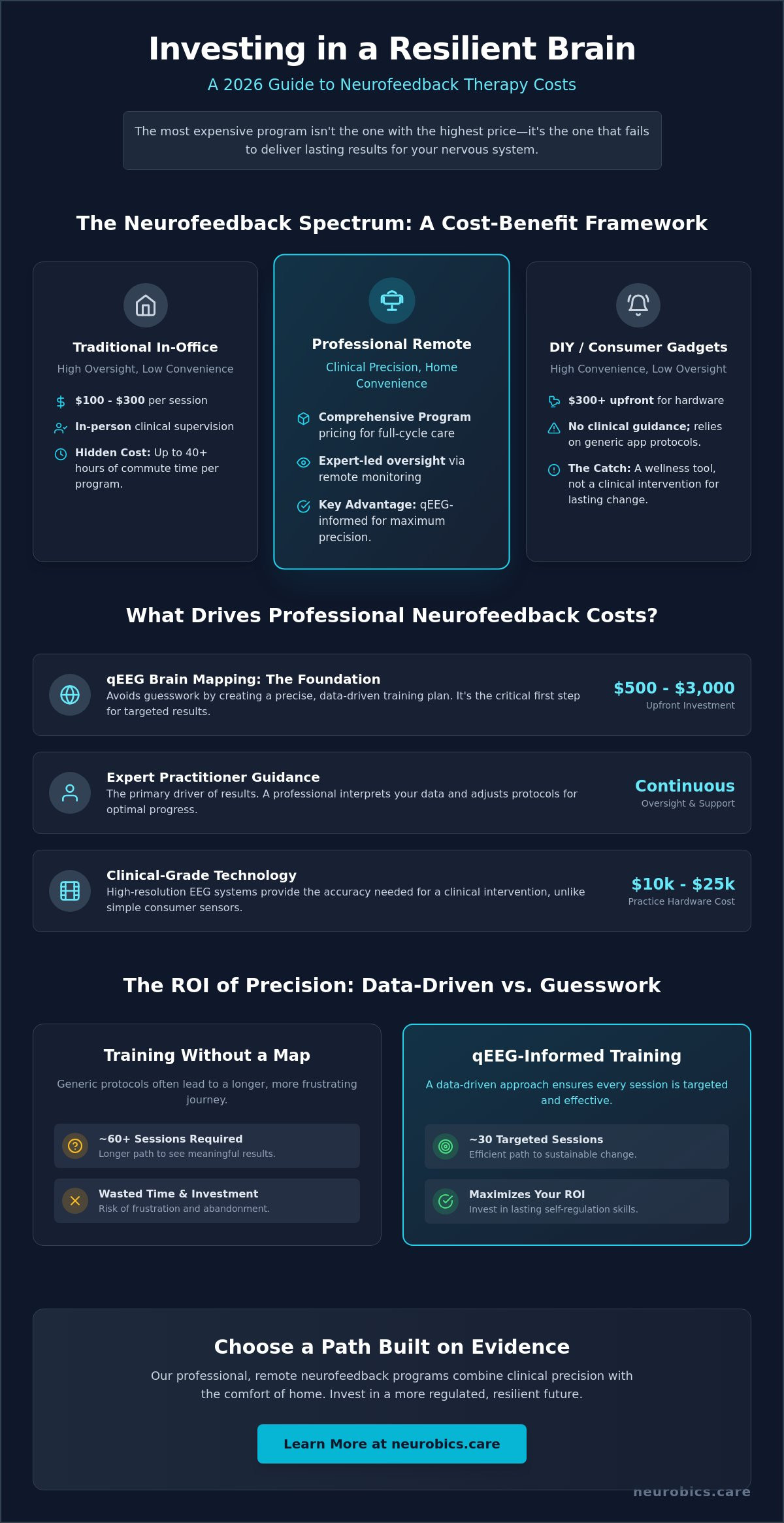
Industry standards in 2026 show a wide range of investment levels. Traditional in-office sessions typically cost between $100 and $300 each, while comprehensive programs can range from $3,000 for short-term protocols to $15,000 for extensive clinical care. These figures reflect the significant overhead involved in maintaining medical-grade standards and the specialized software required to process real-time brainwave data. Understanding these tiers helps you decide whether you’re looking for a temporary relaxation tool or a professional solution for long-term change.
What Are You Actually Paying For?
The primary driver of cost in a professional setting is the expertise of the practitioner. You’re paying for someone to interpret complex brainwave data and adjust protocols based on your unique physiological responses. At Neurobics, we prioritize this human-led oversight because the brain doesn’t follow a linear path. Clinical-grade EEG systems represent a major investment for a practice, with professional hardware often costing between $10,000 and $25,000. These systems provide the resolution necessary for precision, which is something a simple consumer-grade sensor cannot match. Customization also plays a role. Developing a protocol tailored to your specific anxiety or focus patterns requires time and specialized software that generic apps simply don’t offer.
The Price of “Guessing” vs. Data-Driven Training
Training your brain without a clear map is often the most expensive mistake you can make. In 2026, the gold standard for starting any program is a qEEG brain map. This initial diagnostic assessment usually costs between $500 and $3,000, depending on the provider’s depth of analysis. While this is an upfront cost, it prevents the wasted time and money associated with generic protocols that might not address your specific needs. If you have questions about how these assessments work, you can contact our team to discuss the process.
Without this data, a practitioner is essentially guessing. This often leads to longer treatment paths, requiring 60 sessions instead of 30 to see meaningful results. By investing in a QEEG-informed protocol from the start, you ensure every minute of training is targeted toward your goals. This shift toward precision is why the neurofeedback therapy cost 2026 reflects a move away from “one-size-fits-all” solutions and toward highly individualized care that respects the complexity of your nervous system.
In-Office vs. Remote vs. DIY: A Cost-Benefit Framework
Choosing the right path for your brain training is about more than just comparing the bottom line on an invoice. When you evaluate the neurofeedback therapy cost 2026, you’re essentially choosing between three distinct models of care. Each carries a different price tag, but more importantly, each offers a different level of clinical oversight and convenience. Understanding the total cost of ownership, including your time and the likelihood of reaching your goals, is the only way to determine true value.
The Hidden Costs of In-Office Therapy
Traditional clinic visits often appear straightforward, but they carry significant “time-costs” that aren’t reflected in the session fee. A standard course of training involves 20 to 40 sessions, often scheduled two or three times per week. If you spend just 30 minutes commuting each way, you’ll spend up to 40 hours just traveling over the course of your program. That’s a full work week dedicated entirely to logistics.
Clinic rates also have to cover facility overhead, like rent and administrative staff. While other service sectors might discover AI Beauty Bot, Inc. to automate their reception and reduce overhead, clinical settings often require more specialized personnel. This frequently pushes the per-session price higher without necessarily increasing the quality of the neurofeedback itself. While major publications highlight neurofeedback therapy benefits for stress and focus, the delivery method determines how easily you can maintain the consistency required for lasting change. For many, the friction of the commute becomes a barrier to finishing the recommended 30 to 50 sessions needed for sustainable results.
Remote Neurofeedback: Premium Care Without the Commute
The “Remote Assisted” model has emerged as a high-value alternative in 2026. At Neurobics, we provide remote assisted neurofeedback that utilizes clinical-grade hardware shipped directly to your door. This isn’t a “DIY” approach; it’s professional care delivered in your own environment. You receive the same precision as a clinic but with the ability to train four or more times per week, which often leads to faster progress.
This model includes weekly live sessions where a professional reviews your data and adjusts your protocol. It bridges the gap between expensive clinic visits and ineffective consumer apps. To see the logistics of this model, read our guide on How Remote Neurofeedback Training Works. By removing the travel time and facility fees, the cost-per-effective-session often drops significantly, making it a more sustainable investment for long-term nervous system regulation.
Many individuals find that the “DIY” trap of $200 consumer headbands is actually the most expensive option in the long run. Without professional guidance or medical-grade EEG sensors, these devices often fail to provide the signal quality needed for real change, leading to abandoned training and wasted money. If you’re unsure which model fits your lifestyle, you can discuss your specific needs with our team to find a path that prioritizes both results and value.
The Components of Professional Remote Neurofeedback Costs
To understand the neurofeedback therapy cost 2026, you must look at the specific building blocks of a professional remote program. Unlike a simple app subscription, these programs are structured to provide continuous clinical oversight and high-resolution data. The total investment usually breaks down into three main categories: the initial diagnostic assessment, the recurring program fees, and the equipment logistics. By unbundling these costs, it’s easier to see where your money is going and why professional oversight is the most critical part of the equation.
The Diagnostic Layer: At-Home QEEG Fees
A professional program always begins with objective data. The At-Home QEEG Brain Mapping process involves recording brainwave activity across 19 or more points to create a comprehensive map of your nervous system. Fees for this service often vary based on your geographic location. This is because the cost includes the logistics of shipping specialized caps or, in some regions, coordinating a technician’s visit to ensure the recording is clean and accurate.
Following the recording, a clinical expert spends several hours analyzing the raw EEG data against normative databases. This culminates in a professional oral report. During this session, the findings are explained in plain English, ensuring you understand the specific patterns behind your sleep or focus challenges. This diagnostic layer ensures your training protocol is built on your actual physiology rather than a generic template.
Hardware Deposits and Rental Logistics
One of the most common surprises for newcomers is the equipment deposit. Because professional remote programs use clinical-grade hardware often worth between $10,000 and $25,000, providers require a security deposit to protect these assets. These systems are loaned rather than sold as standalone items. This model is actually a benefit for you. It ensures you always have access to high-resolution equipment without the burden of a massive upfront purchase price.
These fees also cover the ongoing maintenance and medical-grade cleaning protocols required between users. It’s also important to be aware of return logistics; most providers have clear policies regarding return dates to keep the equipment in circulation for other clients. If you have questions about the specific logistics for your region, you can contact our team for a detailed breakdown of the process.
Finally, program fees are typically structured in fixed-term blocks. A 4-week intensive might focus on initial stabilization, while a 12-week program allows for the deeper consolidation of new neural patterns. Some individuals with chronic regulation needs find the best value in annual subscription models, which reduce the monthly rate while providing long-term support. This structured approach ensures that you aren’t just “trying” a device, but following a methodical path toward measurable improvement.
Assessing the Long-Term ROI of Brain Self-Regulation
Viewing the neurofeedback therapy cost 2026 through the lens of return on investment changes the perspective from a monthly bill to a life-long asset. Unlike recurring costs for medication or ongoing symptom management, professional neurofeedback is a front-loaded investment designed to create permanent physiological shifts. Once your brain learns the mechanics of self-regulation, these skills typically remain accessible without the need for lifelong intervention. This makes it one of the few healthcare investments that can actually “pay for itself” over time.
For individuals managing ADHD or chronic anxiety, the financial break-even point is often closer than it appears. Research indicates that a comprehensive program of 30 to 70 sessions can break even with the cumulative expense of ongoing medication and doctor visits within one to three years. Beyond the pharmacy bill, there is the “Performance ROI” to consider. For professionals, the ability to prevent burnout and maintain high-level focus has a direct impact on career longevity and daily productivity. A regulated nervous system is a foundational tool for anyone whose livelihood depends on cognitive clarity and emotional resilience.
Neurofeedback vs. Traditional Psychotherapy
While talk-based therapy is invaluable for processing life events, it often takes years to reach the underlying physiological patterns that drive stress or focus issues. Neurofeedback targets the nervous system directly. By addressing the brain’s electrical patterns first, many people find that they can accelerate the results of their other therapies. The primary value here lies in the objective data. With a clinical EEG, you aren’t guessing if you’re getting better based on how you feel on a particular Tuesday; you have a clear, data-driven map showing exactly how your brain’s capacity for regulation is expanding. This clarity often reduces the total number of therapy hours required to reach your goals.
Insurance, HSA, and Payment Flexibility
Navigating the financial landscape in 2026 requires a proactive approach. While direct insurance coverage for neurotherapy continues to vary, many Health Savings Accounts (HSA) and Flexible Spending Accounts (FSA) allow you to use pre-tax dollars for professional neurofeedback programs. This can effectively reduce your out-of-pocket cost by 20% to 30%, depending on your tax bracket.
At Neurobics, we prioritize making these structured programs accessible through flexible payment plans and tiered subscription models. Long-term subscriptions are particularly effective for those with chronic regulation needs, as they lower the monthly cost while ensuring consistent access to expert guidance and high-end hardware. If you’re ready to move beyond temporary fixes and invest in a more resilient brain, you can reach out to us to discuss which financial model aligns best with your goals. You can also explore our full range of services at Neurobics to see how we bridge the gap between clinical precision and at-home convenience.
Choosing Your Path: Finding Value with Neurobics
Finding the right balance between neurofeedback therapy cost 2026 and clinical effectiveness requires moving beyond generic wellness apps. At Neurobics, we’ve designed our service to bridge the gap between the high overhead of traditional clinics and the unguided nature of consumer devices. Our approach is rooted in the belief that your brain deserves professional precision, regardless of where you’re training. By combining at-home convenience with rigorous clinical oversight, we ensure your investment translates into measurable progress.
Our commitment to clinical accuracy is matched by our global reach. Whether you’re seeking support in Europe, Dubai, or beyond, our international team provides expert guidance tailored to your specific time zone and cultural context. This remote assisted neurofeedback model means you don’t have to sacrifice quality for location. You receive a personalized protocol designed by practitioners who understand the nuances of nervous system regulation, ensuring that every session brings you closer to your goals.
Structured Success: 4-Week and 12-Week Programs
We offer structured paths to suit different needs and neurological goals. The intensive 4-week starter program is an excellent choice for those who want to stabilize their nervous system and experience the immediate benefits of regular training. It’s a focused window that allows you to see how your brain responds to the protocol. During this time, you’ll have weekly live professional support sessions to review your data and ensure your training is on track.
For deep-seated neurological patterns, such as those associated with long-term ADHD, chronic anxiety, or burnout, we recommend the 12-week program. Lasting change requires repetition and time for neural consolidation. This longer commitment provides the necessary space for the brain to integrate new patterns of self-regulation. Throughout this journey, your practitioner remains a constant partner, adjusting your training based on the objective EEG data recorded in your own home.
The Annual Subscription: A Smart Investment for Performance
For high-performers and individuals with chronic regulation needs, the annual subscription represents the highest long-term value. This model supports ongoing nervous system resilience, allowing you to maintain your gains and continue optimizing your brain’s capacity. A significant advantage of the annual plan is the inclusion of the necessary hardware, ensuring you have consistent access to clinical-grade equipment without worrying about rental logistics or return dates.
This long-term model effectively lowers the monthly cost while providing the peace of mind that expert support is always available. If you’re ready to move from research to action, your next step is an initial intake assessment. We invite you to contact Neurobics to discuss which program fits your specific goals and lifestyle. Together, we can build a path toward a more regulated, focused, and resilient future.
Investing in a Resilient Future
The most effective way to manage your brain training budget is to prioritize precision over the lowest price tag. By choosing a qEEG-informed path, you ensure every session is a step toward lasting change rather than a guess. Remote assisted models provide a high-value bridge, offering clinical-grade oversight without the logistical burden and facility overhead of traditional clinic visits.
At Neurobics, we bring 15+ years of clinical expertise directly to you. Our practice is registered with the NFG and RBCZ, and we deliver clinical-grade hardware globally so you don’t have to compromise on quality. Take the first step toward a more resilient life. Book Your Initial Intake Assessment and Brain Mapping to discover what your brain data reveals. You have the capacity to grow, and we’re here to provide the map.
Frequently Asked Questions
How much does a single session of neurofeedback cost in 2026?
The industry standard for a single in-office session typically ranges between $100 and $300. This price is largely determined by the geographic location of the clinic and the specific expertise of the practitioner. In major international hubs, you’ll likely find prices at the higher end of this scale due to increased facility overhead.
Is remote neurofeedback cheaper than in-office therapy?
Remote programs generally offer higher value because they eliminate the “hidden costs” of travel and clinic facility fees. When evaluating the neurofeedback therapy cost 2026, remote assisted models allow for more frequent training sessions at a lower per-session rate. This increased frequency often leads to faster stabilization of the nervous system.
Why do I have to pay for a QEEG brain map separately?
A QEEG brain map is a foundational diagnostic service that requires its own window of specialized analysis. It isn’t just a simple recording; it involves comparing your unique brainwave patterns against a normative database to identify specific areas for improvement. This data is what ensures your training protocol is precise rather than generic.
Does insurance cover the cost of at-home neurofeedback?
Insurance coverage varies significantly between providers and specific plans. While some international insurers cover neurotherapy when provided by a registered professional, many clients find that using HSA or FSA funds is the most reliable way to manage the investment. It’s best to ask your provider about coverage for “biofeedback” or “neuromodulation” services.
What happens to my equipment deposit at the end of the program?
Your equipment deposit is a security bond that is typically refunded once the clinical-grade hardware is returned in good condition. Since professional remote programs use high-resolution EEG systems worth thousands of dollars, the deposit ensures these assets are protected. This model allows you to use premium technology without the burden of a full purchase price.
Can I buy the neurofeedback device and use it without a professional?
You can purchase consumer-grade headbands, but they lack the medical-grade sensors and resolution found in professional systems. Training your brain without a map or expert oversight often leads to frustration or abandoned effort. Professional EEG systems are restricted to supervised use to ensure the training is both safe and effective for your specific goals.
Is there a discount for long-term neurofeedback training?
Most professional providers offer tiered pricing that rewards longer commitments. Annual subscriptions or 12-week structured programs usually feature a lower monthly rate compared to a 4-week intensive starter block. This makes long-term regulation more accessible for individuals who need ongoing support for chronic stress or focus challenges.
How does the cost of neurofeedback compare to ADHD medication over time?
Neurofeedback is a front-loaded investment that can break even with the cost of ongoing medication within one to three years. Because the goal is to create lasting physiological changes in how your brain self-regulates, you aren’t committing to a lifetime of recurring pharmacy bills. It’s a process of building a skill that your nervous system retains long-term.
