


What if the most sophisticated brain training technology didn’t require a stressful commute to a specialized clinic or a leap of faith with a generic meditation app? Many people today feel caught between the frustration of ineffective DIY tools and the exhausting logistics of traditional in-person sessions. It’s completely normal to feel a sense of anxiety about “messing up” your brain waves when you don’t have a doctor present to interpret the data. You deserve the confidence that comes from knowing every session is backed by professional expertise and real-time data.
In this guide, you’ll discover how guided neurofeedback at home has evolved into a clinical-grade reality that prioritizes both your convenience and your neurological health. We will explain how qEEG-informed remote training provides a personalized plan based on your unique brain data, ensuring you achieve lasting improvements in focus and emotional regulation. We’ll also look at how Neurobics bridges the gap between modern technology and human-centered care, turning your home into a space for professional-level growth and nervous system recovery.
Key Takeaways
- Understand the fundamental shift from basic meditation apps to clinical-grade remote services that bring professional brain regulation into your living space.
- Learn why a qEEG brain map serves as the essential blueprint for building a training protocol tailored to your unique neurological patterns.
- Discover the safety and efficacy benefits of guided neurofeedback at home, ensuring you avoid the risks of over-training associated with unsupervised DIY tools.
- Explore the streamlined 2026 workflow for remote training, from the initial diagnostic intake to the setup of high-fidelity, medical-grade equipment.
- Gain insight into how expert-led supervision transforms sophisticated hardware into a meaningful tool for improving focus, sleep, and emotional resilience.
Understanding Guided Neurofeedback at Home: Beyond Brain-Training Apps
Many people confuse brain training with simple mobile apps or wearable gadgets designed for basic relaxation. In reality, Neurofeedback is a sophisticated clinical service, not a standalone consumer product. The core difference lies in the intention and the professional oversight involved. While a consumer wearable might offer generic “calm” scores, guided neurofeedback at home provides a structured therapeutic protocol aimed at deep nervous system regulation. It’s a professional service delivered through remote technology, ensuring that the hardware serves as a bridge to clinical expertise rather than just a digital toy.
The Evolution of Remote Brain Training
Telehealth advancements have fundamentally changed how we monitor brain health. By 2026, the integration of high-speed data transmission and advanced EEG sensors has made professional monitoring possible in any setting. We’ve seen a significant shift from generic, one-size-fits-all protocols to highly individualized, data-driven care. This year marks a tipping point where the convenience of being at home no longer requires a sacrifice in clinical quality. At Neurobics, we leverage these technological leaps to provide a seamless experience that prioritizes your brain’s unique needs.
Why “Guided” is the Keyword for Success
The presence of a practitioner is what transforms a device into a therapeutic tool. A professional’s role is to interpret subtle brainwave fluctuations that an automated app might miss. This live or asynchronous supervision is vital because it prevents the accidental reinforcement of negative patterns, such as over-training a state that might lead to agitation or fatigue. Having a professional partner also provides a psychological safety net. It’s much easier to stay committed to your mental health journey when you know a dedicated expert is reviewing your data and adjusting your plan for optimal results. If you have questions about how this partnership works, you can always contact us to learn more about our specific approach.
The Role of qEEG Brain Mapping in Remote Neurofeedback
Before you can effectively train your brain, you need to understand its current state. A Quantitative Electroencephalogram (qEEG) acts as a high-definition blueprint, capturing the electrical activity across different regions of your brain. This data allows practitioners to see beyond surface-level symptoms and identify the underlying neural patterns. When you choose guided neurofeedback at home, this mapping process is the first critical step in ensuring your training is both safe and effective. It replaces guesswork with data-driven precision.
Many people wonder if a home recording can match the accuracy of a clinical setting. By 2026, the technology used for remote mapping has reached a level of sophistication that mirrors office-based systems. We use medical-grade amplifiers and specialized caps that ensure clean, high-fidelity data collection, regardless of your location. This ensures your personalized protocol is built on a foundation of clinical-grade evidence.
The Logistics of a Remote QEEG
The process begins with the delivery of a professional EEG kit to your doorstep. This kit includes a specialized sensor cap and a high-fidelity amplifier. You won’t be doing this alone. A trained technician joins you via a secure video link to guide you through the setup, ensuring each sensor has a clear connection. Once the recording begins, the system captures your brain activity in different states, such as with your eyes open and closed. This raw data is then uploaded to our clinical team for exhaustive analysis by experts.
Visualizing Your Brain Activity
The resulting map provides a visual representation of how your brain processes information. It reveals specific “signatures” that often correlate with challenges like ADHD, anxiety, or disrupted sleep patterns. For instance, an overabundance of slow-wave activity in the frontal lobes might explain difficulties with focus, while high-frequency waves can indicate a nervous system stuck in a state of hyper-vigilance. These insights are essential for creating a training plan that targets your specific needs.
You can learn more about this process in our detailed guide on At-Home QEEG Brain Mapping: Clinical Precision from Your Living Room.
After the analysis is complete, we schedule an “oral report” session. This is a collaborative conversation where we translate complex graphs into plain English. We explain what your data means for your daily life and how it will shape your personalized training protocol. It’s a powerful moment of self-discovery that provides clarity and confidence in the path ahead. If you’re curious about what your own brain map might reveal, feel free to reach out to our team for a preliminary discussion.
Guided vs. DIY Neurofeedback: Why Supervision Matters for Results
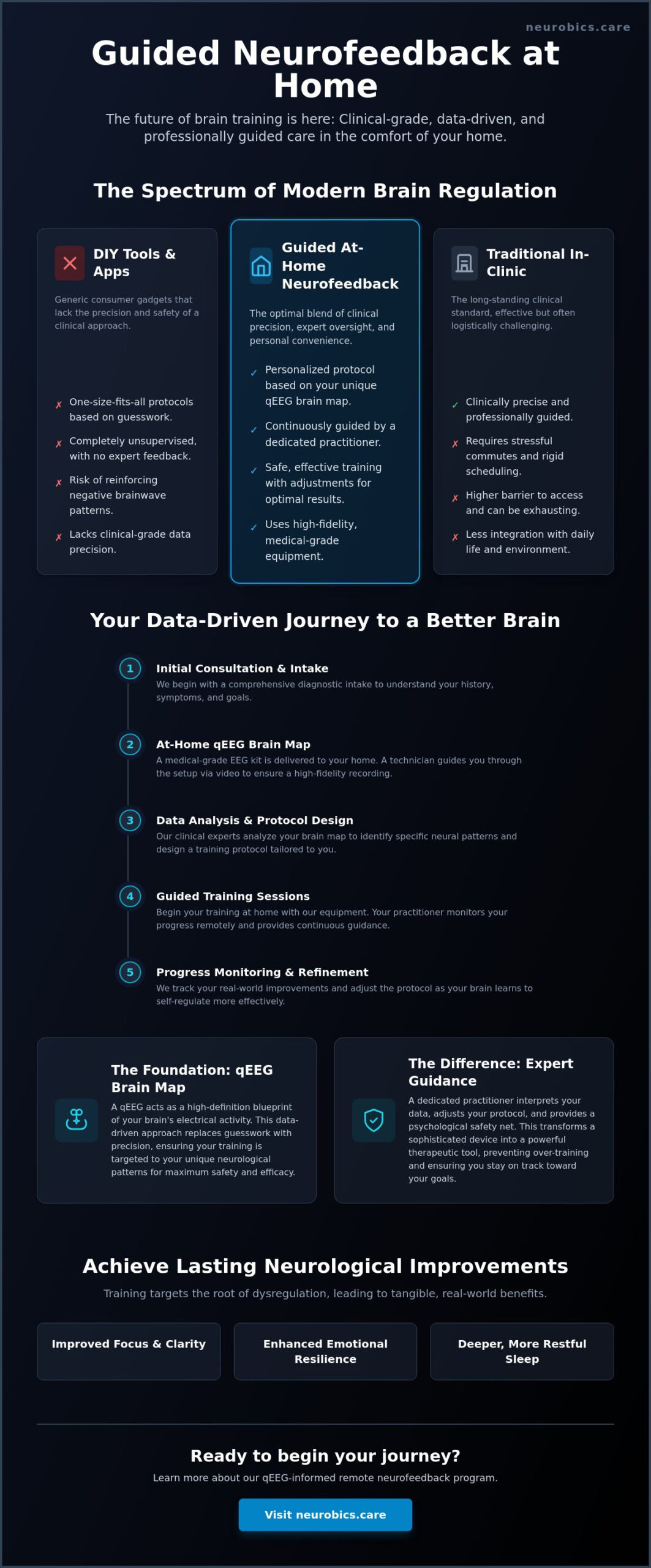
The allure of a quick-fix app is easy to understand. It’s convenient to download a tool and hope for the best. However, training your brain is a biological process that requires clinical precision. Guided neurofeedback at home distinguishes itself by placing a qualified practitioner between the technology and your nervous system. This partnership ensures you aren’t just playing a digital game; you’re engaging in a targeted therapeutic intervention designed for your specific brain architecture.
DIY models often rely on generic algorithms that apply the same logic to every user. These systems can’t distinguish between a brain that needs calming and one that requires activation. Without professional supervision, there’s a genuine risk of over-training. This can accidentally reinforce unwanted states, such as increased irritability or brain fog, simply because the software couldn’t read the subtle nuances of your neural response. Professional software allows for dynamic adjustments, meaning your practitioner can change thresholds in real-time or between sessions to keep your progress on track.
The Problem with Generic Brain Training
One-size-fits-all apps frequently fail because they don’t account for the complexity of neurological conditions. For example, someone struggling with executive function might find that a generic “focus” protocol actually increases their internal tension. This is particularly evident in cases of Understanding ADHD Paralysis: The Neuroscience of the Freeze Response, where the brain’s “stop” signal is already overactive. By targeting specific regions identified in your qEEG, a professional guide ensures the training resolves the root cause rather than just masking the symptoms.
Safety and Ethical Standards in 2026
In 2026, the standard of care for guided neurofeedback at home involves strict oversight from registered practitioners. At Neurobics, our team adheres to the high ethical standards set by professional bodies like the NFG or RBCZ. This level of expertise is vital during the initial adjustment phase. Some individuals experience a “detox” period where the brain recalibrates, which can temporarily affect sleep or mood. A professional partner recognizes these signs as part of the learning process and provides the coaching needed to navigate them safely.
How a Professional Remote Neurofeedback Program Works in 2026
Embarking on a journey with guided neurofeedback at home is designed to be a seamless transition from clinical assessment to personal growth. Unlike automated apps that you simply download and use, this process begins with a comprehensive intake and diagnostic assessment. This session, which can take place in our office or via a secure video link, allows us to understand your personal history, your specific challenges, and your goals for training. We prioritize this human connection to ensure your protocol is grounded in your lived experience.
Once your baseline is established, you’ll receive your clinical-grade equipment. Neurobics provides high-fidelity amplifiers and sensors that meet medical standards, ensuring the data we collect is clean and actionable. Setting up the hardware is a supported process; a technician will walk you through the placement of sensors and the software interface during a scheduled call. This eliminates the anxiety of “doing it wrong” and ensures you’re ready for your first session.
Your first guided session is a milestone where you learn to “find the frequency.” Your practitioner will be with you remotely, helping you recognize the subtle internal shifts that occur when your brain enters the desired state. This isn’t about intense effort; it’s about allowing your brain to learn from the feedback loop. As you continue, you’ll train several times a week, supported by weekly check-ins. These meetings are vital for progress tracking and protocol refinement. If we see that your sleep is improving but your focus needs more support, we adjust the training parameters to match your brain’s evolving needs.
Choosing Your Program Length
The duration of your training depends on your unique neurological blueprint. A 4-week intensive is often suitable for those looking for a “nervous system reset” or to address acute periods of stress. However, for deep-seated patterns, the 12-week transformation is the gold standard. Neuroplasticity is a gradual process of building new, more efficient neural pathways, and this timeline allows those changes to become more permanent. You can learn more about how we structure these programs in our guide on Neurofeedback Therapy Cost in 2026: A Guide to Value and Outcomes.
Equipment Rental and Support
We believe that professional results require professional tools. By using high-fidelity hardware rather than consumer headbands, we ensure the training is effective and safe. For many clients, our “Complimentary Device” model within annual subscriptions provides a worry-free way to access this technology. Our team is always available for technical troubleshooting, ensuring your focus remains on your training rather than the gear. If you’re ready to begin your own personalized journey, explore our remote assisted neurofeedback programs to find the right fit for your lifestyle.
Starting Your Journey with Neurobics Remote Neurofeedback
Choosing a partner for your neurological development is a significant decision that requires both trust and clinical transparency. At Neurobics, we bring over 15 years of expert-led brain training experience to every client interaction. Our approach isn’t built on trendy gadgets; it’s rooted in a deep understanding of how the brain learns to self-regulate. By choosing guided neurofeedback at home through our platform, you’re accessing a legacy of practitioner expertise that has been refined over more than a decade of clinical practice.
We believe that high-quality care should be accessible regardless of your geographic location. While we are based in the Netherlands, our reach is truly international, with local support available in major European hubs. This global infrastructure ensures that you receive the technical and clinical support you need, regardless of your time zone. We’ve optimized the logistics of shipping medical-grade equipment and providing remote oversight so that your experience feels personal, supportive, and seamless.
Personalized Care for Global Clients
Our commitment to qEEG-informed care means that we never apply a generic protocol to a unique individual. We specialize in supporting clients who are navigating the complexities of ADHD, chronic anxiety, and executive burnout. These conditions often require a nuanced approach that addresses the specific neural signatures revealed in your brain map. If you’re new to these concepts, you can explore our foundational article, What is Neurofeedback? A Comprehensive Guide to Brain Self-Regulation in 2026, to better understand the science of self-regulation.
Next Steps: Booking Your Assessment
The first step toward reclaiming your mental clarity is a diagnostic intake session. During this meeting, we’ll discuss your goals and determine if remote training is the right fit for your needs. We understand that starting a new program can feel like a big commitment, which is why we focus on providing clear information before you begin. Following the intake, we’ll prepare you for your at-home qEEG measurement, ensuring you feel confident and comfortable with the technology.
Preparing for your measurement is simple. We provide a checklist to help you set up a quiet space and ensure your equipment is ready. This initial assessment is the most important part of the journey because it provides the data we need to build your path forward. It’s an opportunity to move away from “trial and error” and toward a method that’s as unique as your own brain.
If you’re ready to explore how guided neurofeedback at home can support your long-term well-being, we invite you to take that first step. You don’t have to navigate your neurological health alone. You can contact us today to book an initial intake or to ask any questions you may have about our remote programs. We look forward to being your partner on the path to a more balanced and focused life.
Empowering Your Neural Resilience from Home
Achieving clinical-grade brain regulation no longer requires frequent trips to a physical clinic. By moving beyond simple apps and embracing a data-driven approach, you can transform your cognitive performance and emotional health. The combination of precise qEEG mapping and expert oversight ensures that your training is safe, effective, and tailored to your unique neural patterns. This professional partnership is the bridge between sophisticated technology and the lasting improvements you seek in focus, sleep, and stress management.
Neurobics offers guided neurofeedback at home backed by over 15 years of clinical experience. As a provider registered with the Dutch Healthcare Federation (NFG), we provide global remote support for individuals navigating ADHD, anxiety, and burnout. You don’t have to guess about your brain health when expert-led data is available at your fingertips. We invite you to take the next step toward a more balanced life and book your personalized QEEG brain mapping assessment today. Reclaiming your mental clarity is a journey of small, methodic steps, and we’re here to guide you through every one of them.
Frequently Asked Questions
Is guided home neurofeedback as effective as in-clinic sessions?
Yes, professional remote programs are designed to match the efficacy of in-clinic visits by using identical clinical-grade hardware and software. The primary difference is the location of the training, not the quality of the data. When guided neurofeedback at home is informed by a professional qEEG map and supervised by an expert, it provides the same therapeutic rigor as traditional office sessions while offering the benefit of a familiar, low-stress environment.
How much does a professional at-home neurofeedback program cost?
The cost of a professional program depends on several factors, including the duration of the training, the level of clinician check-ins, and whether equipment is rented or included in a subscription. Unlike generic apps, these programs reflect the value of personalized clinical oversight and high-fidelity hardware. Many clients find that the reduction in travel time and the ability to train more frequently provides a higher return on their investment compared to traditional clinic visits.
What kind of equipment do I need for guided neurofeedback at home?
You need a clinical-grade EEG amplifier and a specialized sensor cap or headset that can capture high-resolution brainwave data. Consumer-grade wearables designed for meditation aren’t sufficient for professional protocols. At Neurobics, we provide the necessary medical-standard hardware as part of our assisted programs. This ensures that the signals we monitor are clean and accurate enough for our practitioners to make precise protocol adjustments.
Can I do neurofeedback at home without a doctor or practitioner?
You shouldn’t attempt clinical-grade training without professional supervision. While DIY gadgets exist, they lack the diagnostic depth of a qEEG and the safety of expert monitoring. Training your own brain without a professional guide carries the risk of reinforcing inefficient neural patterns or causing temporary side effects like headaches and irritability. A practitioner acts as a vital safeguard, ensuring your brain moves toward a state of better regulation and balance.
How many sessions per week are required for visible results?
Most professional protocols require two to three sessions per week to achieve meaningful results. Consistency is the key to neuroplasticity, as the brain needs regular reinforcement to build and maintain new neural pathways. While some people notice subtle shifts in sleep or mood within the first few weeks, lasting changes in focus and emotional regulation typically require a dedicated course of 20 to 40 sessions.
Is at-home neurofeedback safe for children with ADHD?
Yes, remote neurofeedback is a safe, non-invasive option for children when it’s managed by an experienced professional. Many parents prefer the home-based model because it allows the child to train in a comfortable setting without the “white coat” anxiety of a clinic. This familiar environment often leads to better engagement and more consistent training sessions, which are essential for supporting self-regulation in children with ADHD.
Does insurance cover remote neurofeedback training?
Coverage for guided neurofeedback at home varies significantly depending on your insurance provider and your specific policy. In some regions, private health insurers may offer partial reimbursement if the training is supervised by a registered practitioner, such as those affiliated with the NFG in the Netherlands. We recommend contacting your insurance representative directly to ask about coverage for biofeedback or neurofeedback services under your current plan.
What happens if I have technical issues with the equipment at home?
Professional remote programs include dedicated technical support to ensure your training stays on track. If you encounter issues with sensor connection or software synchronization, our technicians can assist you through secure video calls or remote troubleshooting. We’ve designed the setup process to be as simple as possible, but we’re always available to resolve any hurdles so you can focus entirely on your progress.
