


The most expensive part of neurofeedback isn’t the sophisticated technology you wear. It’s the clinical expertise required to make that technology meaningful for your unique brain. When you begin researching the neurofeedback cost, the wide range of prices found across the industry can feel confusing and even a bit discouraging. It’s natural to feel anxious about whether you’re paying for real results or just high-end hardware that might not deliver on its promises. You want to ensure that your resources are being used to build a more resilient mind, not just to rent a device.
At Neurobics, we believe that transparency is the first step toward a successful journey in brain training. You deserve to understand exactly where your investment goes, whether it’s the precision of a qEEG brain map or the ongoing support of a professional practitioner who understands your goals. This guide breaks down the various components of pricing and explains how professional at-home programs compare to traditional in-office visits. We’ll help you navigate the different layers of assessments and show you how to choose a path that balances expert-led care with the long-term value of a more regulated nervous system.
Key Takeaways
- Understand that the total neurofeedback cost is built on three essential pillars: initial qEEG diagnostic mapping, professional protocol oversight, and specialized training hardware.
- Discover how remote assisted neurofeedback eliminates hidden clinic expenses like travel time and missed work while maintaining high clinical standards.
- Evaluate the long-term return on investment by comparing a structured brain training program to the cumulative costs of ongoing medication or years of traditional therapy.
- Learn how to effectively utilize Health Savings Accounts (HSA) and Flexible Spending Accounts (FSA) to fund your training with pre-tax dollars.
- Recognize why a personalized, qEEG-informed protocol is the most critical factor in ensuring your investment leads to lasting improvements in mental performance.
Understanding the Components of Neurofeedback Therapy Cost
Neurofeedback isn’t a simple product you buy off a shelf; it’s a structured process of neural conditioning. To understand the total neurofeedback cost, you have to look past the sensors and software. If you’re asking What is Neurofeedback?, it’s essentially a way to teach the brain to self-regulate by providing real-time feedback on its electrical activity. This is a specialized investment in your long-term mental capacity rather than a quick fix. Because every brain is unique, the pricing reflects a combination of technology and high-level clinical expertise.
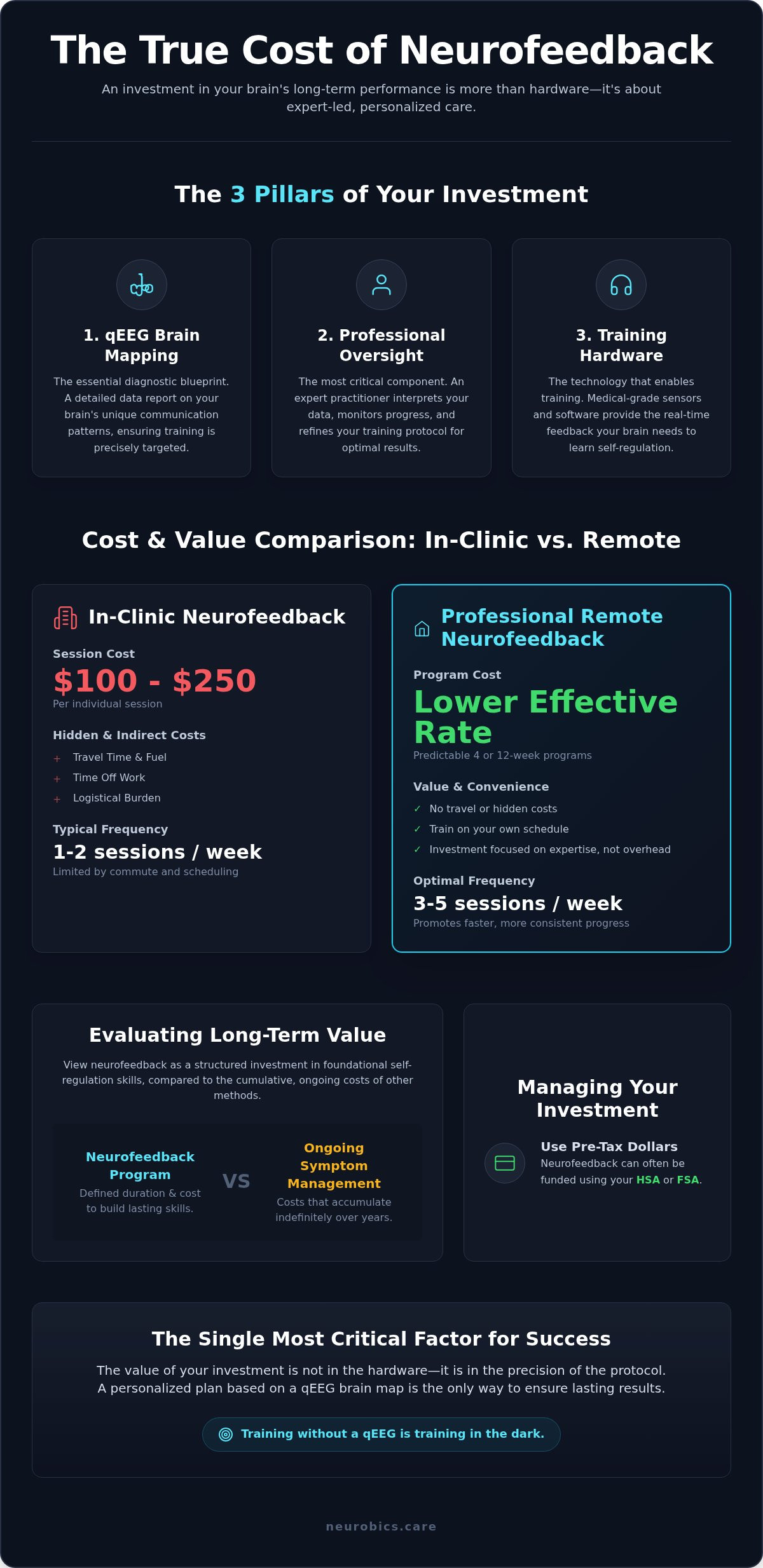
The total investment is built on three primary pillars. First is the diagnostic assessment, which identifies your specific neural patterns. Second is the professional oversight, where a practitioner monitors your data and adjusts your protocols. Third is the equipment, which includes the medical-grade sensors and software used during training. While some might look for the lowest per-session price, it’s important to remember that lasting results typically require between 20 and 40 sessions. This duration allows the brain to consolidate new patterns into long-term habits. Fees often vary globally based on the practitioner’s level of expertise and the geographic location of the clinic, but the most significant value always lies in the quality of the data analysis.
The Initial Assessment and QEEG Brain Mapping
The qEEG, or “Brain Map,” serves as the essential blueprint for your entire training program. It’s far more than a basic intake interview. A professional qEEG provides a detailed report of how different areas of your brain communicate. Skipping this step to save on the initial neurofeedback cost often leads to ineffective training. Without a map, you’re essentially training in the dark. A personalized protocol based on precise data ensures that every session is targeted toward your specific goals, whether you’re focusing on stress regulation or cognitive performance.
Hardware vs. Professional Services
It’s helpful to distinguish between the cost of renting clinical-grade sensors and the cost of the experts reading your data. Professional programs rarely focus on standalone hardware sales because the equipment is only as effective as the protocol behind it. At Neurobics, we emphasize that the true value comes from the practitioner’s ability to interpret your brain’s progress and refine your path. At-home QEEG brain mapping provides this level of clinical precision without the need for a clinic commute, ensuring that your investment is focused on expert guidance rather than facility overhead.
Comparing In-Clinic vs. Remote Neurofeedback Pricing
Many people begin their research by looking at the sticker price of a single session. In a traditional clinic setting, you might pay between $100 and $250 each time you walk through the door. However, the true neurofeedback cost includes hidden factors like travel time, fuel, and the cost of missed work. If your protocol requires 40 sessions, the logistical burden of commuting twice a week can quickly eclipse the clinical fees themselves. Remote training removes these barriers, allowing you to focus your energy on the training itself rather than the logistics of getting to an appointment.
Professional remote models often utilize a program-based structure rather than a pay-per-visit approach. This shift significantly lowers the “cost per session” because it encourages more frequent training. While a clinic visit might happen once or twice a week, at-home systems allow for three to five sessions in the same period. This consistency is often where the most profound neural shifts occur, as the brain benefits from shorter, more frequent intervals of reinforcement. By training in your own environment, you’re also more likely to remain compliant with the full length of the program.
The Economics of At-Home Training
The transition to at home neurofeedback has changed how families and professionals manage their brain health budgets. Instead of paying for clinic overhead, your investment covers equipment rental, deposits, and structured 4-week or 12-week programs. These fixed-term program fees provide a predictable financial path without the surprise of unexpected session costs. For those looking for the most cost-effective long-term solution, an annual subscription often provides the best value, allowing for sustained progress and maintenance over many months.
DIY Headbands vs. Clinical Remote Systems
It’s tempting to look at consumer-grade headbands priced between $200 and $500 as a budget-friendly alternative. However, this often proves to be a “false economy.” These devices frequently lack the sensor precision needed for qEEG-informed training and, more importantly, they lack professional oversight. As noted in discussions regarding Neurofeedback Therapy Cost, the expertise of the practitioner is what transforms raw data into a meaningful protocol. Cheap devices often end up gathering dust because users don’t know how to interpret their results or adjust their training. At Neurobics, we don’t sell standalone hardware. We believe that technology without clinical support is incomplete, which is why every program we offer includes expert-led guidance to ensure quality control and safety. You can explore our program options to see how professional oversight fits into your budget.
Is Neurofeedback Worth the Investment? Evaluating ROI
Viewing the neurofeedback cost through the lens of return on investment changes the perspective from a monthly expense to a functional asset. Unlike many interventions that require lifelong adherence, neurofeedback leverages neuroplasticity to create lasting changes in how the brain regulates itself. This means the benefits don’t disappear when the training ends. For professionals facing burnout or students struggling with academic pressure, the ability to regain focus and emotional stability translates directly into improved productivity and quality of life.
When you calculate the long-term savings, the math becomes even clearer. Ongoing costs for medication, specialized tutoring, or weekly talk therapy can accumulate into significant sums over several years. A structured neurofeedback program, while requiring an upfront commitment, aims to address the underlying patterns of dysregulation. This often leads to a reduced need for other ongoing interventions, making it a strategically sound choice for those looking to manage their long-term health budget.
Neurofeedback for ADHD: A Case for Early Investment
Unmanaged ADHD symptoms often carry a heavy financial burden, from lost career opportunities to the “ADHD tax” of impulsive spending or missed deadlines. Choosing neurofeedback for adhd offers a way to build internal self-regulation skills that last a lifetime. QEEG-informed training identifies the specific oscillatory imbalances associated with inattention or impulsivity, allowing for a targeted protocol that justifies the initial neurofeedback cost through clinical precision. By investing in these foundational brain patterns early, individuals can often bypass the cumulative stress and financial drain of untreated symptoms.
Measuring Success Beyond the Price Tag
Success in brain training is measured both objectively and subjectively. We use follow-up qEEG measurements to see exactly how your brain’s electrical activity has shifted toward a more balanced state. These maps provide visual proof of the work you’ve done. Equally important are the subjective shifts you’ll feel in your daily life, such as deeper sleep, a calmer response to stress, and a more consistent mood. These improvements in your inner architecture are the true dividends of the program. We encourage you to contact us to discuss your specific goals and explore what kind of outcomes you can expect from a personalized training path.
Insurance, HSA, and Ways to Manage Costs
Managing the financial aspect of brain training requires a clear understanding of the current healthcare landscape. In 2026, insurance coverage for neurofeedback remains inconsistent across different providers and regions. While some private plans have begun to recognize the value of self-regulation training, many still categorize it as investigational. A significant shift occurred in 2024 when Medicare reclassified neurofeedback as not medically necessary, which influenced how many secondary insurers handle claims. Despite these hurdles, there are several structured ways to make the neurofeedback cost more manageable without compromising on clinical quality.
One of the most effective tools for international clients is the use of Health Savings Accounts (HSA) or Flexible Spending Accounts (FSA). Neurofeedback is generally considered an eligible medical expense, allowing you to pay for your program using pre-tax dollars. Depending on your tax bracket, this can effectively reduce your out-of-pocket expenses by 25% to 30%. Additionally, many regions allow for the deduction of neurofeedback fees as a medical expense on annual tax returns, provided the training is overseen by registered professionals. At Neurobics, our practitioners are registered with the Dutch Healthcare Federation (NFG) and RBCZ, which often helps in providing the necessary documentation for these financial tools.
Navigating Insurance Reimbursement
If you intend to seek reimbursement, it’s vital to communicate with your insurance provider before you begin. You should specifically ask if they cover biofeedback under CPT code 90901, as this is the most common code used for billing these services. It’s also helpful to verify if they require a specific diagnosis or prior authorization from a physician. We support our clients by providing detailed invoices and proof of professional registration. This documentation is essential for submitting a “superbill” to your insurance company for potential out-of-network benefits, which can sometimes cover a portion of the session fees.
Subscription Models and Payment Plans
Choosing the right program structure can also influence the total neurofeedback cost. For those managing chronic conditions or seeking long-term optimization, an annual subscription is typically the most cost-effective solution. It provides a lower monthly rate and ensures you have the equipment and support needed for sustained progress. If your goals are more focused, such as recovering from a specific period of burnout, a 4-week or 12-week fixed-term program may be more appropriate. Many clients find that prepayment discounts offer a smart way to reduce the total neurofeedback therapy cost while securing their commitment to the process. To find a plan that fits your specific needs, you can get in touch with our team to discuss our current program options.
The Neurobics Approach: Expert-Led Remote Value
At Neurobics, we bridge the gap between high-level clinical precision and the practicalities of daily life. While automated apps offer a low entry point, they often lack the depth required to create meaningful shifts in neural self-regulation. Our approach treats your brain as a unique system, not a data point in a generic algorithm. By choosing a human-led program, you avoid the “cost of failure” often associated with DIY devices that provide raw data without the context needed to apply it effectively. The true neurofeedback cost is an investment in a professional partnership where expert practitioners guide you through every milestone of your development.
Our philosophy centers on the idea that technology is most effective when it’s paired with human empathy and clinical experience. This is why we position our service as a premium alternative to standalone hardware. We don’t just provide equipment; we provide a pathway to better self-regulation through continuous monitoring and protocol adjustments. This ensures that your time and financial resources are used efficiently, targeting the specific areas where your brain needs the most support. You aren’t just training; you’re building a more resilient inner architecture under the care of seasoned professionals.
What is Included in a Neurobics Program?
Every program we offer is built on a foundation of professional oversight. Your fee includes the design of a personalized protocol based on your initial qEEG data, the rental of clinical-grade equipment, and weekly live sessions with an expert. We ship the necessary hardware directly to your home, ensuring you have everything needed to begin. To maintain the integrity of the technology, we require a security deposit that is returned once the equipment is received back in good condition. Expert guidance is the most critical part of the neurofeedback investment; it’s what ensures your training remains safe, effective, and aligned with your evolving neural patterns.
Taking the First Step: The Intake Assessment
Your journey begins with a standalone intake assessment. This diagnostic tool provides the clarity needed to determine if neurofeedback is the right path for your goals. We offer these assessments both in person at our facility in Groningen, Netherlands, and through our remote assisted model for international clients. During this session, we map your current neural activity and discuss your specific needs, from improving focus to managing the symptoms of burnout. This initial step provides the data required to build your custom training plan and gives you a clear understanding of the total neurofeedback cost for your specific case. We invite you to reach out to our team today to book your intake or to receive a personalized cost estimate tailored to your situation.
Investing in Your Brain’s Future
Choosing a brain training program is a decision to prioritize your long-term mental resilience and cognitive capacity. We’ve explored how the neurofeedback cost encompasses three essential clinical pillars: precise qEEG mapping, medical-grade technology, and the steady guidance of an experienced practitioner. By moving beyond the traditional per-session model toward structured remote programs, you gain the consistency needed for lasting neural change without the logistical burden of a clinic commute. This approach ensures that your resources are focused on expert-led protocol adjustments rather than facility overhead.
At Neurobics, we bring over 15 years of clinical expertise directly to your home. Our qEEG-informed personalized protocols ensure that your training is as unique as your brain. We provide dedicated professional support throughout your journey, helping you translate raw neural data into meaningful improvements in your focus, sleep, and stress regulation. If you’re ready to move from confusion to clarity, we invite you to Book Your Personalized Brain Mapping Assessment. Your path to a more regulated and resilient mind starts with a single, data-driven step.
Frequently Asked Questions
Is neurofeedback therapy covered by insurance in 2026?
Insurance coverage for neurofeedback remains inconsistent and varies by provider. Many insurers classify it as investigational. As of 2024, Medicare considers it not medically necessary. However, some private plans may reimburse for biofeedback using CPT code 90901. We provide documentation for registered practitioners to help you seek out-of-network benefits. It’s best to verify your specific plan’s requirements before starting your program.
How much does a single neurofeedback session typically cost?
In-clinic sessions typically range from $100 to $250 each. These costs often reflect facility overhead and geographic location. At Neurobics, we prioritize a program-based model rather than a per-visit fee. This structure lowers the average neurofeedback cost per session by encouraging more frequent, consistent training at home. Our fixed-term program fees cover protocol design and professional oversight, providing a predictable investment for your brain health journey.
Why is the upfront QEEG brain mapping so expensive?
The initial qEEG assessment is a sophisticated diagnostic tool that serves as the blueprint for your training. It isn’t just a simple test; it’s a comprehensive mapping of your brain’s electrical activity. The fee covers the use of clinical-grade sensors and the expert analysis required to create your personalized protocol. Skipping this assessment to save money often leads to ineffective training because the practitioner lacks the data needed to target your specific neural patterns.
Can I use my HSA or FSA funds for at-home neurofeedback?
Yes, neurofeedback is generally considered an eligible medical expense for Health Savings Accounts (HSA) and Flexible Spending Accounts (FSA). Using these pre-tax funds can reduce your effective neurofeedback cost by 25% to 30% depending on your tax bracket. We provide the necessary professional documentation and invoices to support your claims. Always check with your plan administrator to confirm their specific requirements for reimbursement of remote assisted neurofeedback services.
Is it cheaper to rent or buy a neurofeedback machine?
Renting equipment through a professional program is typically more cost-effective than attempting to buy clinical-grade hardware. Clinical sensors are expensive, and hardware alone doesn’t provide the protocol adjustments needed for success. At Neurobics, we include equipment rental and security deposits in our structured programs. This ensures you have access to high-quality technology without the burden of ownership, while also receiving the expert oversight that makes the equipment effective.
How many sessions are needed to see results from neurofeedback?
Lasting neural changes typically require between 20 and 40 sessions. While some individuals notice subjective improvements in sleep or stress within the first few weeks, the brain needs consistent reinforcement to consolidate new patterns. This duration allows neuroplasticity to take effect, creating shifts that remain stable long after the program ends. We use follow-up qEEG measurements to objectively track your progress and ensure your training remains aligned with your specific goals.
Does the cost of neurofeedback vary for ADHD vs. anxiety?
The base cost of a neurofeedback program generally remains the same regardless of the condition being addressed. Whether you’re focusing on ADHD, anxiety, or burnout, the investment covers the same pillars: qEEG mapping, equipment, and professional oversight. However, the total number of sessions required may vary based on the complexity of your neural patterns and your individual response to training. We tailor every protocol to your unique brain map rather than using a generic diagnostic label.
Are there hidden fees in remote neurofeedback programs?
Transparency is vital in our pricing structure. Beyond the standard program fees, you should account for a security deposit for the hardware, which is returned once the equipment is received back. International clients outside the EU may also encounter shipping surcharges. We apply weekly surcharges only if equipment is kept beyond the agreed term without prior arrangement. Every component of our pricing is designed to support a high-quality, expert-guided experience from your own home.
