


What if the most effective way to rewire your brain for lasting focus and emotional balance didn’t require a single commute to a clinic? You’ve likely explored brain training but felt deterred by the logistical hurdles of in-person sessions or the confusing market of consumer “toy” wearables. It’s a common challenge to seek clinical-level results while wanting to avoid the high costs and time commitments of traditional office visits. Choosing a professional at home neurofeedback program allows you to bridge this gap, bringing sophisticated technology and expert guidance directly into your daily routine.
In this guide, you’ll discover how remote brain training has evolved into a precise, data-driven experience that rivals the quality of any physical center. We’ll explain how qEEG-informed protocols create a personalized roadmap based on your unique brain signature, ensuring every session targets your specific needs for stress regulation, focus, or ADHD support. You’ll also learn why having a dedicated practitioner to monitor your progress is the essential difference between a simple gadget and a transformative journey toward mental clarity and long-term resilience.
Key Takeaways
- Learn how a professional at home neurofeedback program differs from consumer gadgets by combining clinical-grade hardware with continuous practitioner oversight.
- Understand why a qEEG brain map is the necessary first step to create a training plan tailored to your specific neural patterns.
- Discover the technical advantages of using professional-grade sensors over simplified wearables to ensure high-quality data and better results.
- Preview the typical 4 to 12 week training process, as it’s designed to move from initial regulation to the long-term strengthening of neural pathways.
- See how Neurobics supports your progress through personalized intake, international equipment shipping, and expert-guided remote assistance.
What Defines a Professional At-Home Neurofeedback Program in 2026?
The landscape of brain health has undergone a significant transformation. A few years ago, training your brain at home often meant using basic consumer headbands that offered little more than a general “calm score.” Today, a professional at home neurofeedback program provides the same clinical precision previously found only in high-end specialized clinics. This shift is driven by the integration of medical-grade EEG hardware and sophisticated AI-driven analysis, allowing for laboratory-quality data collection right in your living room.
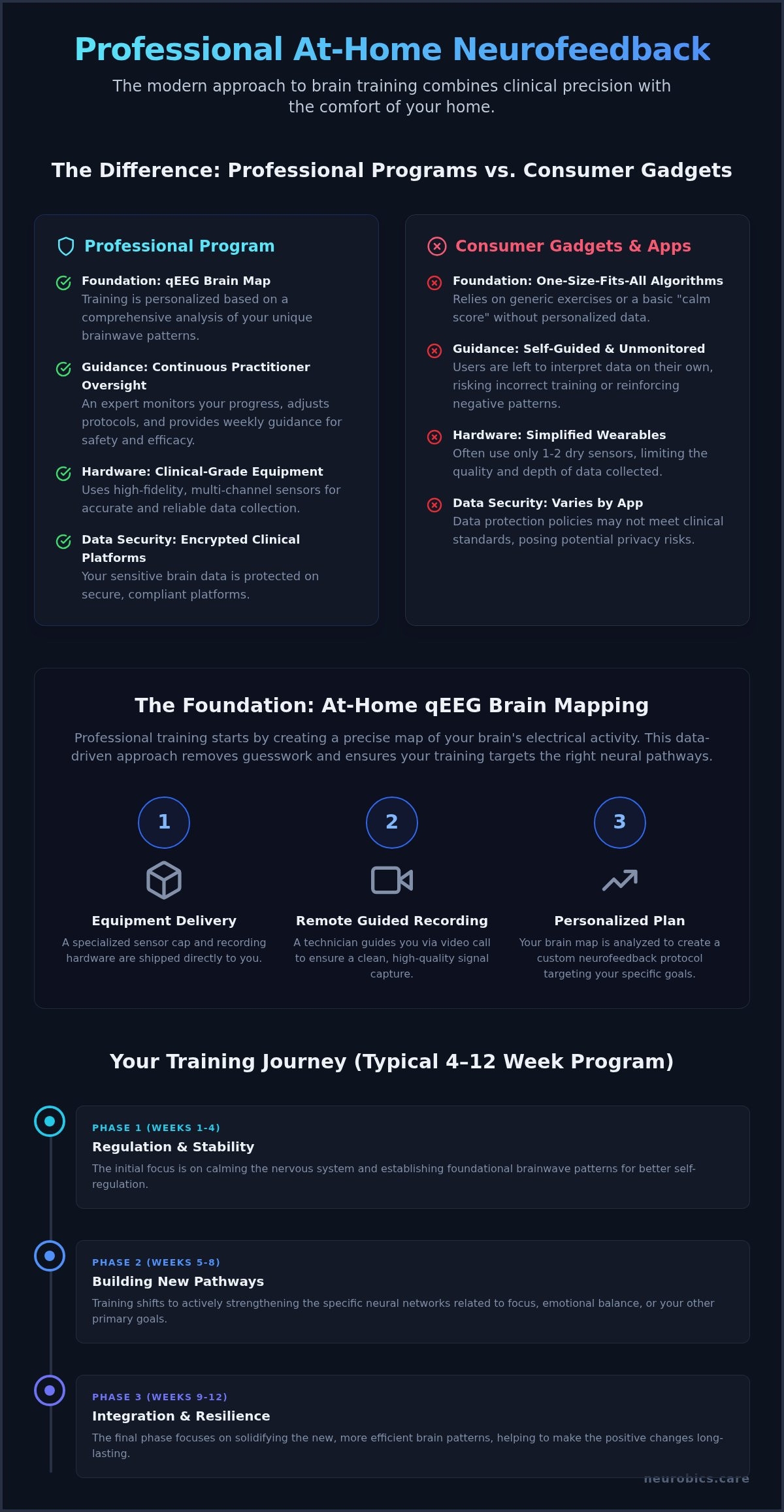
Unlike generic biofeedback, which might only monitor heart rate or basic muscle tension, a professional program is qEEG-informed. This means the training is built upon a comprehensive map of your brain’s electrical activity. By 2026, the technology has reached a point where high-fidelity sensors can capture subtle neural oscillations with remarkable accuracy. This ensures that the feedback you receive is based on your unique neural signature rather than a one-size-fits-all algorithm.
The Evolution of Remote Brain Training
Tele-health advancements have moved beyond simple video consultations. In the field of neurofeedback, it now involves shipping professional-grade equipment directly to your door. These modern systems use high-fidelity sensors that are significantly more capable than the simple 2-channel devices of the past. The Remote Assisted model is the new gold standard, combining the comfort of your home with the continuous oversight of a trained practitioner to ensure every session is productive. It’s a bridge between clinical expertise and the convenience of your own schedule.
Clinical Oversight vs. Self-Guided Apps
Self-guided apps often leave users wondering if they’re truly making progress or simply playing a game. Without professional monitoring, there’s a risk of training in the wrong direction, which could potentially reinforce the very patterns you’re trying to resolve. A professional at home neurofeedback program prioritizes safety and efficacy through several layers of support:
- Expert Protocol Adjustments: Specialists review your session data to fine-tune your training plan.
- Weekly Check-ins: Regular consultations help you understand your progress and address any challenges in real-time.
- Data Security: Professional systems use encrypted, clinical-grade platforms to protect your sensitive brain data.
At Neurobics, we believe that the human element is irreplaceable. While the technology provides the data, it’s the practitioner’s expertise that turns that data into a meaningful path for growth. This expert-led approach provides a level of clinical insight and security that a standalone app simply cannot replicate, ensuring your journey toward better self-regulation is both safe and effective.
The Foundation of Success: qEEG Brain Mapping at Home
Starting a brain training journey without a clear map is like trying to navigate a dense forest without a compass. While some basic apps offer generic exercises, a professional at home neurofeedback program begins with a Quantitative Electroencephalogram (qEEG). This process records electrical activity across the scalp to create a comprehensive “Brain Map.” It reveals exactly how different regions of your brain are communicating, identifying the specific neural signatures behind common struggles.
For instance, qEEG data can pinpoint a high theta-to-beta ratio often associated with ADHD, or excessive high-beta activity that frequently correlates with chronic anxiety. By identifying these objective biomarkers, we move away from guesswork. We can see why you might struggle to fall asleep or why your focus wanes in the afternoon. Comparing these baseline maps to post-training results allows you to see the tangible physical changes in your brain’s self-regulation capabilities over time.
How Remote QEEG Measurements Work
You might wonder how laboratory-grade measurements are possible outside a clinic. The process for At-Home QEEG Brain Mapping is remarkably streamlined. We ship a specialized sensor cap to your door, and a technician guides you through the recording via a live video session. This real-time oversight ensures that the signal quality is pristine and free from interference, such as muscle tension or eye blinks, providing data that is just as reliable as an in-person visit.
From Data to Protocol: Personalized Training
Once your data is analyzed, it’s translated into a custom training protocol. One-size-fits-all programs often fail because they don’t account for individual differences; what calms one person might be under-stimulating for another. By targeting specific brain regions based on your unique map, we leverage neuroplasticity to strengthen healthier pathways. This methodical approach ensures that your at home neurofeedback program is focused on your specific goals, whether that’s improving executive function or recovering from burnout.
This data-driven foundation is what transforms a simple gadget into a clinical tool. It ensures that every minute you spend training is optimized for your nervous system’s specific needs. If you’re ready to see what your own brain data reveals, you can reach out to our team to discuss the first steps in your mapping process.
Professional Equipment vs. Consumer Wearables: Making the Right Choice
When searching for an at home neurofeedback program, you’ll encounter a wide variety of devices. Many are sleek, low-cost headbands marketed as general wellness tools. While these are accessible, they often rely on 2-channel sensors that provide a simplified view of brain activity. In contrast, clinical-grade systems used in professional programs offer a significantly higher signal-to-noise ratio. This technical term means the equipment can distinguish your actual brain waves from “noise” like muscle tension or electrical interference. Without this precision, the brain doesn’t receive the clear, consistent feedback it needs to foster lasting neuroplasticity.
Neurobics prioritizes professional hardware because effective brain training requires accuracy. If the feedback is muddy or delayed, the brain can’t make the connection between its internal state and the external signal. High-quality sensors ensure that every millisecond of training is meaningful. While some might wonder if the investment in a professional program is worth the extra cost, the difference lies in the outcomes. Clinical equipment allows for manual protocol adjustments, ensuring the training evolves alongside your progress rather than staying stuck on a static setting.
Why We Don’t Sell Standalone Devices
Using neurofeedback hardware without clinical interpretation is like owning a high-performance jet without a pilot. There’s a real risk of training the wrong brain states, which can lead to fatigue or increased irritability. We use a rental model to ensure you have access to systems valued at over $5,000 without the prohibitive upfront purchase price. This approach ensures you aren’t just buying a gadget; you’re investing in a supervised process. For a deeper look at how this compares to other options, you can explore our guide on Neurofeedback Therapy Cost to understand the long-term value of a guided approach.
Hardware Requirements for Remote Training
Transitioning to a professional system doesn’t mean you need a laboratory in your home. Modern remote training kits are designed for ease of use and are compatible with most current tablets and smartphones. A typical professional kit includes several essential components:
- A medical-grade EEG amplifier: This small device processes your brain signals with clinical accuracy.
- High-fidelity sensors: These ensure a clean connection for reliable data collection.
- A secure training interface: A cloud-based platform that connects you to your practitioner.
- User-friendly setup guides: Clear instructions tailored for non-technical users.
The setup is intuitive, and our team provides step-by-step support to ensure you’re comfortable with the technology. This combination of powerful hardware and professional guidance ensures that your at home neurofeedback program remains a supportive, high-level experience from start to finish.
Training Journey: What to Expect in Your 4-12 Week Program
Embarking on an at home neurofeedback program is a commitment to gradual, sustainable change. It isn’t an overnight fix; rather, it’s a structured journey that typically spans 4 to 12 weeks. During the initial phase, the focus is on finding the “sweet spot” for your nervous system. This involves fine-tuning the training frequencies to ensure your brain responds positively and remains regulated. We don’t just set a protocol and leave it; we calibrate the approach to your real-time responses.
As you move into the middle phase, the emphasis shifts to strengthening neural pathways through consistent repetition. This is where most clients begin to notice shifts in their daily life, such as improved focus or a more resilient response to stress. Finally, the stabilization phase ensures these new patterns become permanent habits. To achieve these lasting results, training 3 to 5 times per week is considered the ideal frequency, providing enough stimulation to encourage neuroplasticity without overtaxing your system.
A Typical Home Training Session
A session usually lasts about 30 to 45 minutes and is designed to fit seamlessly into your day. After applying the sensors, you simply start the application on your tablet or phone. The software provides auditory and visual feedback that “rewards” your brain when it produces desired wave patterns. For many, this is a relaxing experience. You can even engage in “passive” training by watching a favorite movie or listening to music; the screen brightness or volume will subtly shift in response to your brain activity, teaching your nervous system to stay in a focused or calm state. Beyond your training sessions, immersing yourself in high-fidelity media, such as the premium electronic music streams on SPARKZ.TV, can be an excellent way to maintain a state of flow and relaxation.
Tracking Milestones and Adjusting Protocols
While you train in the comfort of your home, you’re never training alone. Our practitioners monitor your data remotely after every session to track your progress and ensure the protocol remains effective. This oversight is vital for success, especially when using Neurofeedback for ADHD or complex stress patterns. At the 4-week mark, we conduct a comprehensive review to refine your protocol, ensuring your at home neurofeedback program continues to meet your evolving needs.
If you’re curious about how this structured approach can support your specific goals, we invite you to contact our team to discuss which program length is right for your journey.
Getting Started: Your Professional Neurobics Path
Beginning your journey toward better self-regulation is a deliberate step that requires both the right technology and expert guidance. When you choose a professional at home neurofeedback program with Neurobics, you aren’t just receiving a box of equipment. You’re entering a collaborative partnership designed to bridge the gap between clinical science and your daily life. Our process begins with a detailed intake consultation to ensure your training plan is perfectly aligned with your unique nervous system and lifestyle goals.
During this initial phase, we discuss your history with focus, stress, or sleep to determine the most effective starting point. With over 15 years of practitioner expertise, we help you understand the data behind your experiences. This expert-led approach ensures that the protocols we develop for you are safe, effective, and grounded in evidence-aware care. Once your path is defined, we handle the logistics of getting you started, including the shipment of clinical-grade hardware directly to your home.
Selecting the Right Program Duration
Choosing the length of your at home neurofeedback program depends on the complexity of the patterns you wish to address. We offer structured options to meet different needs:
- The 4-Week Reboot: Ideal for those dealing with acute stress or looking to experience how professional neurofeedback feels before committing to a longer process.
- The 12-Week Transformation: Recommended for entrenched patterns such as ADHD, chronic burnout, or long-term sleep disturbances. This duration allows enough time for neural changes to stabilize.
- Annual Subscriptions: A supportive option for individuals managing chronic conditions who benefit from ongoing maintenance and nervous system regulation.
- Family Programs: Flexible setups that allow multiple family members to train using the same professional equipment under practitioner supervision.
Global Support and Local Expertise
Neurobics supports a diverse international community, with a specialized focus on clients across Europe and the Middle East. We understand the nuances of remote care and provide comprehensive technical assistance to ensure your equipment is always ready for use. Whether you are training in a quiet corner of your home in London or a busy office in Dubai, our practitioners are available to review your data and provide the encouragement you need to stay consistent. For those balancing high-pressure careers, combining brain training with financial literacy support from Yenom can further enhance long-term stability and focus.
This partnership is built on transparency and professional care. We don’t just ship hardware; we provide the clinical oversight that makes brain training successful. The most vital first step is obtaining your personalized brain map to see what your data reveals. Ready to start? Contact Neurobics to schedule your intake and begin the process of booking your initial qEEG measurement.
Empowering Your Brain’s Potential from Home
Building a more resilient and focused mind is a journey that no longer requires the logistical burden of frequent clinic visits. By choosing a professional at home neurofeedback program, you gain access to clinical-grade technology and practitioner expertise without sacrificing your daily routine. We’ve explored how qEEG mapping provides a precise blueprint for your training and why high-fidelity sensors are essential for meaningful neural change. This shift from generic “DIY” gadgets to a supervised, data-driven model ensures that every session is optimized for your unique nervous system.
With over 15 years of clinical experience, our team ensures you’re never training in isolation. We provide expert-led qEEG mapping and ship professional equipment worldwide, creating a seamless experience from your initial intake to your final session. This structured approach allows you to strengthen your brain’s self-regulation capabilities with confidence and clarity. If you’re ready to move beyond surface-level apps and invest in a personalized, evidence-aware path toward mental well-being, we invite you to take the next step. Begin your personalized brain training journey with Neurobics today and discover the lasting impact of expert-guided remote training.
Frequently Asked Questions
Is an at-home neurofeedback program as effective as in-clinic therapy?
A professional at home neurofeedback program is just as effective as in-clinic training because it uses the same clinical-grade hardware and qEEG-informed protocols. The primary difference is the convenience of your own environment. Because you can train more frequently without the stress of a commute, many clients find they reach their stabilization phase more efficiently than they would with occasional office visits.
Do I need to be tech-savvy to set up the neurofeedback equipment at home?
You don’t need to be a technical expert to use our remote systems. Every kit is designed for intuitive setup, and we provide a guided video session to help you with your first measurement. Our practitioners are also available for remote technical assistance if you ever have trouble connecting your sensors to your tablet or smartphone.
Can children participate in a remote neurofeedback program safely?
Yes, children can safely participate in remote neurofeedback under the supervision of a parent and a practitioner. It’s a non-invasive method often used to support focus and emotional regulation. The training usually involves watching a movie or playing a simple game, making it an engaging and stress-free experience for younger users during their developmental years.
How many sessions per week are required for the best results?
Training 3 to 5 times per week is the ideal frequency for encouraging lasting neuroplasticity. This frequency provides enough repetition for the brain to learn new self-regulation patterns without causing fatigue. Consistency is more important than session length, as the brain needs regular feedback to turn new neural pathways into permanent habits.
What happens if the equipment doesn’t work or I have technical issues?
If you encounter any issues, our team provides comprehensive remote support to get you back on track. We can troubleshoot signal quality or software connections during your scheduled check-ins. Because your data is reviewed after every session, your practitioner will quickly notice if the equipment isn’t recording correctly and will reach out to help.
Is the cost of the home program covered by health insurance?
Insurance coverage for neurofeedback remains inconsistent across different regions and providers. While some international plans may offer reimbursement for biofeedback-related services, many do not yet cover at-home programs. We recommend contacting your insurance provider directly to check if they cover “remote assisted neurofeedback” or similar services under your specific policy.
Can I use the neurofeedback program while taking medication for ADHD or anxiety?
You can certainly use an at home neurofeedback program while taking medication for ADHD or anxiety. However, it’s essential to inform your practitioner so they can adjust your training protocols accordingly. Neurofeedback focuses on strengthening the brain’s natural self-regulation, which can complement your existing care plan as long as your progress is monitored professionally.
How long do the results of a 12-week home program typically last?
The results of a 12-week program are designed to be long-lasting because they are based on structural neural changes. Once your brain learns to maintain a more regulated state, it tends to keep that pattern as its new default. Many clients report that the improvements in focus and stress resilience remain stable long after the active training phase concludes.
