


What if the key to mastering your focus and calming a restless mind didn’t require a permanent commute to a clinical office? For many professionals and students in the North, the struggle to manage ADHD symptoms or chronic stress is often compounded by the logistical headache of weekly appointments. You’ve likely felt that familiar frustration when trying to balance self-improvement with a packed schedule. It’s common to feel overwhelmed by the options, especially when you’re looking for neurofeedback groningen services that actually fit into your life.
This guide shows you exactly how to access professional qEEG brain mapping and neurofeedback without sacrificing your time or peace of mind. At Neurobics, we believe that brain training should be as flexible as it is precise. You’ll learn how personalized data from your own brain waves can create a clear path toward improved sleep and mental clarity. We will examine the differences between office-based sessions and remote programs, helping you decide which path offers the best support for your unique nervous system and Groningen-based lifestyle.
Key Takeaways
- Understand how professional neurofeedback groningen provides a scientifically informed method to improve your focus, sleep, and overall nervous system regulation.
- Learn why qEEG brain mapping is essential for moving beyond a one-size-fits-all approach to achieve truly personalized mental performance results.
- Explore the logistical advantages of remote, at-home neurofeedback options for residents living in and around Groningen, including Haren and Zuidhorn.
- Discover how structured brain training programs can help reset a nervous system stuck in a fight-or-flight state, leading to lasting mental clarity.
- Get clear guidance on how to book an intake assessment and choose the right training duration to fit your personal goals and lifestyle.
Understanding Neurofeedback Options in Groningen (2026)
Neurofeedback is a sophisticated, non-invasive method that allows you to observe your brain’s electrical activity in real time. It’s often described as a specialized form of biofeedback. To explore the history and technical variations of the field, you can read more about What is Neurofeedback? on Wikipedia. In the city and province of Groningen, this technology has become a sought-after tool for those who want to move beyond traditional talk therapy and address the physiological roots of their stress or focus issues.
The landscape for neurofeedback groningen has grown significantly. Residents aren’t just looking for a quick fix; they’re seeking evidence-aware methods to manage the complexities of modern life. Many local practitioners align themselves with the Dutch Healthcare Federation (NFG). This helps maintain high standards of care and ethical practice across the Northern Netherlands. This professional oversight gives clients peace of mind that they’re engaging in a methodologically sound process that prioritizes their well-being. This focus on high-quality standards is a regional priority, extending from clinical care to the digital systems used by healthcare organizations and SMEs, which often rely on Nubivio for comprehensive managed IT and cybersecurity services.
The Science of Self-Regulation
At its core, this training relies on EEG technology to monitor brainwave frequencies. Your brain is incredibly adaptable. This quality, known as neuroplasticity, means your neural pathways can be strengthened or redirected through consistent practice. Unlike passive treatments where you simply sit back and listen, neurofeedback is an active process. It’s like a workout for your brain. You receive immediate feedback when your brain hits a desired state. This encourages your nervous system to find that balance more easily on its own, even after the session ends.
Common Reasons for Seeking Training in the North
The diverse population of Groningen brings unique challenges. Students at the University of Groningen (RUG) often face intense pressure. This leads to issues with focus, memory retention, and exam anxiety. In the industrial and energy sectors near Eemshaven, professionals frequently deal with high-stakes environments that can trigger burnout and chronic fatigue. We also see many families seeking support for children who struggle with neurodivergent patterns in a school setting. Whether it’s managing ADHD symptoms or recovering from chronic stress, the goal is always the same: building a more resilient and regulated mind. Professional neurofeedback groningen services, like those offered at Neurobics, provide the structure needed to achieve these outcomes. If you’re curious about how this might work for you, you can contact us to discuss your specific situation.
How Brain Training Supports Mental Performance and Well-being
Your brain functions through constant electrical impulses, which we categorize into distinct frequencies. Alpha waves usually signal a state of calm alertness, while Beta waves are associated with active thinking and problem solving. Theta waves, by contrast, often appear during deep relaxation or light sleep. When these frequencies fall out of balance, your emotional state often follows suit. You might feel constantly “on edge” or, conversely, unable to clear a persistent mental fog that prevents you from being productive.
Effective neurofeedback groningen programs aim to harmonize these patterns. By using a brain wave monitor, we can see exactly where your nervous system is getting stuck. For many, the brain remains in a state of high-alert fight-or-flight, even when there’s no immediate threat. Training helps the brain learn to reset itself, moving back into a restorative rest-and-digest state. This isn’t just a temporary shift. Because neurofeedback relies on the principles of operant conditioning, your brain learns these new habits at a fundamental level. These benefits often persist long after you finish your program because you’ve essentially taught your nervous system a more efficient way to self-regulate.
Targeting ADHD and Focus
In many brains experiencing ADHD, practitioners often observe a high theta-beta ratio. This means there’s an excess of slow-wave activity during tasks that require fast-wave focus. This imbalance frequently leads to ADHD paralysis, where the simplest tasks feel insurmountable. Through neurofeedback for ADHD, we train the brain to decrease excess Theta and increase Beta when attention is required. This improves executive function, making it easier to initiate and complete projects without the usual mental friction. At Neurobics, we focus on making these shifts sustainable for long-term academic or professional success.
Stress Regulation and Burnout Recovery
Chronic stress prevents the brain from downshifting into a peaceful state at the end of the day. This is why burnout often comes with insomnia or a feeling of being tired but wired. Neurofeedback promotes physiological calm by rewarding the brain for entering more regulated, stable states. It’s a way to achieve deep relaxation without relying on medication or external substances. Many clients report that their sleep quality improves within the first few weeks, providing the necessary foundation for emotional resilience. If you’re feeling the weight of professional pressure, you can reach out to our team to see if this approach is right for your specific needs.
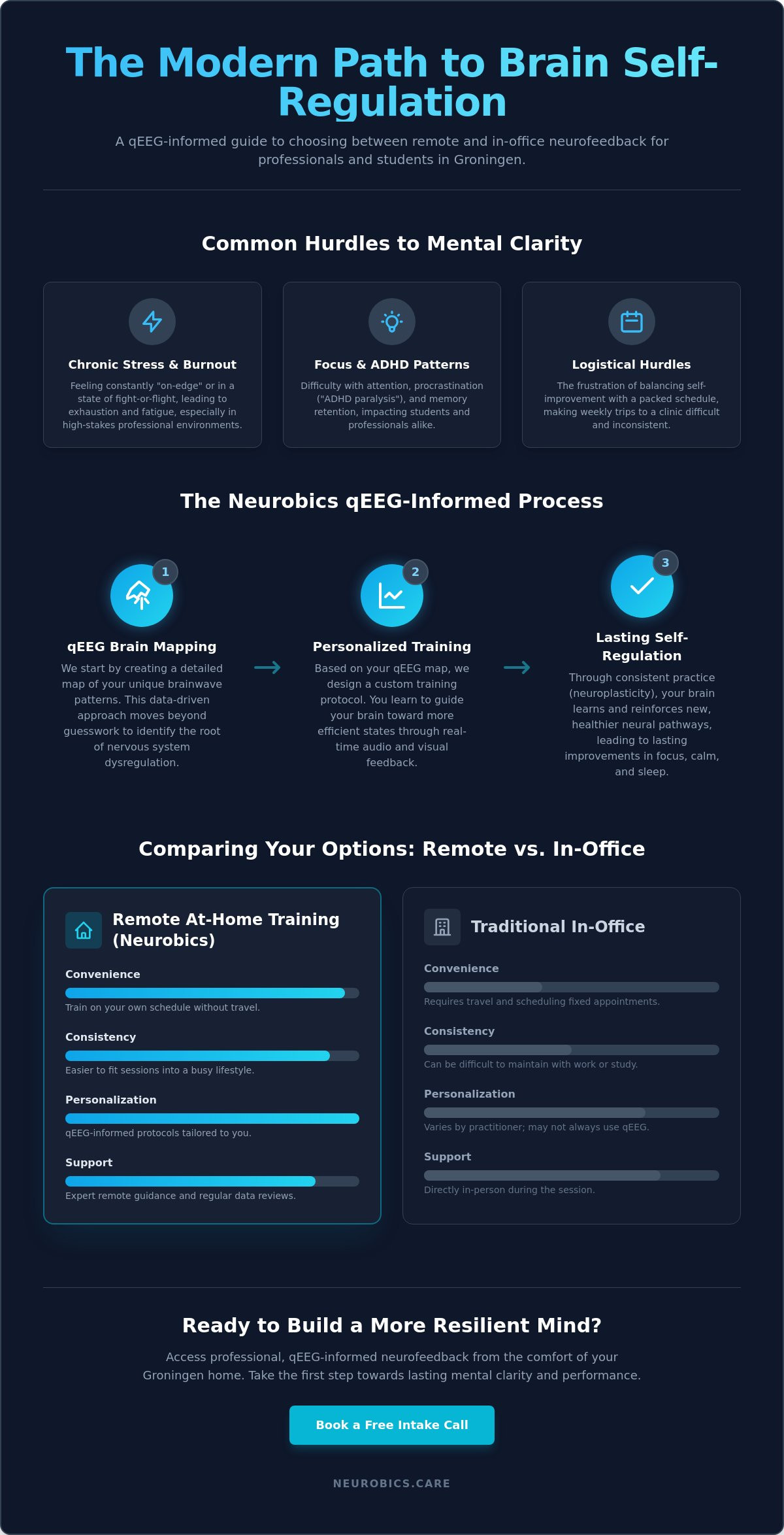
In-Office vs. Remote Neurofeedback in the Northern Netherlands
Deciding where to conduct your training is as vital as the decision to start. While the city center of Groningen offers traditional clinical settings, the rise of remote assisted neurofeedback has changed the logistics for many in the Northern Netherlands. It’s no longer necessary to choose between high-quality care and personal convenience. Whether you’re looking for neurofeedback groningen services from the heart of the city or the quiet suburbs, understanding the different models will help you find the right fit for your lifestyle.
Logistics often dictate the success of a program. For a resident in Haren, a quick trip to a local office is manageable. However, if you’re commuting from Zuidhorn or Delfzijl, the travel time can become a barrier to the consistency required for neural change. When you’re already dealing with ADHD or burnout, adding a long commute to your weekly schedule can be counterproductive. It’s also helpful to consider the neurofeedback therapy cost, as remote models often provide more training sessions for a similar investment compared to the per-visit fees of a traditional clinic.
The In-Office Experience
The traditional model involves visiting a practitioner in a structured environment. This path offers direct, face-to-face interaction, which some clients find deeply reassuring. It’s often the preferred choice for individuals with highly complex needs who require immediate, hands-on adjustments. However, this model comes with fixed scheduling and travel requirements. If your work or family life makes it difficult to commit to a specific time every Tuesday morning, the rigid nature of office visits might lead to missed sessions and slower progress.
The Advantages of Remote Training
Modern remote programs have bridged the gap between clinical precision and home comfort. At Neurobics, we ship professional-grade equipment directly to your address in Groningen or the surrounding province. This allows you to train in your own environment, where your nervous system already feels safe. The primary benefit here is frequency. Neuroplasticity thrives on repetition; training three to five times a week at home often yields faster results than a single weekly office visit. You aren’t doing this alone, either. A remote practitioner monitors your data from afar, adjusting your protocols based on the real-time feedback from your brain. It’s a premium, assisted experience that fits into a busy life without sacrificing the expert guidance you need for a successful outcome.
The Role of qEEG Brain Mapping in Personalized Care
Every brain is unique. Attempting to improve focus or sleep without a clear understanding of your specific neural patterns is like trying to find your way through the streets of Groningen without a map. Generic protocols often lead to underwhelming results because they don’t account for individual differences in brain activity. This is why professional neurofeedback groningen services prioritize Quantitative EEG (qEEG) as the first step in any successful training program. If you’re ready to move beyond guesswork, a QEEG assessment Groningen provides the data-driven foundation needed to build a truly personalized training plan.
A qEEG acts as a high-resolution weather map of your brain. It identifies areas of “high pressure,” where activity might be too intense, and “low pressure” zones that are under-active. By pinpointing these specific imbalances, we can move away from a one-size-fits-all approach. This data ensures that your training is precisely calibrated to your needs, whether you are managing ADHD symptoms or recovering from the cognitive fog of burnout. Whether you choose an at-home brain measurement or an in-office intake, this assessment provides the scientific foundation for everything that follows.
What to Expect During a qEEG Assessment
The process is entirely non-invasive and comfortable. We use a specialized cap to record electrical activity at 19 or more points across your scalp. This doesn’t involve any electrical input into your brain; it’s a purely listening process. Once the data is collected, we compare your results against a normative database of thousands of individuals of the same age and gender. This comparison allows us to identify outliers and understand how your brain waves differ from the average. We then translate this complex data into a clear visual report. We’ll sit down with you to explain these findings in plain English, showing you exactly where your nervous system is thriving and where it needs more support. For a deeper understanding of the entire process and the latest global standards for accuracy, our definitive guide to qEEG assessment and brain mapping walks you through every step in detail.
From Data to Protocol
The insights from your map directly dictate your training protocol. For example, a brain stuck in a state of high-beta activity may experience constant anxiety, requiring a protocol that rewards a calm, alpha state. Conversely, someone struggling with focus might show excess theta waves, requiring a different setup to encourage faster, more alert frequencies. As you progress, we perform follow-up measurements to track your neural shifts and adjust your plan accordingly. A qEEG serves as the essential blueprint for effective brain training, ensuring every session is targeted to your specific neural needs. If you’re ready to see what your own brain map reveals, you can book an at-home brain measurement with our team today.
Getting Started with Neurobics in Groningen
Starting your brain training journey is a commitment to your long-term well-being. At Neurobics, we’ve refined our process to ensure that accessing neurofeedback groningen is seamless, whether you’re a busy professional in the city or a student preparing for exams. We offer two primary paths for remote training: a 4-week intensive program and a more comprehensive 12-week program. Both options are designed to provide the consistency your nervous system needs to develop healthier self-regulation patterns through remote assisted neurofeedback.
Understanding the financial aspect is a key part of your preparation. In the Dutch healthcare system, neurofeedback is generally not covered by basic insurance (basisverzekering). However, many residents in the Northern Netherlands find that their supplementary health insurance (aanvullende verzekering) offers partial reimbursement for alternative or psychological care. We recommend reviewing our guide on neurofeedback insurance coverage to understand how these policies apply in 2026. For self-employed individuals and entrepreneurs in Groningen, these costs may also be tax-deductible as a professional development or educational expense, though you should verify this with your specific tax advisor.
Our Local and Remote Support Model
Our approach combines the precision of clinical data with the flexibility of home-based training. Once your intake is complete, we ship the necessary professional-grade equipment directly to your address via PostNL. This equipment is easy to set up, and our team provides full technical support to ensure you feel confident from your very first session. You aren’t training in isolation. Every program includes weekly live sessions with expert practitioners who monitor your progress and adjust your protocols in real time. This ensures your training remains safe, effective, and aligned with the unique data from your qEEG map. The equipment is simply returned via the same shipping method once your program concludes, making the entire process efficient and stress-free.
Taking the First Step
Your journey begins with a comprehensive intake assessment and brain measurement. This initial meeting is the perfect time to discuss your specific goals, whether you’re looking to improve your sleep quality, manage ADHD symptoms, or recover from burnout. Setting realistic expectations is vital. While some notice subtle shifts in the first few weeks, the most significant and lasting changes occur through consistent practice over several months. We invite you to contact us to schedule your local consultation or intake. Our team is here to guide you through every step of the process, ensuring you have the tools and support needed to achieve a more balanced and resilient mind through professional neurofeedback groningen.
Your Path to a Resilient Mind in Groningen
Choosing to prioritize your brain health is a significant step toward a more balanced life. We’ve explored how professional neurofeedback groningen services bridge the gap between clinical science and daily practicalities. By utilizing precise qEEG mapping, you move beyond guesswork and into a training plan built specifically for your neural patterns. Whether you’re navigating the pressures of the University of Groningen or managing a high-stakes career, the ability to self-regulate is your most valuable asset.
At Neurobics, we bring over 15 years of clinical experience in the Netherlands to every client journey. Our practitioners are registered with professional standards like the NFG and RBCZ, ensuring you receive care that is both ethical and evidence-aware. With custom qEEG-informed protocols and the flexibility of at-home training, achieving mental clarity and better sleep has never been more accessible. It’s time to stop feeling overwhelmed by stress or focus issues and start training for the life you want to lead.
Ready to see what your brain can do? Book your Groningen intake session and start your brain training journey today. Your journey toward lasting cognitive resilience is just one conversation away.
Frequently Asked Questions
Is neurofeedback therapy covered by Dutch health insurance in Groningen?
Neurofeedback is generally not covered by basic Dutch health insurance (basisverzekering). However, many supplementary insurance packages (aanvullende verzekering) provide partial reimbursement for sessions under the category of alternative care or psychosocial support. It’s best to check your specific policy details or contact your provider to see if they recognize practitioners registered with the NFG or RBCZ.
How many sessions are typically required to see results?
Most individuals begin to notice subtle improvements in sleep or mental clarity within the first 10 sessions. For lasting, long-term changes in your neural patterns, a complete program usually consists of 20 to 40 sessions. The exact duration depends on your initial qEEG map and how quickly your nervous system adapts to the training protocols provided during your neurofeedback groningen journey.
Can I perform neurofeedback at home if I live outside the Groningen city center?
You can absolutely train at home regardless of your location in the province. We ship professional-grade equipment to residents in Haren, Zuidhorn, Delfzijl, and beyond. This remote assisted neurofeedback model allows you to maintain a consistent training schedule without the stress of commuting into the city center, making it a practical choice for busy professionals and families.
Are there any side effects associated with brain training?
Neurofeedback is a non-invasive process with very few reported side effects. Some people experience temporary fatigue or a mild “heavy” feeling in the head after a session, which is similar to the mental tiredness felt after a long day of focused work. These sensations are usually brief and indicate that your brain is working hard to find new, more efficient regulation patterns.
Do I need a referral from my GP (huisarts) to start neurofeedback?
You don’t need a formal referral from your GP (huisarts) to begin training at Neurobics. Our intake process includes a comprehensive assessment and QEEG assessment Groningen brain mapping to ensure the training is appropriate for your needs. However, if you’re hoping to claim reimbursement from your supplementary insurance, some providers might ask for a GP’s note, so it’s wise to verify this beforehand.
What is the difference between neurofeedback and traditional biofeedback?
Neurofeedback is a specialized branch of biofeedback that focuses exclusively on brainwave activity. While traditional biofeedback might track physiological markers like heart rate, skin temperature, or muscle tension, neurofeedback uses EEG sensors to monitor and reward specific brainwave frequencies. It’s a more direct way to address the neural roots of issues like ADHD, anxiety patterns, and chronic stress.
Is the equipment used in remote training as good as clinic-based machines?
The technology we provide for remote neurofeedback groningen is clinical-grade and identical in precision to the systems found in traditional offices. We use high-fidelity amplifiers and sensors to ensure your brainwave data is captured accurately. This high standard of equipment allows our practitioners to monitor your progress and adjust your personalized protocols with the same level of expertise as an in-person session.
Can neurofeedback help with ADHD symptoms without medication?
Neurofeedback is a highly effective tool for improving self-regulation and executive function in individuals with ADHD. By training the brain to reduce excess slow-wave activity and increase focused frequencies, many people find they can manage their symptoms more effectively. While we don’t provide medical advice or suggest stopping prescribed treatments, brain training offers a non-drug path to enhancing focus and reducing impulsivity. If you want to understand how a precise qEEG assessment can identify the specific neural patterns underlying ADHD, our comprehensive brain mapping guide explains the full process in detail.
