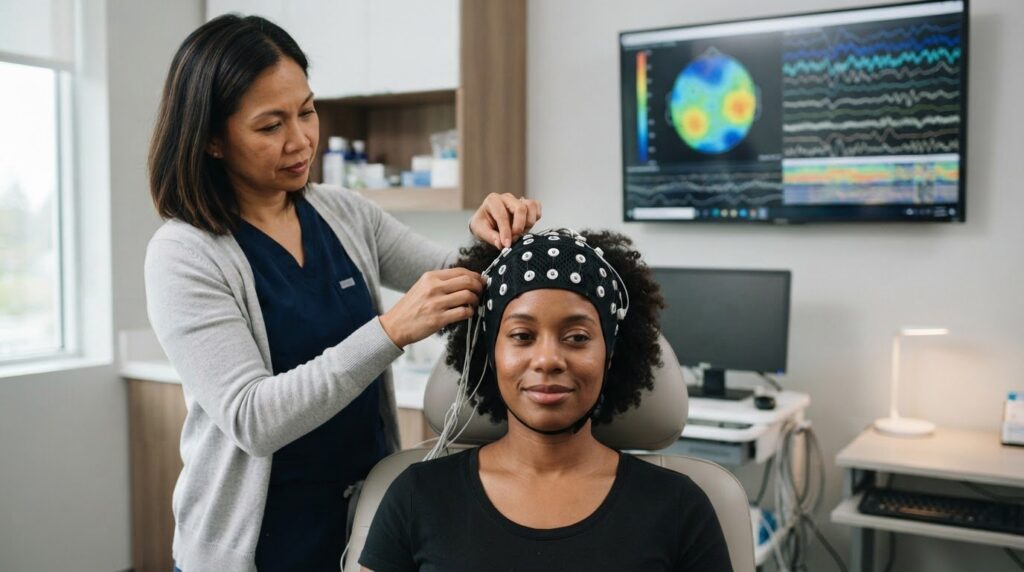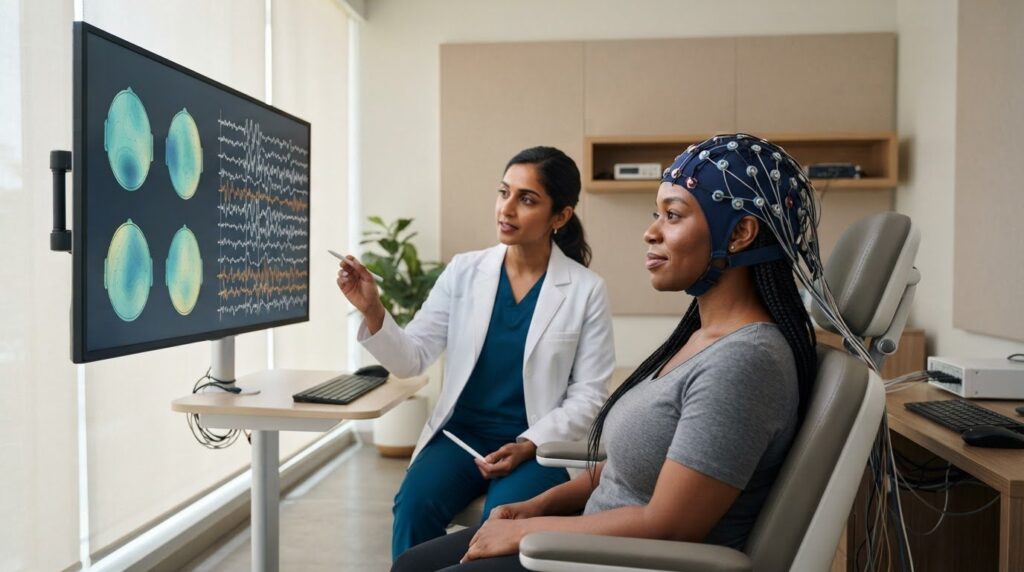
Clinical qEEG can add quantitative analysis to an EEG recording, helping describe patterns in recorded brain activity. It does not diagnose a…
Posted in
Posted in


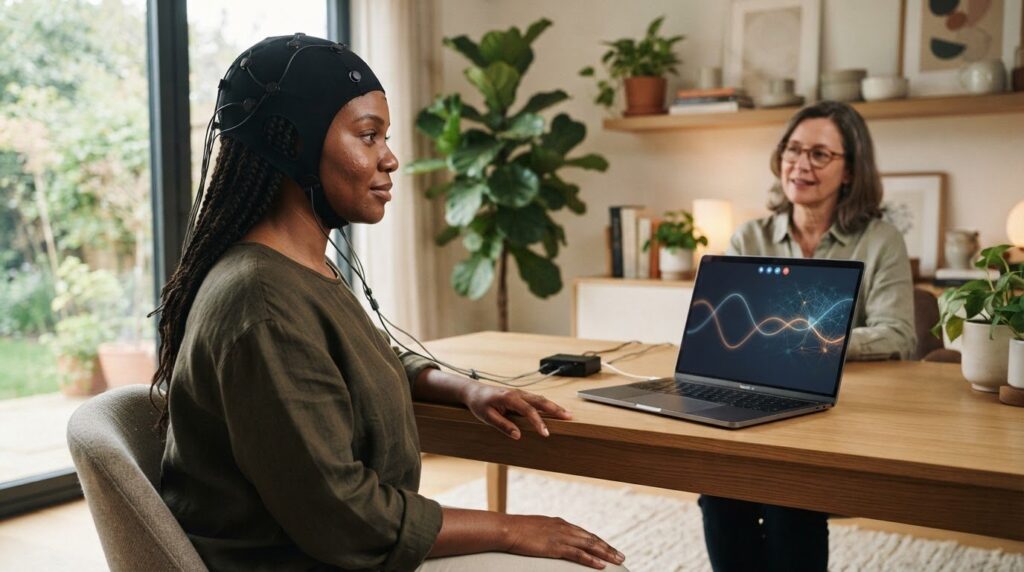
Clinical qEEG can add quantitative analysis to an EEG recording, helping describe patterns in recorded brain activity. It does not diagnose a…
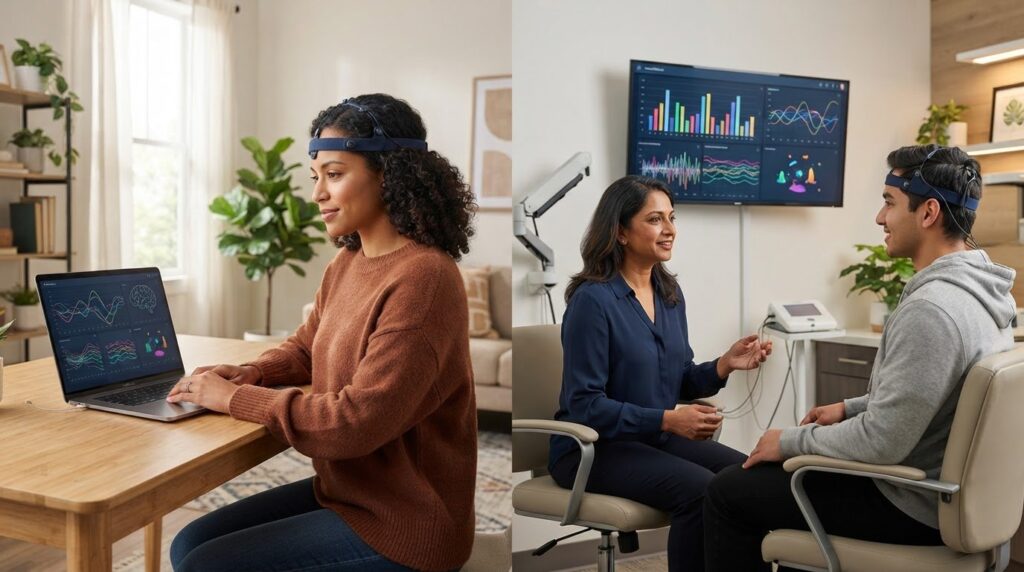
When comparing home neurofeedback vs clinic training, the key difference is not simply convenience versus expert care. Both formats can involve…
Can a brain map explain why you’re struggling with focus, sleep, or stress? A QEEG can provide information about patterns of electrical activity, but…
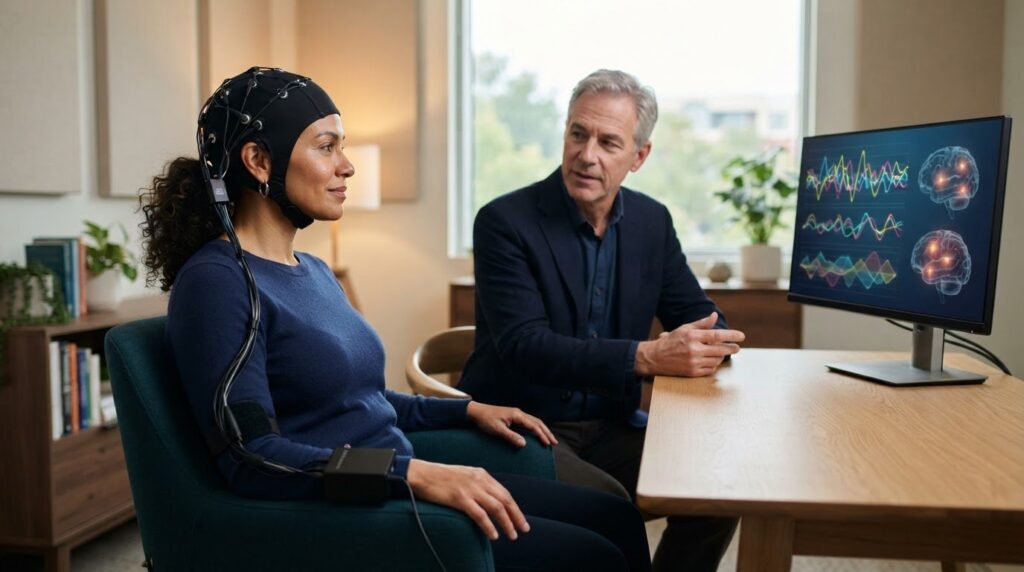
What can a brain map contribute to a training plan, and does a QEEG result mean something is “wrong”? With qeeg guided neurofeedback, an assessment…
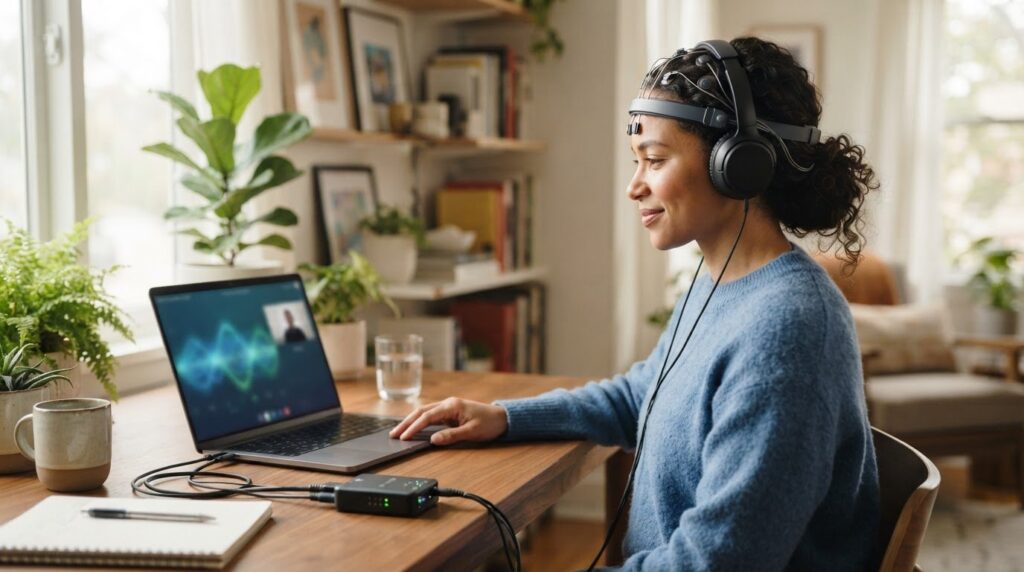
The headset is only one part of neurofeedback equipment for home use. What matters just as much is how brain activity is measured, what the feedback…
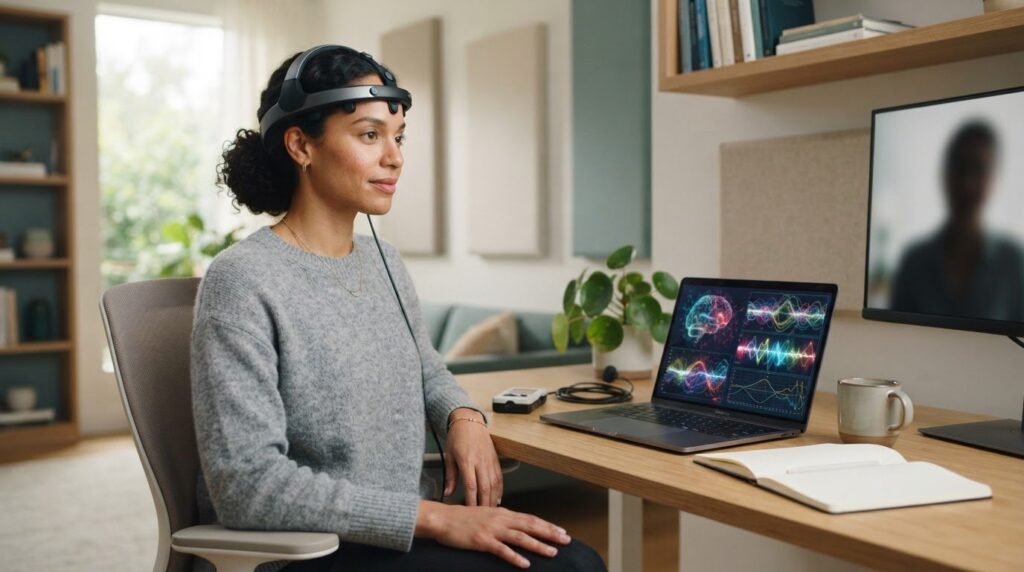
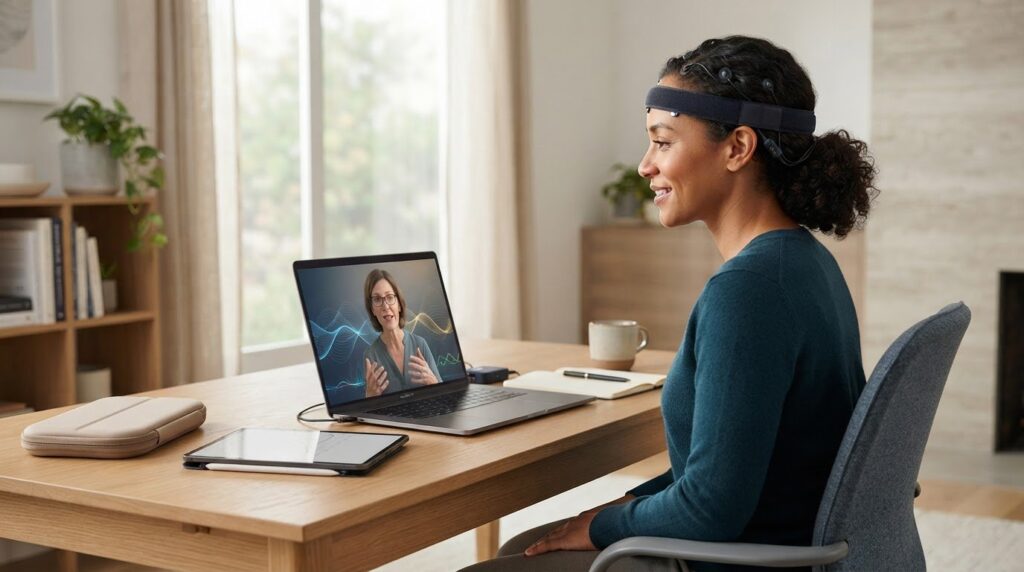
Remote assisted neurofeedback combines home-based practice with professional guidance. If you are considering training outside a clinic, the key…
Could “online neurofeedback training” mean learning how to work with clients, or receiving brain training yourself from home? The phrase can describe…
What if focus isn’t something you can force, but a capacity you can practise regulating? If work, study, or everyday tasks often pull your attention…
A “yes” from your insurer may not mean that every part of neurofeedback is covered. If you’re asking, “wordt neurofeedback vergoed?” the practical…
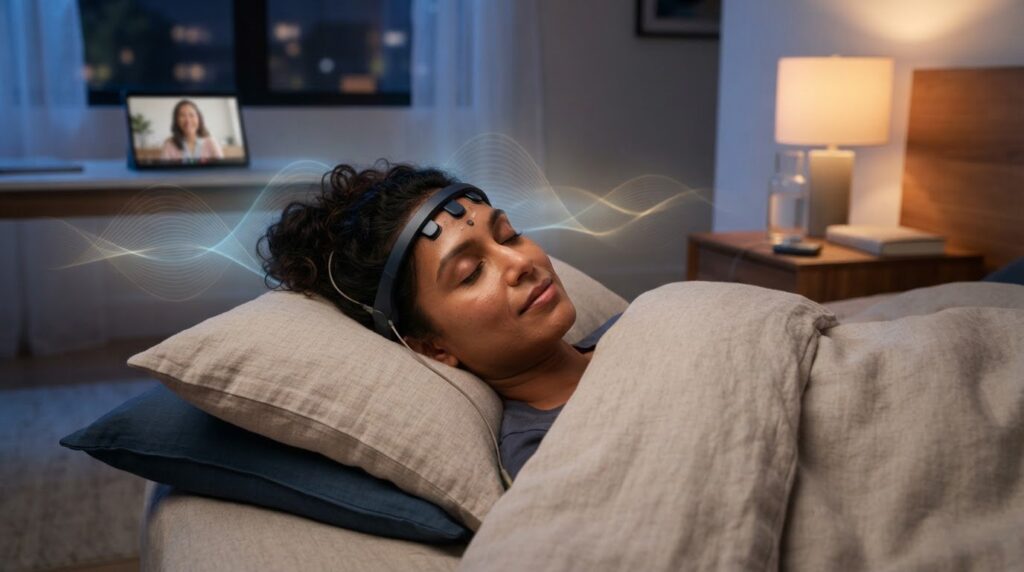
When nearly 15% of the global population lives with chronic insomnia, it’s clear that common advice to just “relax” or “turn off the screens” often…